
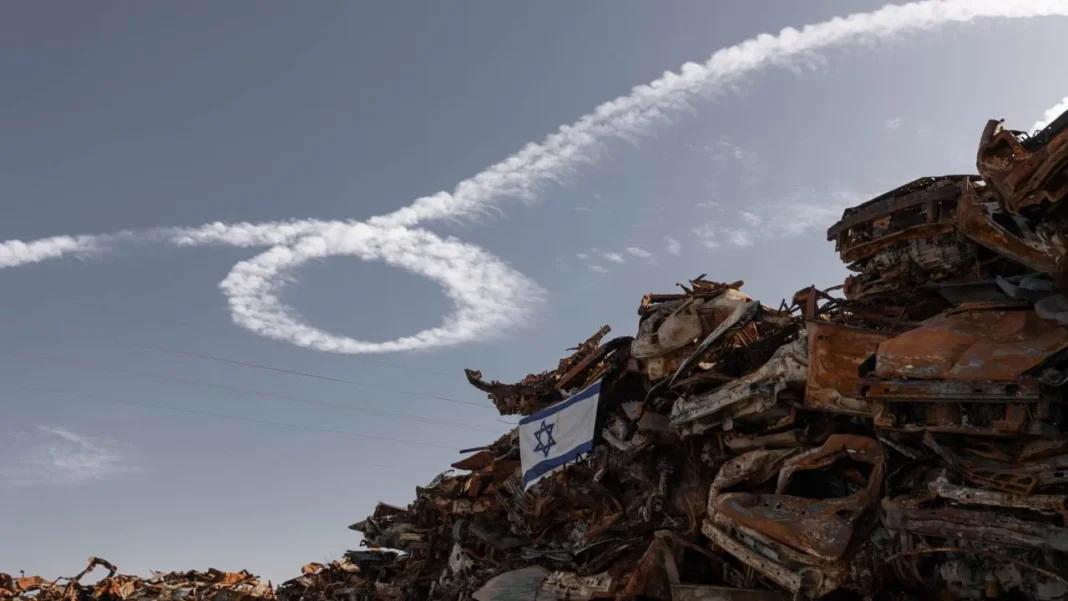

Chen G. Schimmel is an Israeli photojournalist whose documentation of October 7th and the months that followed has become an important visual record. This series includes excerpts from her first book, October 7th | Bearing Witness, which creates a visual and written account of the first year after the attacks.
Proceeds go to the SUMMIT Institute for Trauma and Post-Trauma Recovery. For more information: https://www.chengschimmel.com/
The question hung heavy in the air, like a cloud we couldn’t quite reach, drifting through the dust and fragments of everything that shattered on October 7th. How could we move when the ground beneath us felt so unstable, when the rhythm that once carried us through life had been stolen, leaving only silence? And yet, on Simchat Torah, the Hebrew anniversary of that day, there we were, standing in that space, dancing with the Torah in our arms, singing with a joy that seemed impossibly far away. How did we dance, even when the world felt split wide open and we stood among the cracks?
The dance is not about forgetting the pain or pretending everything is okay. It’s about recognizing that even in the midst of our deepest sorrow, there is something that remains whole: our spirit, our ability to keep living, keep breathing, and keep stepping forward, even when it feels like the weight of the world is pressing down on us.
How can we dance again? It’s not just a question for Simchat Torah; it’s a question for every moment we face after loss, after tragedy. The Torah shows us that the dance of life isn’t about waiting for everything to be perfect. It’s about moving in the middle of the brokenness, with all the weight we carry, the weight of those who can’t dance anymore, and the silence they left behind. We carry that silence with us, not as an absence, but as part of the rhythm, part of the dance.
Sometimes, it’s a way of saying, “I’m still here. I’m still alive.” It’s about reclaiming our bodies, our space, and our right to exist in the world despite everything that they tried to take from us. Dancing becomes an act of defiance, a way of refusing to let the darkness win.
Maybe that’s what our dance needed to be. Not a perfect, choreographed expression of joy, but a raw, messy, vulnerable movement towards life. We danced because we refused to let the darkness win. We danced because in the act of movement, we created a new rhythm, a new song. And as we danced, we were not alone. Even when it felt like the world had stopped, there were others beside us, stepping into the same uncertain rhythm, finding their way back to life. This is the power of the collective song, the recognition that while each of us is carrying our own piece of the brokenness, together we are weaving something whole.
That’s the dance. We acknowledge the darkness, we hold the silence, and then we take a step. And another. And slowly, the pieces begin to move together. Slowly, the rhythm returns.
How can we not dance?
How can we not, when so many are still standing in the brokenness and yet choosing life, choosing light? How can we not dance when the soldiers stand on the frontlines, their boots heavy with dust, their hearts heavy with the weight of a country on their shoulders, and yet they continue to move forward?
We dance for them. For the ones who hold the line, who carry the lives of everyone behind them, even when their own lives feel fractured and fragile.
How can we not dance for the wives?
The wives who watch their husbands disappear into the chaos, who wake up each day not knowing when or if they will return? They carry their own brokenness, their own silence, but they still wake up, they still hold the day together, and they still keep the flame of hope burning. We dance for them: for the ones who wait, for the ones who carry the weight of absence and still manage to keep going.
We dance because they have chosen not to let the silence consume them.
How can we not dance for the children?
The sons and daughters who don’t understand why their fathers and mothers have to leave, why the world feels so different, so heavy, so full of things they can’t name? But they continue to play, they continue to laugh, and they continue to find joy even in the smallest moments.
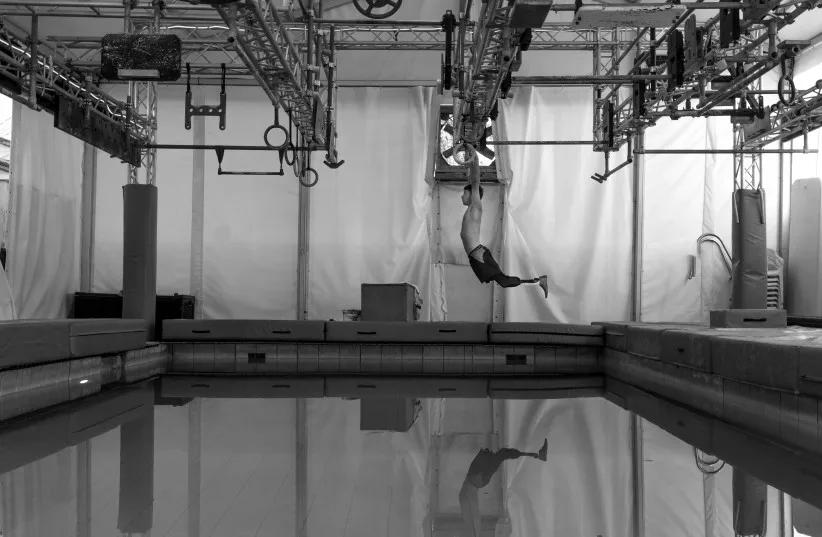
We dance for them: for the ones who remind us that life still pulses even in the darkest times.
How can we not dance for the wounded soldiers?
Those who have given so much of themselves on the battlefield, who carry the weight of both visible and invisible scars, yet still stand tall, still carry the strength of a thousand battles within them?
We dance for them because their courage teaches us what it means to keep moving forward, no matter how heavy the burden, no matter how deep the wounds
How can we not dance for those who have lost sons and daughters?
For those whose hearts have been torn open by grief, and yet they still stand? How can we not dance when their love continues to pulse through every moment of their lives, even in the face of such immense loss?
We dance for them because even in their brokenness, they continue to carry the light of the ones they lost.
How can we not dance for the evacuees?
For those who left their homes, their lives, and their memories behind, who carry their entire world in a single bag but still hold on to hope, still believe in a return, and still carry the dream of rebuilding and of going back? We dance for them, for the ones who left everything but refuse to let go of their future.
We dance because they have not given up on the promise of home.
How can we not dance for the hostages?
For those who are still held in the darkness, for their families who wake up every day with an emptiness that words can never touch, waiting for a sign, for a miracle, for the day that their loved ones come home?
We dance because they still believe, because their love refuses to be extinguished even in the deepest void.
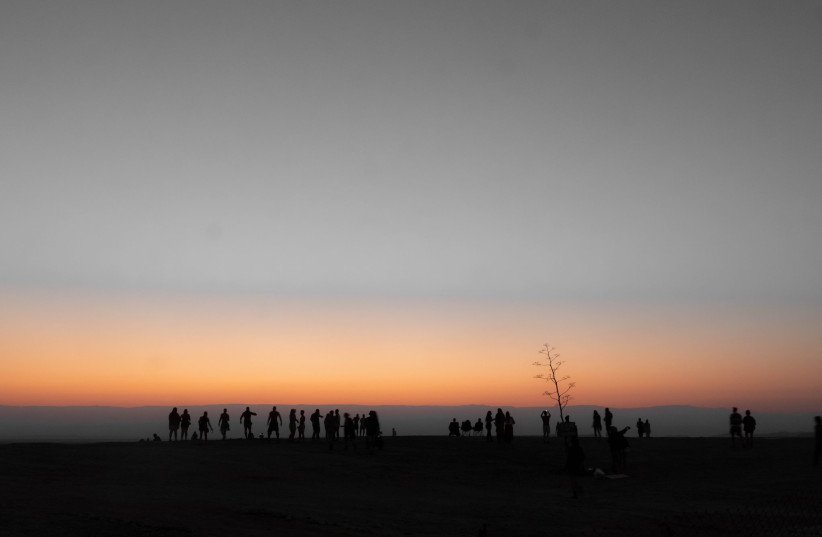
How can we not dance for the Nova survivors?
For those who lived through the unthinkable, who carry the weight of those who didn’t make it, who wake up every day with the memories but still choose to keep living, still choose to hold on to the light they can find? We dance for them, for the ones who carry the stories of the lost and the stories of their own survival.
We dance because they remind us that even after the darkest night, the dawn still comes.
How can we not dance when so many continue to stand?
When so many continue to fight, to love, to hope, to live? We danced because they are still here. Because we are still here. And together, we will keep dancing in the face of everything that has tried to take that dance from us.
We dance for them, for all of them, for us, for the broken and the whole. Because even in the face of everything that has been taken from us, we danced, and we will continue to dance.
Written in collaboration with Chen Schimmel
Source:
www.jpost.com




