
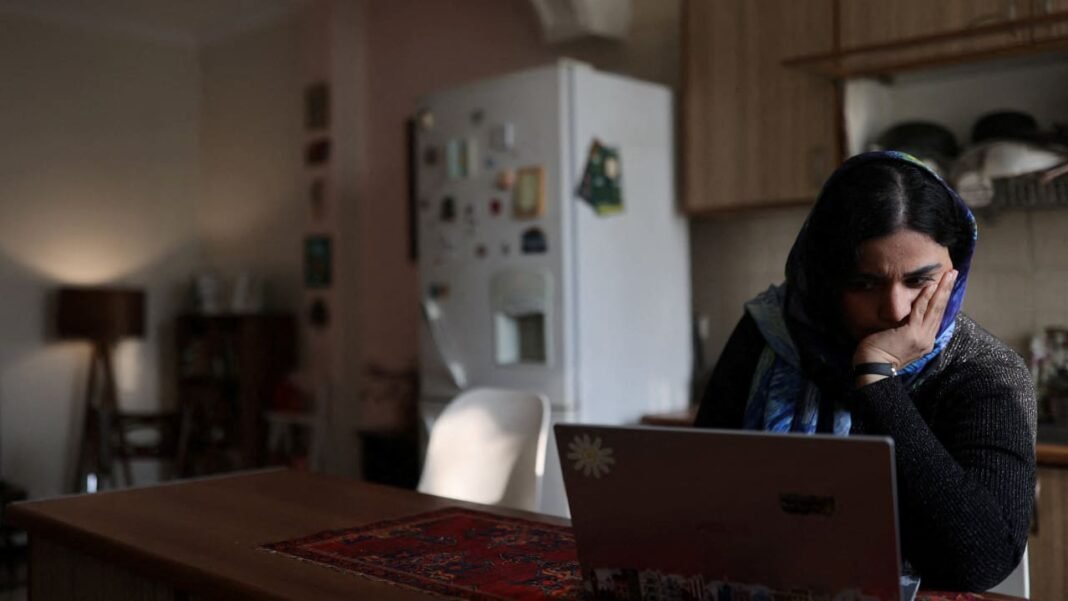

The Islamic regime’s selective rollback on internet restrictions has created an ideological litmus test, allowing voices backing the regime to enter online spaces while continuing to isolate the majority of Iranian people digitally, experts told The Jerusalem Post on Thursday.
Iran’s deputy science minister, Seyed Mehdi Abtahi, promised on Sunday that the regime would allow researchers and professors access to online sites, except those censored by Tehran.
“Based on a list we had, steps have been taken to provide professors with access to the international internet, and gradually this will be extended to all professors,” Abtahi told the Iranian Student News Agency.
Service providers, with the approval of Iran’s Supreme National Security Council, have also begun offering an ‘Internet Pro’ package, according to dissident and state media reports. This package allows selected businesses and institutions to access global sites, which remain restricted to the general public.
Roger Macmillan, a terrorism and security specialist and former director of the diaspora site Iran International, told The Post that promising access to researchers and academics “is not a liberalization signal.”
“It is the visible face of a control architecture that has been in preparation since at least mid-2025, when internal documents submitted to Iran’s National Cyberspace Centre outlined a multi-year plan to eliminate foreign technology dependency and rebuild Iran’s digital ecosystem under permanent state management,” he explained, hinting that Iran’s motives in shutting down internet access was less connected to national security than the regime initially claimed during its January crackdown.
Suppressing widespread protests across the country
The regime restricted internet access to suppress widespread protests across the country, which broke out in response to Iran’s worsening economic crisis. While the regime claimed that the blackout was a necessary response to the “foreign-backed” riots threatening national security, UN experts like Mai Sato noted that it disrupted international monitoring of massive human rights violations against demonstrators.
“The regime is not reconnecting its population. It is deciding, deliberately and systematically, which Iranians the outside world is permitted to hear,” Macmillan stressed. “The academics and professionals now receiving access are not the dissidents, the activists, or the ordinary citizens who lived through this war. They are the regime-adjacent voices least likely to threaten the narrative.”
Macmillan warned that this online landscape has deliberately altered the type of information the West will be privy to. “The information environment we are reading is not a window into Iranian society – it is the regime feeding us what they want us to hear. The people of Iran still do not have a voice,” he said.
Amir Rashidi, a cybersecurity expert at the digital rights group focused on Iran Miaan, told The New York Times, “In Iran, the internet is no longer being treated as a public right. It is being reframed as a ‘strategic infrastructure’ whose level of access can be adjusted based on security concerns and high-level state priorities.”
Rashidi repeated Macmillan’s claim that Iran has long been planning such an internet system, though it repeatedly denied the accusation.
He told The Post that the internet in Iran was increasingly being treated as a privilege rather than a right, which was the core belief behind the new categorization system determining the level of access a person can receive.
Warning that Iran had failed to communicate the criteria it used to assess whether someone would receive a white SIM card, a type of uncensored access offered by regime authorities, or Internet Pro, Rashidi said there was room to include discriminatory factors like gender, ethnicity, and religious identities in the process.
Rashidi added that while some could now access certain online spaces, the regime is able to monitor which sites and applications are being accessed.
With plans to develop its own root certificate, a trust anchor in the online infrastructure, future advancements may also allow the regime to intercept messages or carry out “man-in-the-middle attacks.” These attacks would allow the regime to alter, intercept, and or quietly observe private communication, disrupting attempts to whistleblow to outside authorities like the United Nations.
Source:
www.jpost.com




