

As Israel prepares to mark its 78th Independence Day under the official theme of “Strengths of Renewal,” we must realize that it is hard to demand renewal from a society that exhausts its energy on the emotionally reactive, deeply tribal internal drama of a teenager. The challenge facing Israel today is not survival. It is maturity.
This delayed maturation reflects our political arena, not our people. The current Israeli zeitgeist is defined by a profound dissonance: on the ground, civil society demonstrates immense solidarity and capability. Yet institutionally, we act like an angst ridden adolescent, squandering our economic and military powerhouse status on petty turf wars.
Wrestling with an identity crisis, we are viewing the world in strict binary terms. Our political discourse has been hijacked by hormonal tribalism, where the ideological dream of one camp is automatically perceived as the ultimate nightmare of the other.
Fortunately, the diagnosis is not terminal. Sociological data reveals that today, our actual policy gaps are remarkably narrow. The majority agrees on the fundamentals of a free market economy and a cautious security doctrine.
This is a stark contrast to the 1950s through the 1980s, when ideological chasms were genuinely vast. Yet paradoxically, during those early decades, the national divide did not revolve entirely around personal allegiance to, or disdain for, the ruling power.
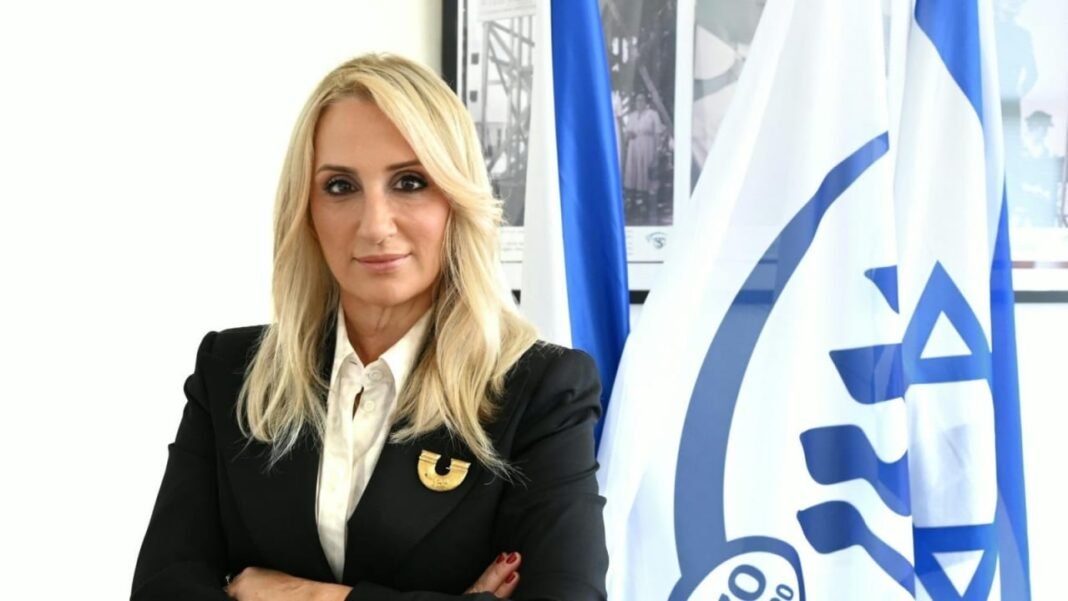
Why, then, are we so bitterly divided when we actually agree on the basics? Heading the world’s largest Zionist women’s movement, where the decision making table is predominantly female, gives me a distinct perspective. I could draw many conclusions, but one is glaringly obvious: severe gender inequality.
From Leader to Laggard
In the 1950s, Israel led the world in female representation. The Knesset had roughly 10% women, compared to a mere 2% in the U.S. Congress. Today, the picture has flipped. While Western democracies average over 35% female representation, Israel lags behind at roughly 15%.
Correcting this gap is essential for a maturing nation. Women replace performative, ego driven politics with collaborative, transformational leadership. The numbers prove it: when women participate in formal negotiations, the resulting agreements are 64% less likely to fail.
While male politicians in Israel battle over turf, women are already doing the heavy lifting. During the Iron Swords War, women led grassroots initiatives bypassed paralyzed government systems, launching fully functional civilian command centers within hours. Israel constantly relies on women to clean up its crises. It is time to stop excluding them from formal political power.
As we raise the flags on our 78th Independence Day, renewal without unity is merely cosmetic. True national renewal demands a new social contract built on real social capital, a shift from a political ego system to a mature eco system of interdependence.
The solution lies not in op-eds praising women’s resilience, but in translating civil heroism into formal power. We must demand strict gender parity across the board:
Any national commission of inquiry, state rebuilding administration, or future coalition must mandate 50% female representation.
We must firmly reject “war cabinets” that function as exclusive, men only spaces.
Golda Meir, Israel’s only female Prime Minister, famously quipped: “Whether women are better than men I cannot say, but I can say they are certainly no worse.” At 78, it is time we put that to the test.
Anat Vidor is the World WIZO President
Source:
www.jpost.com




