
This mauled, war-torn, bedraggled, beat-up, battered, and bruised country of ours is now marking 78 years of independence. That doesn’t sound like a long time in the normal run of the global timeline. But, as we all know, life here is so intense. Even without rockets heading this way from a couple of thousand kilometers away, the ambiance across the national social and political scene generally tends to the charged side.
That, coupled with the old adage about artists suffering for their art, if we were to allow ourselves a modicum of proverbial freedom, may go some way to explain why there has been so much music – much of it of the highest quality – produced here since 1948.
In a Hebrew-language book that Yoav Kutner put out in 2008, Shi’ur Moledet, on the occasion of the country’s 60th birthday, he charted much of the evolution of Israeli music. The name translates as “Homeland Lesson” or possibly, “A Degree of Homeland,” although in the book itself it appears simply as “Home Land.”
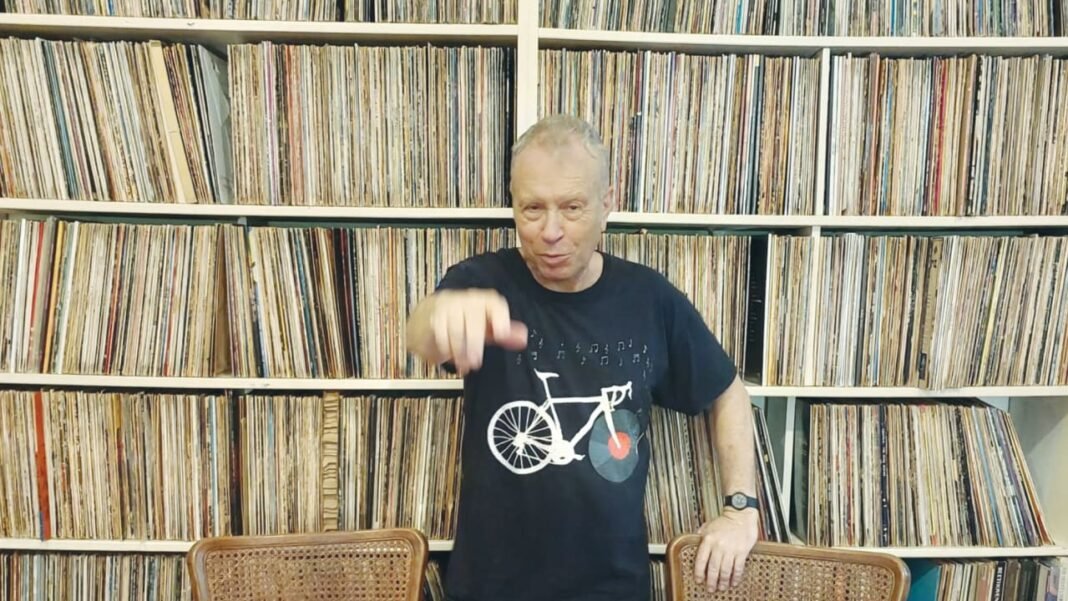
Kutner – our preeminent music radio show presenter, and a veritable walking-talking encyclopedia of locally produced pop, rock, and songs of other ilks – started his research way back, even before an independent country where Jews would ostensibly feel safe and secure was much more than a twinkle in Theodor Herzl’s eye.
In his foreword to Shi’ur Moledet, Kutner presents the reader with a taxing conundrum. He asks what constitutes a bona fide “Israeli song,” or, “more accurately, a song of the Land of Israel.”
“Does that,” he ponders, “refer to any song performed in Hebrew? Any song written or sung by an Israeli writer or singer? Does ‘a homeland song’ necessarily have to engage in the country’s landscapes?”
In view of the vast thematic, musical, philosophical, and stylistic gulf that exists between the songs created in the state’s early days, and the stuff that goes down deep into the 21st century – all those aspects, and more, require serious consideration and examination.
But before we get down and dirty with the way musical things have panned out in nearly eight decades, Kutner raises a highly pertinent aspect. “What is the role of music in our lives?” he poses perspicaciously. That sounds like an expansive topic that might be better addressed by a phalanx of psychologists, sociologists, and philosophers rather than full-time members of the Israeli entertainment industry.
In fact, as usual, Kutner hit the nail on the head, across the arc of this still-young country’s continuum. “If you look back to ‘Shir Hama’alot’ by [legendary cantor] Yossele Rosenblatt [first performed in 1930], you can see the song meant something.”
That doesn’t just reference the stirring lyrics inspired by Psalms. Kutner bolsters that take straight from his own backdrop. “When I was at a military boarding school, we sang Shir Hama’alot at the Friday evening meal. We were all secular, but it still meant something to us. Today, they talk about the religious-secular divide, but there was a shared vision.”
‘Music has played a very important role in society’
FOR KUTNER, the current juncture of our national history, with the sores of military altercations and terrorist invasion still raw and continuing to fester, sheds a powerful light on the significance of music and its power to resonate personal and national sensibilities. And it has, here, since the get-go.
“Music, songs, in prayer, has played a very important role in various stages of society, of the people,” he suggests.
He says it is not just about soothing the troubled soul or providing the public with a smattering of titillation. “If you look at our history, from the birth of Zionism to the establishment of the state, songs and the connection with something that is pleasant – music always offers something pleasant – there are objectives to it. That is true even if the work in question was not crafted with great forethought.”
That ties in neatly with the notion that art and street-level life provide each other with reciprocal sounding boards. It is palpably evident in this country.
Here, music – rousing ideology-drenched songs sung with great fervor around campfires at kumzitz gatherings, or conveyed through more formally structured charts performed in grander surroundings – has often evoked and echoed a spirit of patriotism, togetherness, joy, nostalgia, and deep sorrow.
The annals of the Israeli Songbook provide ample evidence of that observation, from the earliest pre-state days of the nationalist movement. “Music – the songs that were sung, often together – were largely designed to give meaning to life here,” Kutner states.
“You [olim] are in a foreign country, Eretz Yisrael; it is tough here. There was this yearning to come here, and the music united people here. People wondered what they were doing here. Why didn’t they go to the US – like Yossele Rosenblatt?” Kutner adds with a chuckle.
We have come a long way since the fabled cantor first sang Shir Hama’alot, and popped over here for a visit after relocating to the other side of the Pond. The rate of change in this part of the world has been rapid for some time, and it seems to advance apace as the years go by.
The sonic stylistic progression keeps pace with socio-political and other developments here. Casting an eye across this country’s musical timeline reveals dizzying transformations as olim arrive, with their own cultural baggage. Some added fresh seasoning to the local musical arena while others, predominantly Ashkenazi songwriters and composers such as Paul Ben Haim, tried to ingest indigenous sounds and marry them with their native sounds and rhythms.
There have been others, like Hungarian-born composer and ethnomusicologist Andre Hajdu, who roamed broad realms of cultural and genre endeavor to create new, richly layered material that expanded the reach of sonic Israeli offerings.
In commercial musical spheres, various pieces of the local melting pot mosaic featured in the work of such popular acts as Mati Caspi, Shlomo Gronich, and Yehudit Ravitz, who, at some stage or other, fused Latin elements in their oeuvres.
French and Russian themes were very much the order of the day in the early years of the state before the Swinging Sixties eventually filtered through to this Middle Eastern backwater. Then, the likes of the Churchills, iconic singer Arik Einstein and his compadres in the High Windows threesome, Shmulik Krauss and American-born Josie Katz, began to set their more westernized stall out.
As Kutner pointed out some time ago, that was something of a false dawn, and often the vocalists’ command of English was not quite of Shakespearean standard. They sang a mixture of some of the original lyrics with some gibberish thrown in to keep the beat going.

How Israel opened up to the Western world
THE 1967 Six Day War changed everything, as this then-fledgling country, bursting with self-confidence, began to open up to the Western world, and the sounds of American and British rock and pop acts began flooding the local market.
“You also had volunteers coming here, to kibbutzim and other places, from all over the world, and they brought their music and other cultural customs with them,” Kutner notes.
That spread like wildfire, and numerous facets of cultural and social life began to morph. Acts like seminal rock-pop outfit Kaveret, led by guitarist-vocalist and principal songwriter Danny Sanderson, began not only to bring in a new approach to popular music, they added madcap humor and biting satire to their fare.
The latter was a new facet of life here, and comedians and other writers began to venture into areas that had previously been considered untouchable. Monty Pythonesque TV show Nikui Rosh took no PC prisoners, and writer-raconteur Yehonatan Gefen teamed up with Danny Litani and David Broza for satirical-political-musical duo spots. That can be largely attributed to the crisis of faith, as the bubble of the post-Six Day War euphoria was summarily burst, following the shock of the Yom Kippur War in 1973.
That gained momentum. “There were protest songs in the 1980s, after the First Lebanon War [which started in 1982],” says Kutner. “There was no political protest in Israel beforehand. I remember I spoke at the time to musicians who were the same age as the [IDF] soldiers, like Shlomi Bracha and Yuval Banai [members of trend-setting 1980s rock group Mashina]. They no longer felt the need to only express things that bolstered the nation. They said, we’ll sing about ourselves, about the problems here. It doesn’t have to be blatant. It can also be subtle.”
That, naturally, filtered through to artistic expression. “Yorim Vebochim” (Shooting and Crying), which rock vocalist Sy Hyman wrote as a response to the First Intifada, is a prime example. “Shalom Hanoch, The Clique, and lots of women artists got into that. And there is the connection with politics, not in the context of wars, but in connection with society. Following the 1977 political revolution [when the Likud party, led by Menachem Begin, won the general election and ended 29 years of left-wing domination], Mizrahi music took another leap forward.”
Singer-songwriters also began to emerge, led by Naomi Shemer – an almost lone female star in the local musical firmament – Shalom Hanoch, Meir Ariel, Miki Gabrielov, and Shemtov Levi. Female artists also started to move to the front of the stage, with Hava Alberstein, Ravitz, Astar Shamir, and Nurit Galron joining Shemer.
“Technology also freed up many artists,” Kutner adds. “It became easier for musicians to have more control over what they recorded and put out, and they gained more freedom from the big record labels.”
Visual aesthetics also came into the equation. “MTV started up. It took a while for that to have an effect here [in the 1980s], but suddenly artists – [rock] groups like Tislam and Benzine – were making video clips.”
Generally far more conservative IDF troupes, which had been the mainstay of the local music and entertainment sectors for decades, began to lose ground. Solo artists and bands began to demand, and enjoy, greater freedom of maneuver, both in musical and textual terms.
The Ashkenazi hold on the Israeli cultural scene also started to cede to artists from the Sephardi community, beginning with the so-called “cassette singers,” the likes of Zohar Argov, Haim Moshe, and Jackie Mekayten, followed by Ehud Banai, Sarit Hadad, and groups from outside the Tel Aviv scene, such as Teapacks from Sderot.
Meanwhile, Habreira Hativit (Natural Gathering), led by Moroccan-born Shlomo Barr, the East-West Ensemble, and Bustan Avraham, were at the forefront of the move to stake a claim for non-Western material in Israeli musical and cultural consciousness.
Jazz musicians also made great strides, particularly after American saxophonist-educator Arnie Lawrence made aliyah in the late 1990s. That was before the Internet took over and made music, from everywhere and anywhere, readily accessible at the click of a computer mouse or smartphone button. Lawrence had set up the jazz studies at the prestigious New School in New York, and included stints with jazz pantheon members Louis Armstrong and Dizzy Gillespie in his bulging bio.
The Israeli purveyors of jazz
TODAY, ISRAELI jazz artists perform at festivals and top venues all over the globe – that is, as long as politically imposed constraints don’t get in the way. Trumpeter Avishai Cohen and namesake bassist are regular features at leading events, and the likes of Germany-based pianist Omer Klein and French-domiciled pianists Yaron Herman and Yonatan Avishai do their fair share of globetrotting.
Israeli purveyors of jazz have also gained in stature and confidence and, around a decade ago, they began to reach into the Israeli Songbook for their base material, in addition to penning their own charts, instead of relying solely on numbers from the art form’s birthplace, the US.
The late 1990s also saw the emergence of world music-oriented and new agey acts, such as Galilean ensemble Sheva, and there is now an abundance of artists who lean toward the more spiritual and even liturgical side of the musical tracks. Etti Ankari, for example, who had great success as a rocker in the 1990s, and later adopted a religious lifestyle, now tends more toward spiritually fueled fare. And there are liturgical festivals and other events, dotted across the country’s cultural calendar.
Bassist-composer Hagai Bilitzky, who heads the Jazz Department of the Academy of Music and Dance, of the Hebrew University of Jerusalem, has deeper insight than most into the current state of the local jazz scene, and how it got to where it is today.
Bilitzky started out on his musical path as a jazz musician, partly under the aegis of Lawrence. At some stage, he broke away into Arabic domains before returning to the jazz fold. “We have great teachers in the department – [saxophonists and former jazz department directors] Yuval Cohen and Eli Degibri, and [pianist] Omri Mor,” he says.
Today, Mor is best known for marrying core jazz with Andalusian music, and has appeared at music festivals in Morocco. “I feel there is a lot of joy, as well as serious intent, among Israeli jazz musicians and students. To arrive at a [bona fide] synthesis [of styles and genres], you have to gain a good understanding of style. Maybe that is our advantage, coming from such a rich cultural melting pot.”
The emotional tidal wave that washed over all Israelis, and continues to leave its mark on our emotional wellbeing after October 7, 2023, of course also comes into the national musical equation.
Quite a few singer-songwriters have penned and performed odes to fallen soldiers and others who suffered directly from Hamas’s mega terrorist attack. With his wealth of experience in the national musical field, 71-year-old Kutner feels the jury is still out on that.
“I think it is too early to start relating, musically, to October 7. We need more time to work through all of that before musicians can really express something of value about it.”
The Promised Land of music
IN GENERAL cultural and, specifically, musical terms, this is truly the Promised Land. And, as Kutner says, there is an incessant dynamic to our artistic timeline that constantly produces the goods.
“In every generation there is change. That is due to a variety of factors, not just artistic considerations. That is also because of things like politics and social issues. There are a lot of elements in Israeliness. You can, for example, play Arabic music, and that is fine [as Israeli music]. There is always an innovative wave that comes through.”
Indeed, there is ne’er a dull moment here, in life and, as reflection of that, in our music.
Source:
www.jpost.com