
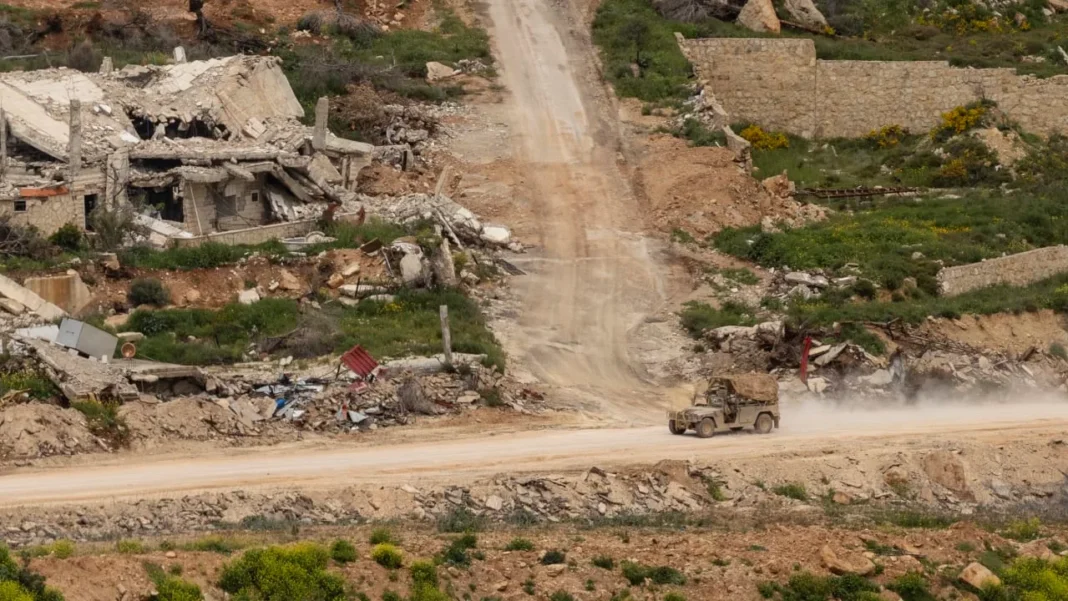

The news that emerged on Thursday afternoon that Israel and Lebanon had agreed to a ceasefire beginning that night did not come from an official announcement by the leaders of either of these sides.
Instead, it came from a social media post by the ceasefire’s broker, US President Donald Trump, who, according to Axios, quoting a senior Israeli official, “pushed this ceasefire through” because it was causing snags in the shaky truce with Iran.
Trump’s announcement was how members of Prime Minister Benjamin Netanyahu’s cabinet reportedly learned of the ceasefire, just as his security cabinet was convening to discuss and vote on it.
And they were furious, along with the opposition in Israel and leaders in the North, whose residents have heard time and time again from the government that Israel is determined to destroy Hezbollah once and for all.
However, as we have learned from the decades past entrenched in conflicts with Hezbollah, despite all of the efforts to do so, and the bluster emerging time and again from the government that the terror group had been deeply weakened, military force alone, coming only from the IDF, is not going to eliminate it.
That didn’t stop opposition leader Yair Lapid and Yisrael Beytenu chairperson Avigdor Liberman from raising that well-worn flag.
While rightfully claiming that “all the promises of this government [are] crashing against the ground of reality,” Lapid boasted that the next government he leads would permanently remove the Hezbollah threat.
Liberman: War must not end without Hezbollah’s elimination
Liberman echoed this by saying that “the war must not be ended without a clear decision and the elimination of Hezbollah.”
Only Yair Golan, the head of the left-wing Democrats, expressed cautious support, saying that “a ceasefire agreement is a step in the right direction.”
However, the crux of the situation is that a ceasefire or even a peace agreement between Israel and Lebanon doesn’t really mean anything, because it’s Hezbollah that is the cancer inside Lebanon that threatens both countries.
So, why is this ceasefire different, and why are negotiations worth pursuing?
There are several reasons. In the historic talks held last week in Washington, hosted by US Secretary of State Marco Rubio, Lebanon’s Ambassador to the US, Nada Hamadeh Moawad, acknowledged that “Hezbollah is a mutual problem for both Israel and Lebanon.”
Netanyahu said that Israel has two fundamental demands: the disarmament of Hezbollah and a sustainable peace agreement. He insisted that the army will remain in Lebanon in a reinforced security buffer zone until Hezbollah no longer presents a threat.
A senior Israeli official told The Jerusalem Post that, unlike in the past, the US now intends to actively lead efforts to disarm Hezbollah and is prepared to use American resources to achieve this goal. “Trump wants this to happen, so this time the US will be far more involved,” the official said.
Trump also said he would be inviting Netanyahu and Lebanese President Joseph Aoun to the White House in the next two weeks “for the first meaningful talks between Israel and Lebanon since 1983.”
Whether those talks will bear any fruit depends on how committed Lebanon is to confronting Hezbollah and whether US involvement will be meaningful and move the goalposts.
It would also be a breath of fresh air if all of the European countries, like France, that condemn Israel for its actions in Lebanon, would imitate Moawad’s approach and take up an active role in removing the Hezbollah threat from both Lebanon and Israel.
Netanyahu said in a statement that the ceasefire is “an opportunity to forge a historic peace agreement” between the two countries. And surely, there are hopeful signs. The commitment from the US to be involved in disarming Hezbollah and the willingness from Lebanon to finally end the state of war with Israel are certainly positive developments.
But the way it was done, with Israel apparently having little, if any, say in the matter, is deeply troubling.
Israel needs to make its own decisions based on its own needs, not be dictated to by its senior benefactor. The apparent demands put upon Netanyahu by Trump and the prime minister’s inability to even tell his government, let alone the people of Israel, what is happening, is how a democracy works.
Ultimately, the only consideration that Israel should have concerning the North is keeping the residents safe. We support the ceasefire and advise negotiators to stand strong and not budge an inch on the future safety of our brothers and sisters in the North.
Source:
www.jpost.com




