
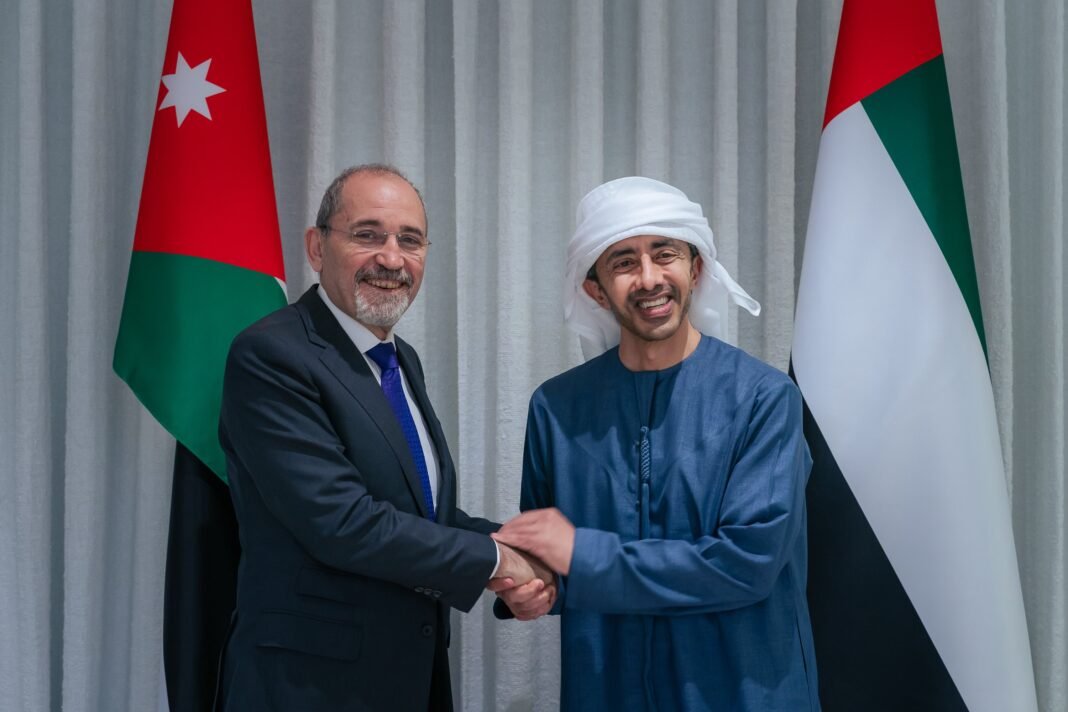

At a time of mounting regional instability and shifting geopolitical dynamics, the meeting between , Minister of Foreign Affairs of the United Arab Emirates, and , Deputy Prime Minister and Minister of Foreign Affairs of Jordan, stands out as a strong signal of strategic coordination between two key Arab diplomatic actors.
Far from being a routine diplomatic engagement, the discussions reflect a shared determination by Abu Dhabi and Amman to deepen their cooperation in response to increasingly complex regional challenges, where security, energy, and economic concerns are closely intertwined. Both ministers, central figures in shaping their countries’ foreign policy, conducted a comprehensive assessment of ongoing developments across the Middle East.
Regional security featured prominently in the talks. The two leaders emphasized the importance of safeguarding international maritime routes, which are vital to global trade, as well as ensuring the stability of energy supplies in a context of heightened tensions that could disrupt global economic balances.
In this regard, Abdullah bin Zayed and Ayman Safadi underscored the urgent need to prioritize diplomatic channels and multilateral initiatives to contain escalation risks. They advocated for strengthened regional and international dialogue, promoting an approach centered on de-escalation, cooperation, and sustainable political solutions rather than confrontation.
The meeting also addressed broader international efforts aimed at stabilizing the region. Both ministers stressed the importance of coordinated global action to effectively respond to the multifaceted challenges facing the Middle East, highlighting diplomacy as a critical tool for crisis prevention.
The Palestinian issue was another key focus of the discussions. The two sides reviewed the latest developments in Gaza, the West Bank, and Jerusalem, calling for increased humanitarian support for civilians and renewed efforts toward a credible political process leading to a just and lasting solution.
Beyond immediate crises, the meeting reflects the positioning of the United Arab Emirates and Jordan as moderate and pragmatic diplomatic actors committed to regional stability. Their coordinated approach underscores a shared ambition to play an influential role in shaping regional dynamics through dialogue and balanced diplomacy.
Ultimately, this high-level exchange confirms that cooperation between Abu Dhabi and Amman extends beyond bilateral relations, forming part of a broader vision aimed at regional stabilization. Through the leadership of their foreign ministers, both countries seek to actively contribute to diplomatic solutions to the Middle East’s ongoing challenges, at a time when political pathways remain essential to preventing further escalation.





