
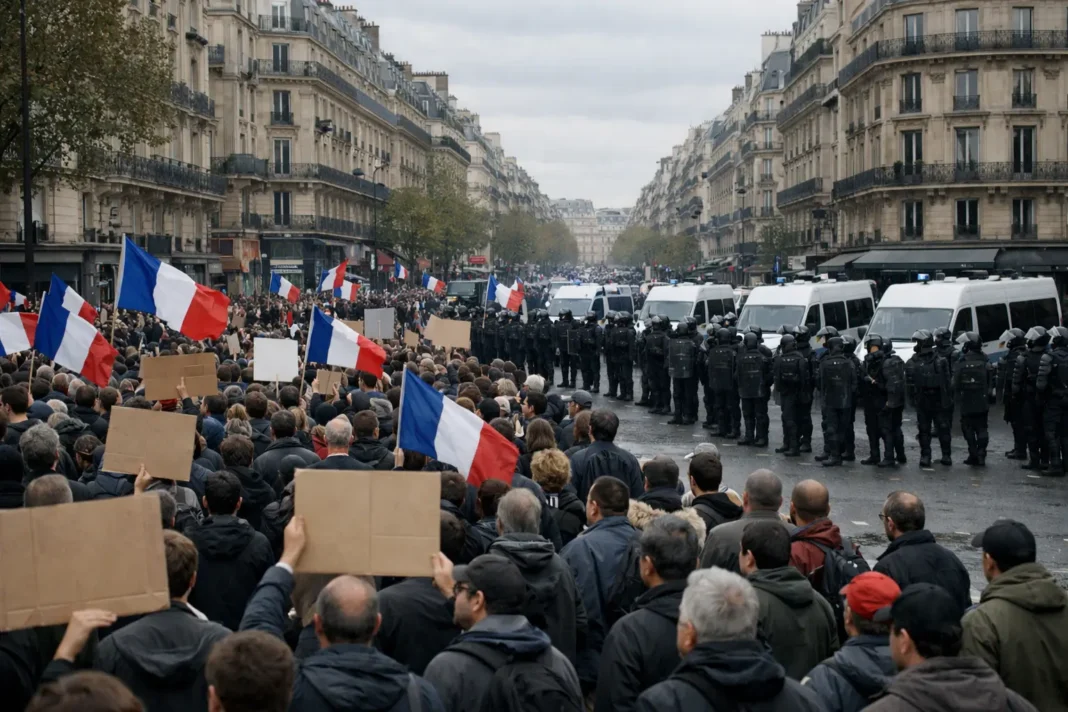

Nearly 1,000 people were arrested in France after clashes followed another day of large-scale demonstrations, marking a new escalation in a protest movement that has brought hundreds of thousands of people into the streets. The arrests underline the scale of the public order challenge facing the country after repeated nationwide mobilisations drew large crowds across multiple cities.
The demonstrations were not limited to isolated gatherings. They formed part of a broad wave of protests that again placed pressure on public authorities, transport networks and local security services. While the central fact remains the size of the turnout, the clashes and arrests shifted attention from the marches themselves to the state’s capacity to manage mass mobilisation without further confrontation.
The unrest also carried a wider European dimension. Demonstrations took place in other countries, showing that the issues driving people into the streets in France have resonance beyond national borders. Parallel protests across Europe do not create a single unified movement, but they highlight a shared climate of political tension and social frustration in several states at the same time.
For France, the immediate consequence is a renewed test of confidence between citizens, public institutions and law enforcement. Large demonstrations can remain a legitimate expression of democratic pressure, but widespread arrests after clashes complicate the political environment and increase scrutiny of crowd control, policing and the government’s response. The scale of participation suggests that the protest movement remains a central national issue rather than a passing episode.
The coming days will be closely watched for signs of either de-escalation or further mobilisation. With hundreds of thousands already taking part and nearly 1,000 people detained, the balance between maintaining order and preserving the right to demonstrate has become one of the defining questions facing French public life at this stage of the crisis.






