
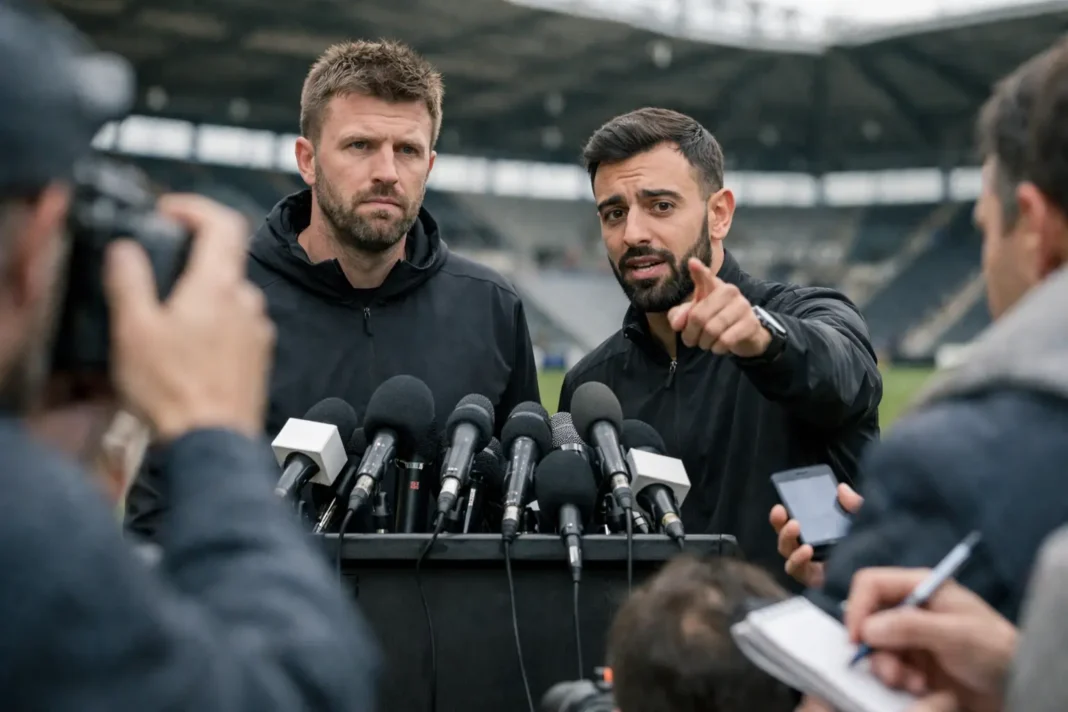

Manchester United captain Bruno Fernandes blamed Michael Carrick for the tactical approach that preceded a 4-1 defeat by Como in the Champions League. The criticism from the club skipper came in the immediate aftermath of the match and focuses squarely on the coach’s choices during the game. The result and the captain’s public stance mark a notable moment of internal discord for the club.
The scoreline itself underlines the scale of the setback: a four-goal concession with only one reply leaves little room for ambiguity about the outcome. Observers have noted that when a team’s captain directly attributes blame to the head coach for tactics, it elevates the issue beyond the usual post-match critique. For a squad competing at European level, such an exchange between leadership figures is likely to dominate headlines and fan conversations in the days that follow.
Implications extend beyond this single fixture. Tactical questions raised by Bruno Fernandes affect perceptions of match preparation, in-game adjustments and player roles. For Michael Carrick, who occupies the touchline responsibility, the intervention by his captain introduces added pressure from supporters and internal stakeholders to address the strategic shortcomings identified. The episode also casts attention on team morale and cohesion ahead of forthcoming fixtures.
How the club responds to the situation will determine whether the episode prompts a short-term reset of ideas or a longer debate about leadership and direction. Supporters and analysts will be watching subsequent team selections, tactical shape and public communications from both the playing group and the coaching staff. For now, the confirmed facts are the 4-1 defeat by Como in the Champions League and the captain’s attribution of fault to his head coach—elements that together have created a fresh focal point in the club’s season.






