


Refusing to eat the last piece of food from a shared plate is one of the least understood social gestures. This behavior is often perceived as polite, receives praise, and is even taught to children as a virtue. However, psychologists view things completely differently, according to an article published in the scientific journal Space Daily.
According to the article, many people believe that table manners are simply a matter of politeness, but this perception can crumble when seeing a six–year–old child hesitate to eat the last piece of garlic bread, while three adults pretend that they do not want it either.
In many homes, the “last bite” ritual has a clear role. For example, the mother may automatically be the first to refuse it, and the father may take it, or he too may refuse it depending on the house rules and who is allowed to ask for it. Sometimes it is offered to grandparents, and sometimes the guest is forced to accept it as a kind of social obligation. Meanwhile, the children observe these details and understand something deeper than any traditional rule of etiquette.
Determining a person’s status
Children learn that shared food is a simple measure of a person’s status. The person who takes the last piece without hesitation may be the most important or the least important person at the table, and the difference is usually understood from the context. Thus, the child learns that refusal can sometimes be an act of generosity and sometimes a form of self–sacrifice, despite the apparent similarity between the two situations.
Children are considered excellent anthropologists, Space Daily explains. According to the principles of social learning, norms are transmitted without direct instruction, confirming what parents know instinctively, as children imitate actions more than words.

Self–denial as a measuring tool
In homes suffering from a shortage of resources – whether real or imagined – the scenario is predictable: The provider is the one who has the right to want, while the one who receives the sustenance pretends not to desire it.
Even in affluent households, this behavior may persist if one of the parents grew up in a culture of scarcity. Therefore, refusing the last item does not necessarily reflect genuine generosity, but rather an assessment of a person’s status within the family. Space Daily notes that there are interesting studies in behavioral neuroscience regarding how behavior related to social status is encoded and expressed in social animals.
A team of researchers from the University of Wyoming published a study in 2025 that identified a specific neural circuit controlling hierarchical behavior in mice, showing that what appears to be “deference” or “self–control” is actually a sophisticated system for reading social status, where behavior changes based on perceived rank.
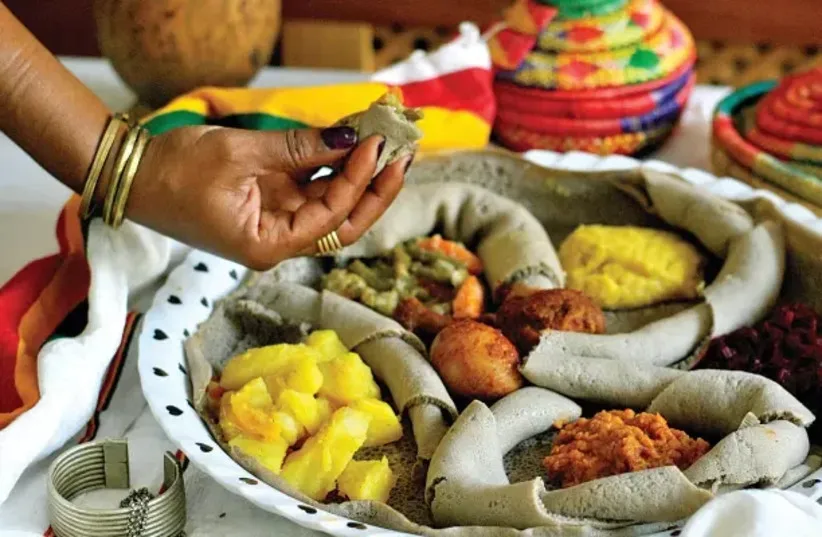
Etiquette procedures often overlook the fact that refusing the last piece of food is rarely neutral; instead, it often expresses something related to social status, entitlement, and self–sacrifice. This is a behavior learned in childhood that continues to be carried into various everyday situations.
According to Space Daily, it is possible to distinguish between genuine politeness and programmed politeness through body language. Genuine politeness is light and decisive; the person declines the last portion and moves on without further thought. As for programmed denial, it carries with it a hidden tension, and the thought of the matter returns later, accompanied by a vague feeling of hunger or discomfort.
Source:
www.jpost.com



