
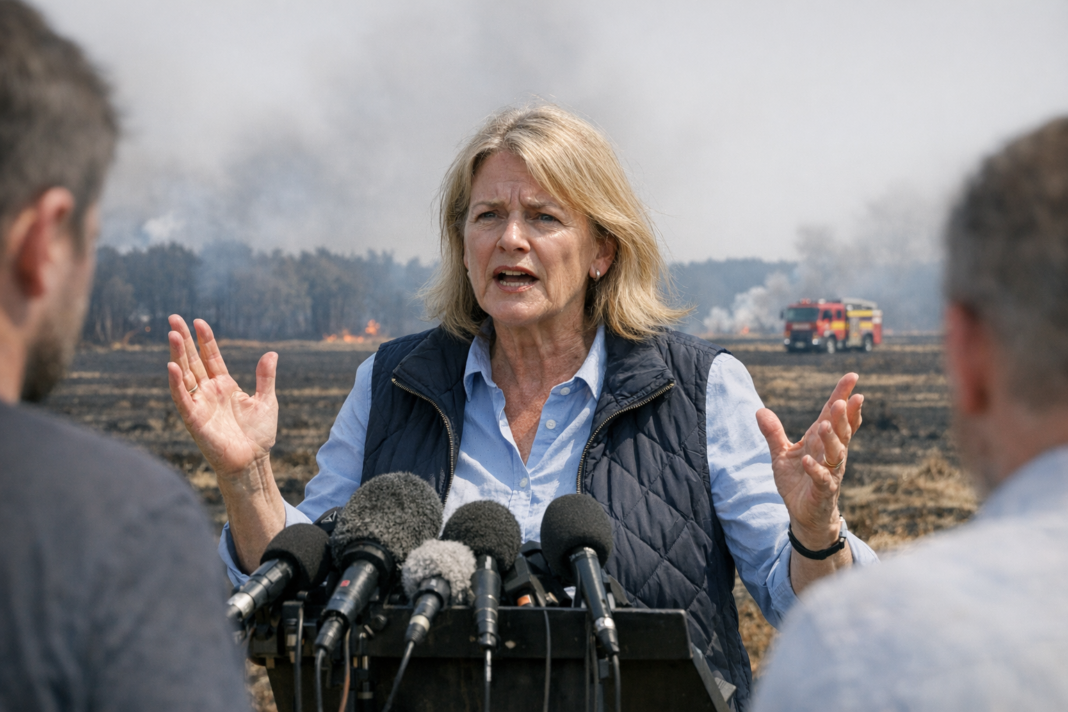

Summer’s record temperatures have reignited a tense public discussion after Richard Tice, deputy leader of Reform UK, suggested that the heat should be met with resignation rather than intensified policy action. The comment arrived against a backdrop of unusually high temperatures across the United Kingdom and has focused attention on how political choices balance immediate economic concerns with the challenges posed by climate change.
The extreme heat this season has coincided with a series of tangible impacts: localised wildfires in communities such as Stourbridge, damage to harvests in several agricultural areas, and sustained pressure on emergency services. These developments have produced direct costs for households, businesses and public authorities and have required rapid mobilisation of resources to protect lives and property.
The intervention by the deputy leader has framed the issue as a trade-off between short-term comforts and longer-term planning, prompting discussion among policymakers and commentators about priorities for public spending and regulation. The debate covers multiple policy areas, including land and water management, support mechanisms for affected industries, and investment in infrastructure to reduce vulnerability to further heat events.
What emerges from the current exchange is a set of practical questions for legislators and local authorities: how to allocate budgets for emergency response, which measures to prioritise to protect supply chains and agriculture, and how to integrate heat resilience into planning without undermining economic stability. The choices taken now will shape how communities cope with future episodes of extreme heat and their fiscal implications in the years ahead.





