

The available indicators suggest that, if the reported operational pattern reflects conditions on the ground, the United States has entered a new phase of its campaign against the Islamic Republic.
The objective is no longer limited to degrading Iran’s military capabilities; it now appears increasingly focused on eroding the regime’s capacity to govern, sustain logistics, and finance its war effort.
The selection of targets – including bridges, ports, electrical infrastructure, and transportation networks – signals a transition from a conventional military campaign to a broader strategic effort aimed at disrupting the state’s ability to function.
From an intelligence perspective, the evolving target set indicates that Washington has redefined the regime’s center of gravity. Missile bases and IRGC command facilities remain important, but they are no longer the sole priority.
Oil export infrastructure, transportation corridors, southern ports, and the national energy network have become critical components of the campaign.
Such a shift is typically observed when the objective expands from destroying military assets to increasing the adversary’s long-term strategic costs and reducing its capacity to regenerate military power.
Iran’s response, meanwhile, suggests that Tehran continues to rely on a strategy of widening the battlefield. Attacks or threats directed toward Qatar, Bahrain, Kuwait, Jordan, Syria, and maritime shipping routes appear intended less to secure military superiority than to impose political and economic costs on the United States and its regional partners while reinforcing deterrence.
Nevertheless, these actions do not necessarily demonstrate strategic initiative; they may equally reflect the regime’s narrowing range of viable options.
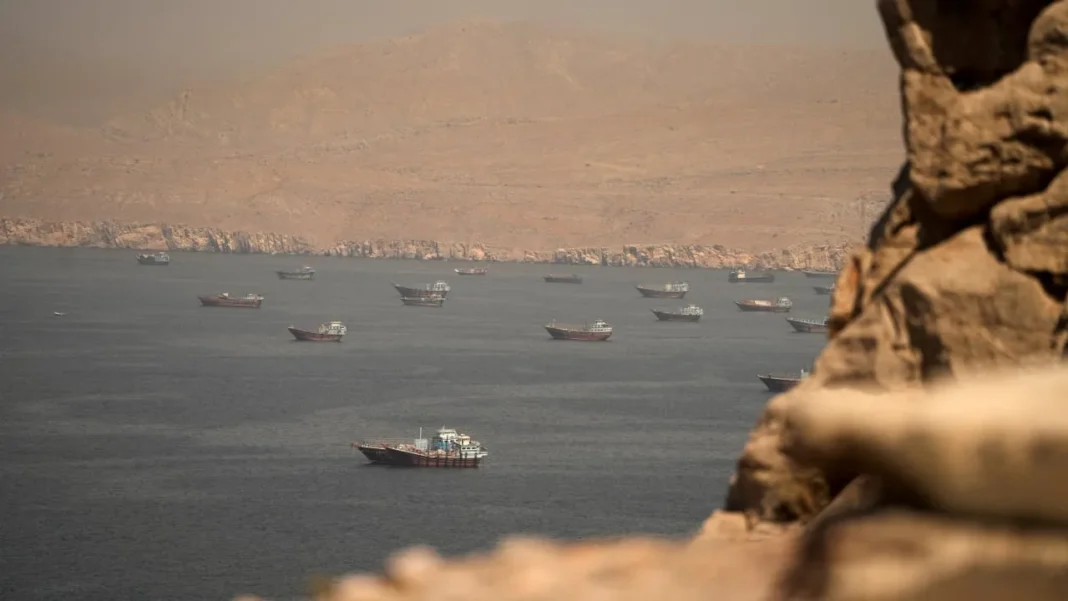
The most consequential variable in this conflict remains Kharg Island and the security of Gulf energy routes. Any sustained operation against Iran’s principal oil-export infrastructure, or any major disruption to maritime traffic, would transform the conflict from a regional military confrontation into a global energy and commercial shipping crisis.
Financial markets are already beginning to price in that possibility as concerns over long-term supply disruptions continue to grow.
If this trajectory continues, the conflict will increasingly evolve into a campaign of strategic attrition, in which success will be measured not simply by the destruction of military targets but by each side’s ability to preserve the essential functions of government, economic resilience, logistical capacity, and political cohesion.
Whether this process ultimately leads to negotiations, behavioral change, or a broader escalation remains uncertain.
Eventual collapse
From an intelligence standpoint, the probability of the Islamic Republic’s eventual collapse is higher today than at any previous stage, although neither its timing nor its pathway can be predicted with certainty.
War damage, deteriorating infrastructure, mounting economic pressure, inflation, communication restrictions, and sustained domestic repression are collectively eroding the regime’s ability to govern while further weakening public confidence.
External military pressure alone, however, is unlikely to bring about regime collapse. History suggests that governments typically enter the final phase of systemic failure only when military and economic pressure converges with nationwide civil unrest, elite fragmentation, declining loyalty within the security apparatus, and the emergence of a credible political alternative.
As long as the coercive institutions remain cohesive and the leadership of the Islamic Revolutionary Guard Corps continues to view its survival as inseparable from that of the regime, Tehran may retain the ability to prolong its rule despite severe economic deterioration.
The decisive factor is not the destruction of military facilities but the gradual loss of the state’s capacity to govern. Should prolonged power outages, disruption of ports, declining oil exports, fiscal exhaustion, and the inability to finance state institutions persist, the regime’s relationship with its military establishment and regional proxy networks would inevitably weaken.
At that stage, the Islamic Republic may still possess weapons, but it would increasingly lose the institutional capacity to administer the country, sustain its security apparatus, and reproduce political authority.
A plausible assessment is that, before reaching such a breaking point, the regime will likely intensify domestic repression, expand executions, tighten control over communications, militarize urban areas, and seek a limited diplomatic arrangement with Washington in an effort to buy time and ease economic pressure without fundamentally altering its ideological foundations.
The long-term trajectory of a politically exhausted and structurally weakened system points toward eventual collapse. Yet that collapse is unlikely to be immediate, automatic, or produced by military strikes alone.
The decisive moment will emerge only when sustained military pressure, economic insolvency, nationwide public mobilization, fragmentation within the security establishment, and the central government’s diminishing ability to command and enforce authority converge.
At that point, the Islamic Republic may still appear intact from the outside, while, in strategic terms, it will already have ceased to function as a viable governing system.
The writer is a Middle East political analyst. His book, Tehran’s Dictator, examines the theocratic era of Ali Khamenei (1989-2026). Follow him on X: @EQFard.
Source:
www.jpost.com





