
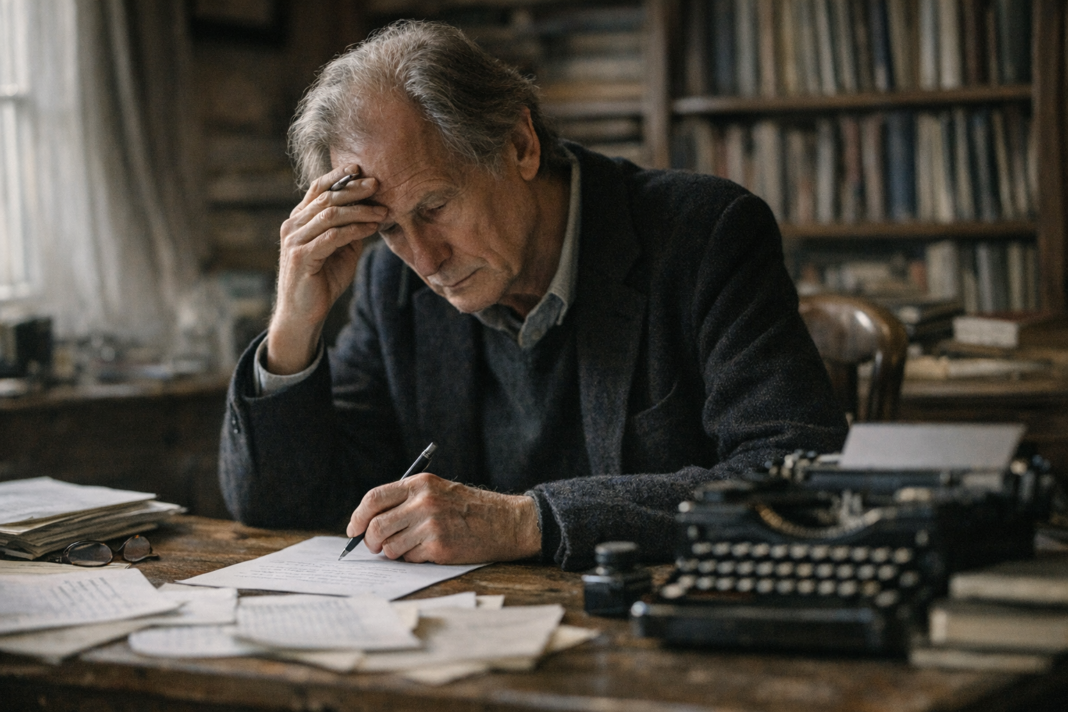

Bill Nighy, speaking from north-west London, describes his new film & Sons and the eccentric, reclusive novelist at its centre. In the film the patriarch AN Dyer is presented as a withdrawn, legendary author whose presence upends a family gathering. The picture contains an unconventional twist that moves the story toward speculative territory; filmmakers and cast are avoiding plot disclosure while promoting the film’s exploration of authorship and family dynamics.
AN Dyer is characterised on screen as an irascible, sofa-bound figure who snaps that he does not “do phonecalls,” a line that establishes his curmudgeonly distance from the outside world. The performance draws on familiar literary archetypes and critics have noted echoes of writers such as JD Salinger and the dishevelled, eccentric figure typified by Catweazle. Off camera, Bill Nighy presents a different persona: he says he spends considerable time on the phone, is an enthusiastic texter and enjoys browsing bookshops when his schedule allows.
Bill Nighy also recounts earlier ambitions and episodes from his life, including a youthful decision to go to Paris to pursue writing and the unexpected difficulties that followed. He has described those years as formative, calling some ambitions “cliched” while acknowledging the practical hardships he faced. On lighter notes he has discussed communication habits such as his selective use of emojis — citing favourites like the flamingo, purple dahlia and leaping shark — and has expressed a dislike for conventional smiley faces. He has also spoken publicly about disliking working lunches and, in a separate remark, about admiring physical feats such as the splits in popular performance.
& Sons is being presented to audiences as a film that interrogates reputation, creativity and familial obligation through a character study of a celebrated writer. The production team and cast including Bill Nighy have been participating in interviews and events to discuss the film’s themes without revealing central plot developments. Viewers encountering the film will find a blend of literary portraiture and unexpected narrative elements that frame the central family confrontation.






