
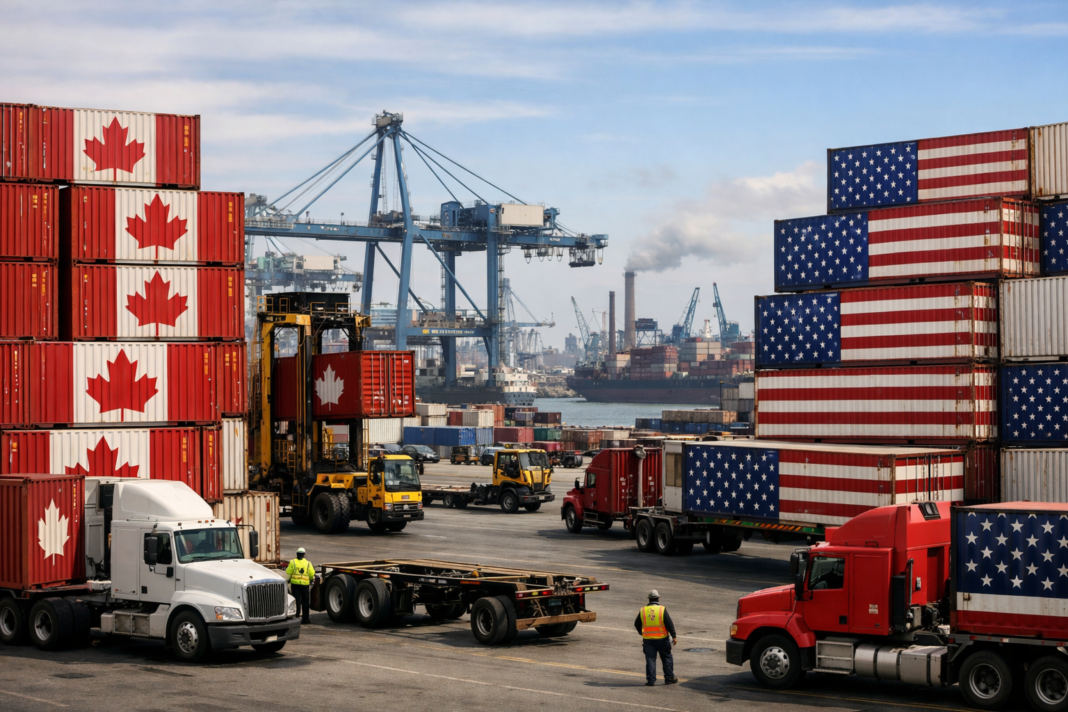

Canada announces dollar-for-dollar retaliatory tariffs on a range of imports from the United States, with levies reaching as high as 50% on selected products. The measures apply to diverse categories including steel, furniture, fresh tuna and makeup, signalling a further escalation in a bilateral trade dispute that has been unfolding between the two neighbours.
The phrasing of the response — described by Ottawa as “dollar-for-dollar” — indicates that the new duties are intended to match, in commercial impact, measures previously imposed by the United States. The announced list targets both industrial inputs and consumer goods, raising concerns about immediate disruptions to cross-border supply chains and additional costs for importers and retailers who source materials or finished products from the other side of the border.
The latest round will reverberate through sectors that are already sensitive to tariff changes. Producers of steel and furniture could face higher input costs and altered market access, while importers of perishable items such as fresh tuna and firms relying on cosmetic imports must reassess logistics and pricing. For businesses operating in integrated North American supply chains, the measures add uncertainty to planning, procurement and inventory strategies at a time when firms are already managing inflationary pressures and shifting demand patterns.
Beyond immediate commercial effects, the move adds a new chapter to the broader trade tensions between Canada and the United States. Policymakers, industry groups and trade analysts will be monitoring responses from affected companies and any subsequent steps by both governments. The new tariffs are likely to shape near-term negotiations and could influence the timing and content of discussions aimed at resolving outstanding disputes in the bilateral economic relationship.






