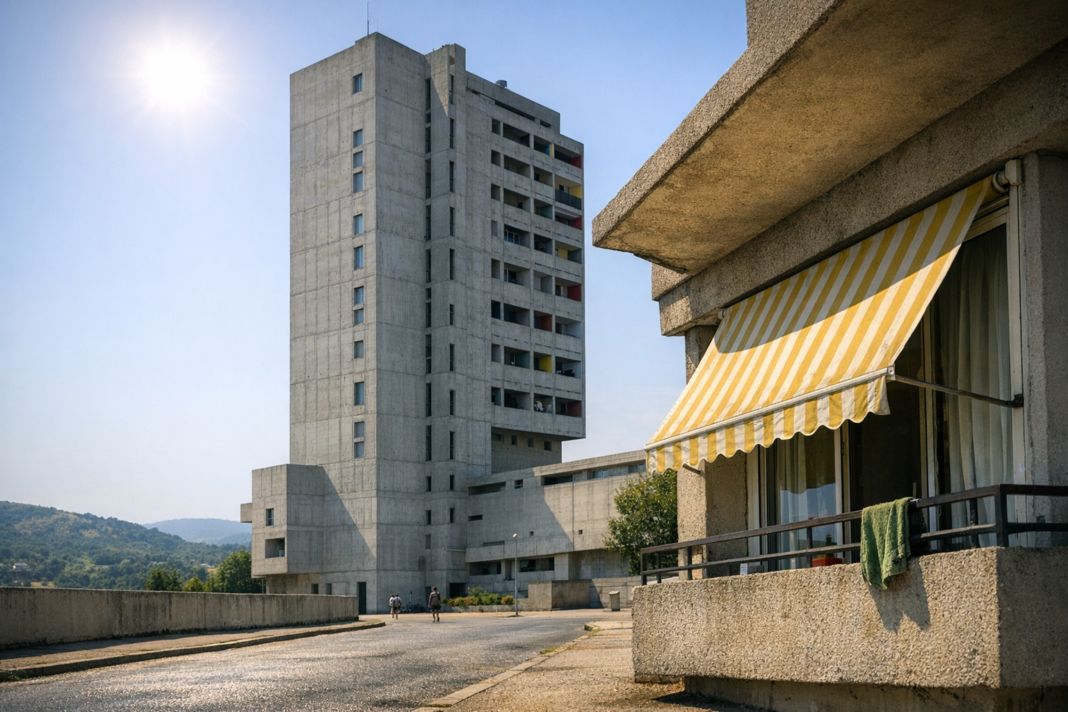

Le Corbusier’s Unité d’Habitation in Firminy is both a landmark of modernist architecture and a lived social housing block where residents now face sweltering indoor conditions. The concrete tower, the architect’s final project, allocates roughly two-thirds of its apartments to HLM social housing and has protected elements: its façade and roof were listed as monuments historiques in 1993. The building stands on a hill above a town that has experienced industrial contraction and demographic decline over recent decades, yet its significance ensures close regulatory scrutiny over any physical changes.
Over recent summers tenants have reported interior temperatures reaching around 40°C, a level that affects health, comfort and daily living. At the same time, heritage protections and related building rules have limited visible alterations to the exterior, with practical measures such as external shutters difficult to approve for protected façades. The combination of exposed concrete, limited passive shading and regulatory constraints has left many apartments vulnerable to heat waves that are increasing in frequency and intensity.
The situation at Unité d’Habitation presents a concrete policy dilemma: how to reconcile obligations to preserve architectural heritage with the immediate need to ensure habitable conditions for residents. Solutions discussed in professional and municipal forums include targeted retrofit measures that respect the building’s character while reducing indoor heat: improved ventilation, discreet external shading, interior insulation where appropriate, and selective mechanical cooling in common areas or vulnerable dwellings. Funding mechanisms and regulatory pathways that permit sensitive adaptation of listed buildings are central to these options, as is technical advice from conservation engineers and public health authorities.
Firminy’s tower is likely to be an early test case for how French heritage law and social housing policy respond to climate-driven challenges. Resolving the tension between conservation and human needs will require coordinated decisions by heritage agencies, local authorities and social housing managers, supported by clear technical guidance and financing. The outcome will influence not only the futures of residents in this landmark but broader approaches to protecting both architectural legacy and occupant wellbeing in an era of rising temperatures.