
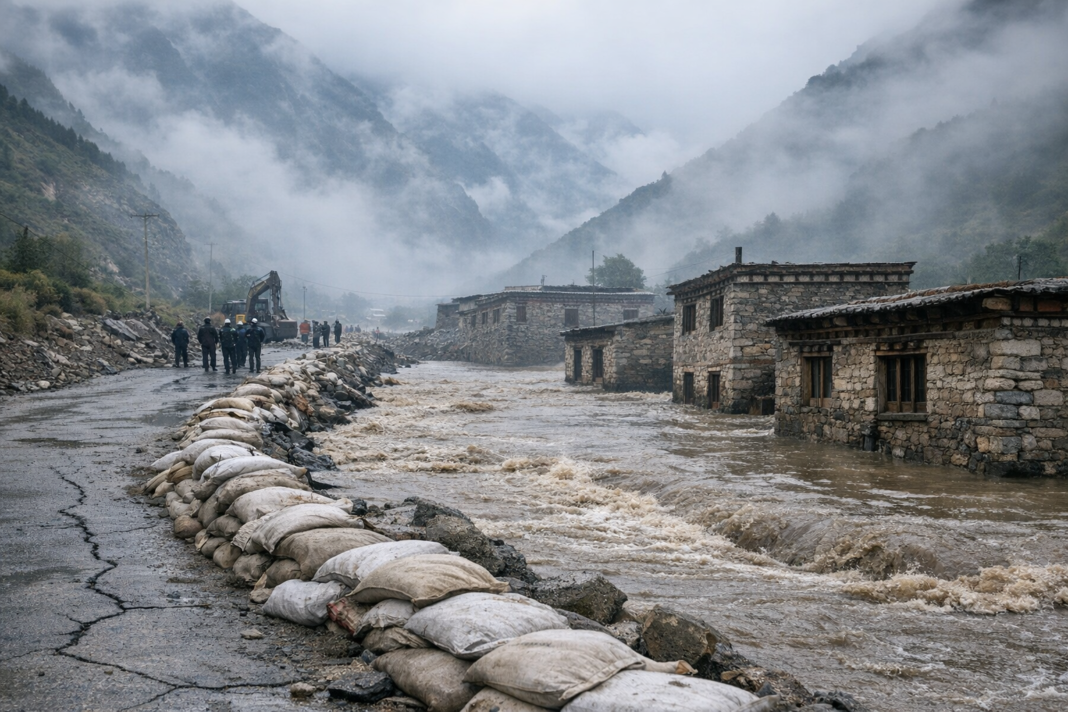

Graphic flood footage remains hidden from public view in parts of Tibet, limiting what residents, families and outside observers can verify about the scale of recent flash flooding and the fate of people affected. Available visual material appears fragmented: some clips circulate beyond mainland platforms while much of the most dramatic imagery is not widely accessible to users inside China. That information gap has left a basic understanding of casualties and damage incomplete in the public sphere.
Researchers and media analysts note that the absence of broadly shared footage complicates efforts to form a clear picture of the events on the ground. Chinese state media and local channels have published official briefings and some images, but the most graphic recordings—often captured on mobile phones—remain out of public circulation within domestic networks. This pattern affects how quickly independent verification can be carried out and how reliably outside outlets can corroborate reports from the region.
The limited visibility of footage has practical consequences. Families seeking information about missing relatives face barriers to confirmation, and humanitarian coordination can be hindered when outside responders rely on partial or second‑hand accounts. The scarcity of available imagery also reduces the ability of researchers and rights monitors to assess patterns of risk, the adequacy of early warnings and the immediacy of search-and-rescue operations in affected communities.
Calls from experts for clearer, documented reporting emphasize the need for unhindered access to affected areas and to verifiable visual records to inform relief and long-term recovery. For local communities and international observers alike, transparency about the sequence and impact of the floods is essential to plan assistance and to address safety concerns. Greater availability of reliable information would help families, humanitarian organizations and authorities coordinate responses and understand lessons for future flood preparedness in the region of floods and beyond.







