
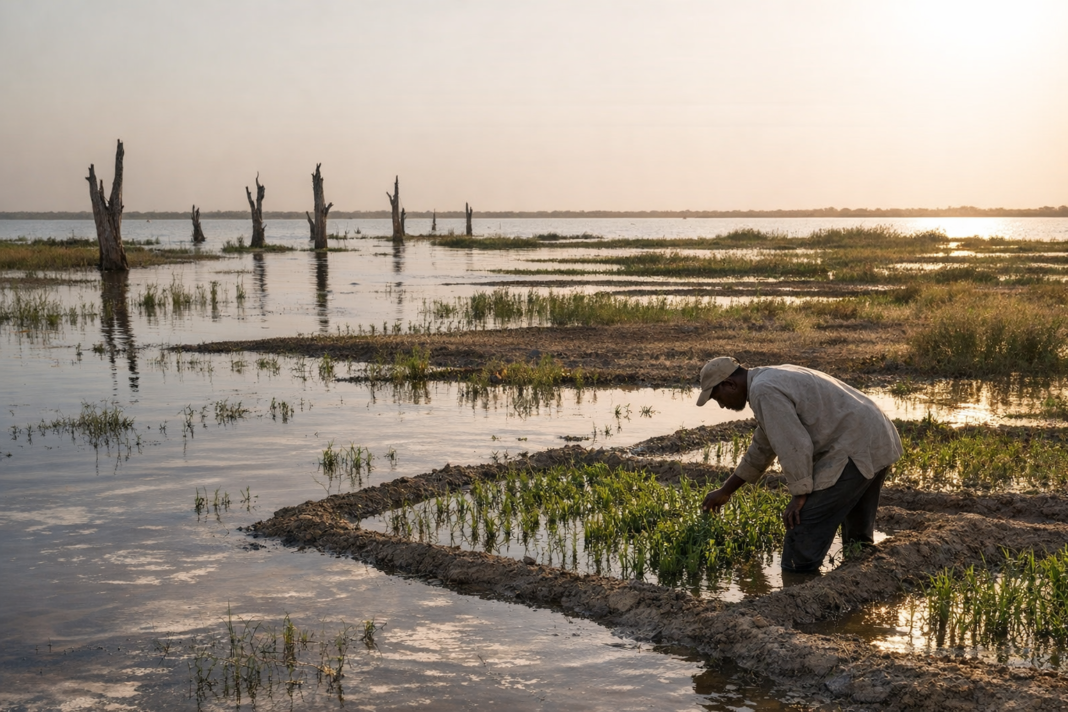

Sahel region is greening as groundwater levels and surface waters have risen across wide areas of the semi-arid belt, restoring wells and reviving landscapes long associated with drought. Researchers report mean water tables rising by roughly 13 feet in parts of Niger and a substantial rebound in Lake Chad, while field teams have documented returning wildlife and higher local irrigation potential, according to hydrogeologist Richard Taylor of University College London.
The recovery reflects a combination of climatic and land-surface changes. The West African monsoon has strengthened and extreme storm clusters known as mesoscale convective systems now deliver concentrated downpours that promote rapid runoff into rivers, wadis and inland depressions that recharge aquifers. An assessment by the Intergovernmental Panel on Climate Change links part of this shift to North Atlantic warming driven by global heating and a reduction in sulphate aerosols from coal burning in Europe and North America. Satellite gravity data from NASA corroborate growing terrestrial water storage across the region.
Local human actions are amplifying those climatic trends. Programs including the Great Green Wall and revived traditional water-harvesting techniques — contour stone bunds, zai pits and crescent basins — improve soil moisture and retention. International support such as the World Bank regional recovery initiative PROLAC and the abandonment or decline of large irrigation schemes in some basins have also altered river withdrawals, increasing flows into wetlands and groundwater reservoirs.
The hydrological changes are producing measurable social and ecological effects. Conservationists report reintroduced populations of the scimitar-horned oryx and other fauna returning to restored wadis and oases. Farmers in parts of Chad and Niger have expanded plantings and reported higher yields after accessing groundwater. At the same time, more intense storms have increased flood risk, causing urban inundation and damage to mud-brick housing during recent monsoon seasons.
Looking ahead, climate models indicate a continued rise in average and extreme rainfall across much of the Sahel, with regional variability linked to El Niño and other drivers. Hydrologists caution that variability will persist even as overall groundwater recharge trends upward, underlining the need for measured water management and infrastructure planning to balance opportunity and flood risk, a conclusion echoed by Richard Taylor.






