
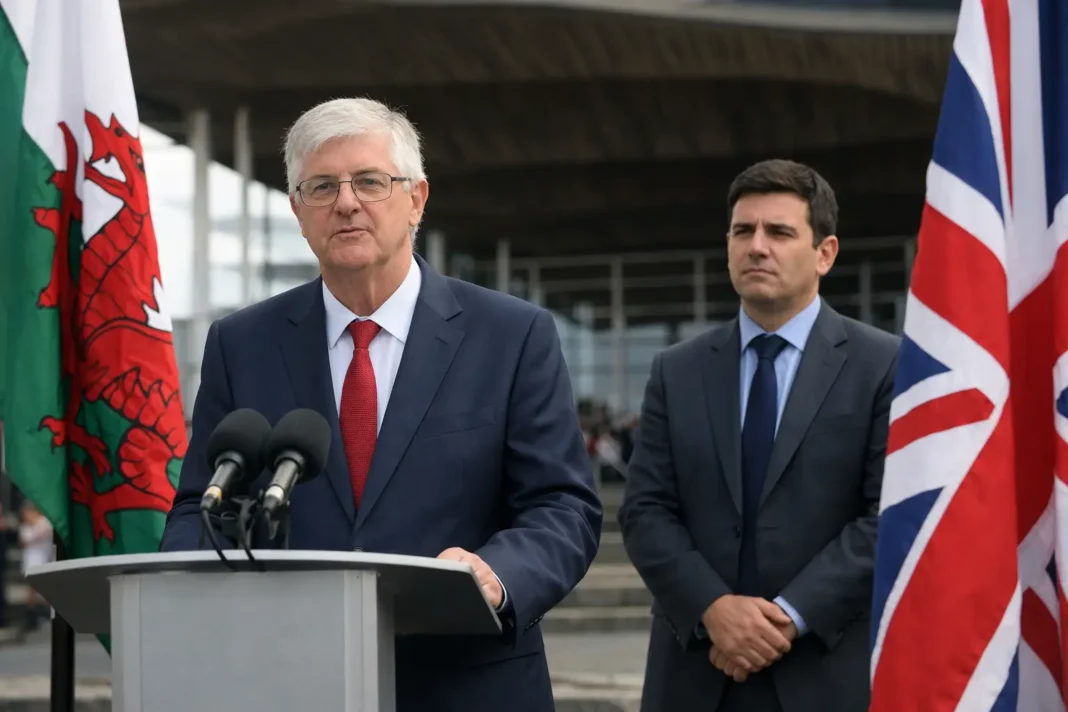

Wales seeks Scots-style powers as the newly leading party in Cardiff presses London for clearer parity with Holyrood, and hopes are pinned on Westminster dynamics led by Andy Burnham. At the recent conference of Plaid Cymru, which now heads the Welsh government, party figures signalled an openness to negotiating with Labour ministers rather than pursuing unilateral measures, framing their demand in straightforward terms: give Wales the package of devolved powers already held by Scotland.
The Welsh first minister, Rhun ap Iorwerth, has expressed a renewed confidence that a UK leadership willing to transfer meaningful competences could reshape relations between Cardiff and Westminster. That sense of possibility contrasts with his reported skepticism under the previous UK leader. Campaigners and ministers in Cardiff describe the ask as a technical alignment of institutions and authorities rather than an ideological break, seeking comparable autonomy over matters currently exercised in Edinburgh.
Labour’s internal balance will be decisive. Figures within the party who are cautious about further devolution present an obstacle that proponents in Wales say must be addressed if negotiations are to make substantive progress. The stance of Labour ministers and negotiators will determine whether a route to parity can be constructed through legislation or intergovernmental agreements, and whether any transfer of powers requires primary parliamentary approval at Westminster.
The outcome carries consequences for governance across the United Kingdom. A move to grant Wales the same devolution settlement as Scotland would alter fiscal and administrative responsibilities for the Welsh government and could recalibrate political incentives in both Cardiff and London. Negotiations now centre on practical pathways to parity, with Welsh ministers signalling preference for a negotiated settlement that preserves institutional stability while extending the scope of devolved decision-making.





