
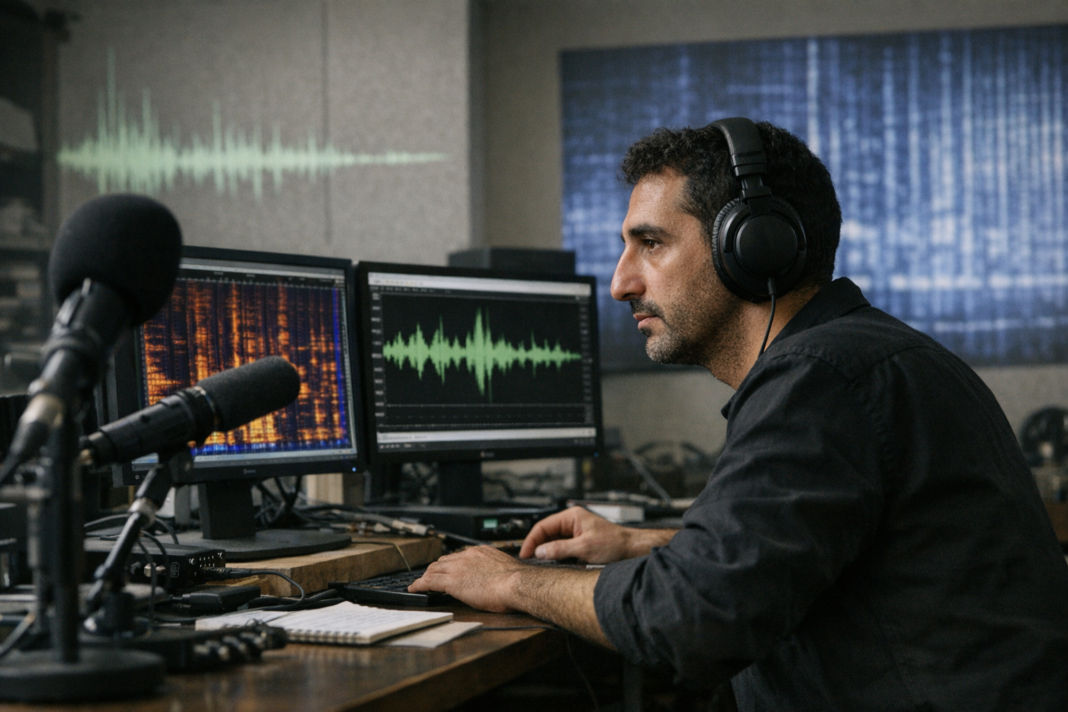

Lawrence Abu Hamdan moves fluidly between the white cubes of contemporary art and the technical rigour of human rights investigation. A 2019 Turner Prize laureate, he has developed methods that treat recorded sound as a form of documentary evidence. In 2023 he founded Earshot, an organisation that applies acoustic forensics to alleged abuses, and his practice continues to be visible in major exhibitions, including projects presented at the Venice Biennale.
Through Earshot, Abu Hamdan and collaborators undertake analyses that range from trajectory assessment of gunfire to the identification of weapons and crowd-control devices from recordings. Teams combine witness testimony, audio analysis and spatial modelling to establish timelines and sound profiles in contested episodes, such as attacks affecting emergency workers in Gaza or disturbances at a silent vigil in Belgrade. The work sits at the intersection of art, acoustics and legal documentation rather than in the realm of speculative commentary.
His earlier, formative research was carried out in partnership with Forensic Architecture for Amnesty International. In that investigation survivors from Syria’s Sednaya prison recounted sensory memories — sounds of doors, footsteps and other low-level noises — that were analysed to reconstruct aspects of the prison’s layout and daily conditions. Those sonic testimonies provided a distinct evidentiary strand at a time when direct visual documentation was scarce, illustrating how auditory detail can complement other forensic sources.
As debates continue about the admissibility and limits of acoustic evidence, Abu Hamdan’s work highlights practical consequences for reporting and accountability. Institutions, advocates and researchers engaging with sound-based methods face technical and ethical challenges — from chain-of-custody issues to contextual interpretation — but the growing use of acoustic analysis marks a broadened toolkit for documenting violations. Whether presented in galleries or in investigatory reports, the outputs of Earshot and allied teams underscore a shift: listening, when methodically applied, can produce verifiable information that informs public records and rights-based inquiries.





