
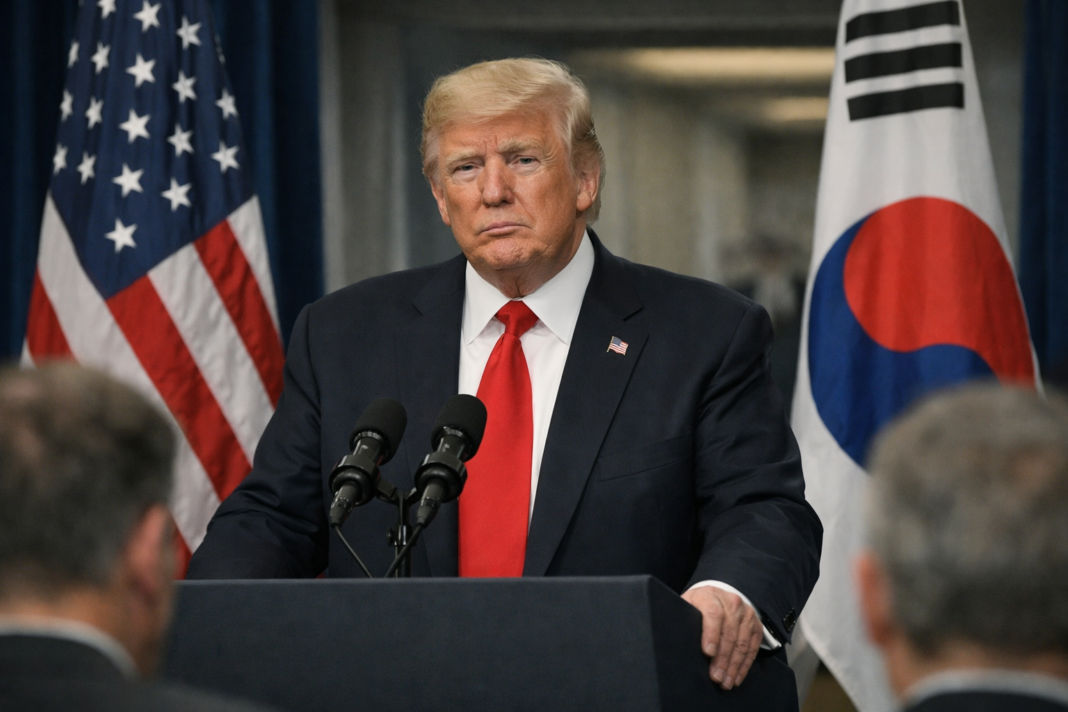

Mr. Trump announced that the United States will scale back large-scale military exercises with South Korea, saying the move followed Seoul’s decision to stay out of the recent conflict with Iran and that he was influenced by a “very good relationship” with North Korea’s leader. The statement, delivered by the US president, frames the reduction in drills as both a diplomatic response and part of a broader recalibration of Washington’s approach to regional tensions.
Donald Trump and his advisers presented the change as a shift away from the large, annual command-post and field exercises that have been a central feature of the US-South Korea alliance for decades. Those exercises have been viewed by military planners as a key element of deterrence on the peninsula; analysts say any sustained reduction could alter training rhythms and interoperability between US forces and their South Korean counterparts. The White House has not published a detailed timetable or scope for the planned downsizing; official comment and implementation steps are expected to follow.
The announcement underscores how bilateral security practices are increasingly shaped by diplomatic calculations beyond the Korean peninsula. Mr. Trump’s reference to his rapport with North Korea and Seoul’s posture on the Iran conflict links three theatres of policy that Washington must manage simultaneously. Regional capitals and alliance partners will be watching for clarification on what types of exercises will be reduced and whether alternative training or assurance measures will be provided to mitigate any perceived erosion of deterrence.
Officials in Seoul and Washington face the task of reconciling alliance commitments with evolving political priorities. The coming days should reveal whether the change is a temporary, symbolic scaling back or the start of a longer-term realignment of joint training programs. Observers note that decisions about exercises often involve consultations with allies and the Pentagon; for now, public information on the scale and timeline of the reduction remains limited, leaving open questions about the implications for readiness and regional security.






