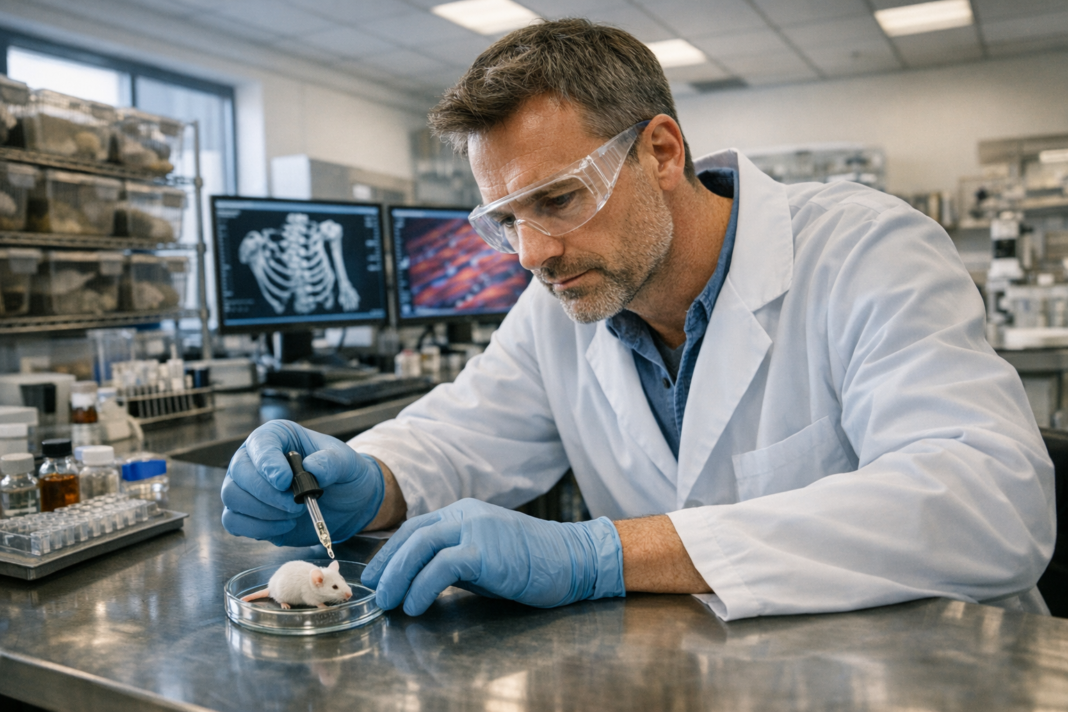

Experimental compound AP503 produced a marked increase in bone strength in preclinical mouse studies, researchers report. The treatment worked by engaging a specific cellular receptor, leading to more robust bone formation while simultaneously slowing the processes that cause bone loss. The finding adds to a growing body of laboratory research seeking therapies that can both rebuild skeletal mass and limit deterioration linked to ageing.
The compound operates through GPR133, a receptor that appears to shift cellular activity toward bone formation. In the treated animals, markers of new bone growth rose and measures consistent with reduced bone resorption declined. Investigators also observed effects on skeletal muscle in the same experimental setting, suggesting the intervention may influence musculoskeletal health more broadly than bone alone.
The dual impact on bone and muscle is notable because age-related declines in both tissues commonly contribute to frailty and fracture risk. A therapy that simultaneously enhances bone formation and supports muscle strength could change how clinicians approach conditions such as osteoporosis, which currently relies on agents that predominantly slow bone loss rather than rebuild lost mass. At this stage the evidence is limited to animal experiments and cannot be extrapolated directly to people.
Further work will need to establish safety, dosing, and efficacy in human biology before any clinical application is possible. Key next steps include replication of the findings across models, investigation of long-term effects, and assessment of potential side effects. While translation from mice to humans is a complex process, the ability of AP503 to engage a defined molecular switch offers a clear pathway for follow-up studies aimed at developing new treatments for skeletal and age-related decline.