
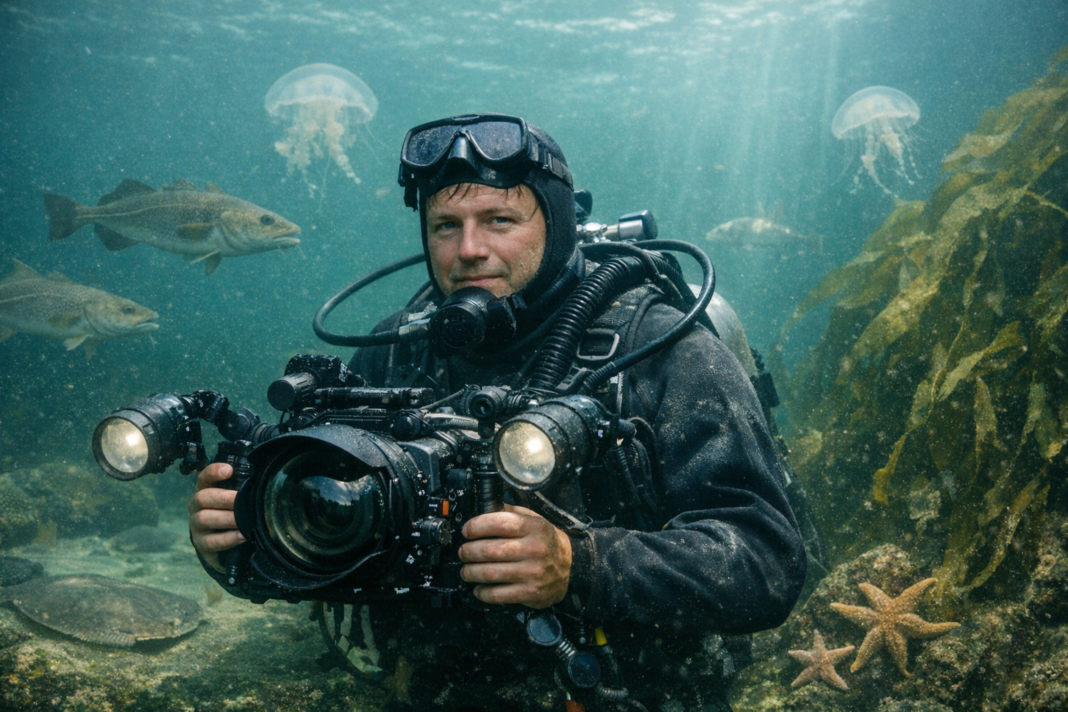

Hidden beneath grey surface waters, a different North Sea comes into view: a shifting tapestry of predators, schooling fish and benthic species that contradicts the long-held idea of a biologically sparse basin. A recent feature-length documentary, assembled from more than two decades of underwater footage, presents this assemblage in unexpected detail while also highlighting the practical hurdles that make such filming rare. Dense plankton blooms and suspended sediments routinely reduce visibility, complicating efforts to record behaviour and species interactions below the waves. The film therefore represents not just a visual reveal but the outcome of sustained technical and logistical perseverance.
Long-term commitment lies at the centre of the project. The footage was gathered by Peter van Rodijnen, a Dutch cinematographer and diver whose interest in the region was shaped by early encounters with televised ocean exploration. Over roughly 20 years, improvements in camera sensitivity, lighting and dive support expanded the range of scenes that could be captured. Nearly a decade ago, Van Rodijnen joined forces with director Mark Verkerk to shape the material into a cohesive narrative, aiming to show the continental shelf’s underwater dynamics to a broader audience.
The resulting film documents an array of species often obscured from casual coastal observation: coastal seals navigating turbid waters, large sharks moving through deeper channels, migratory tuna that visit the shelf, transient orca activity and smaller fauna such as shorthorn sculpins. By compiling repeated observations from the same sites, the filmmakers produced sequences that illustrate seasonal changes, predator–prey encounters and habitat usage. The work thus offers a rare visual record of ecosystem complexity in the North Sea, countering the notion that its nearshore waters lack diversity.
Beyond its value as a natural-history film, the collection serves as a resource for researchers, educators and planners seeking better empirical grounding for management decisions. Local communities and recreational divers along the Netherlands coast contributed access and local knowledge that made long-term observation possible. As image-making tools continue to advance, similar long-form documentation can broaden understanding of temperate shelf seas and inform discussions about conservation priorities, fisheries policy and public engagement with marine environments.






