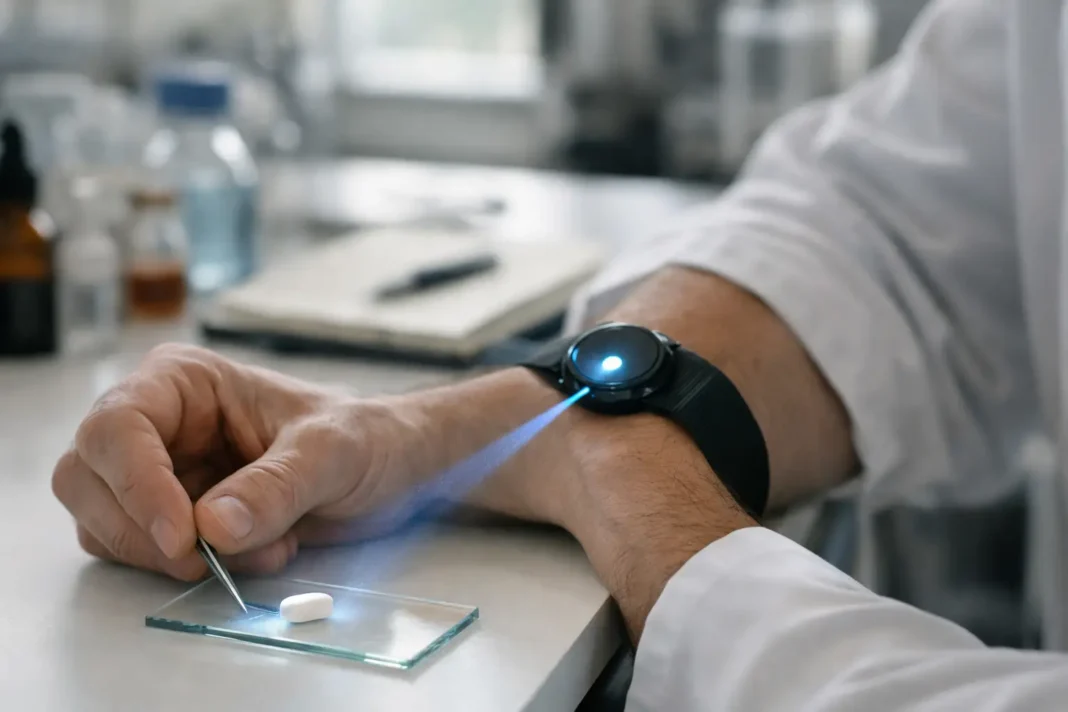

Cambridge researchers have developed an ultra-low-cost optical sensor that delivers laboratory-level measurement precision in a device small enough for wearable use. Built by a team at University of Cambridge, the chip costs around $10 to produce and was tested in controlled conditions where it identified foods, plastics and medicines with 100% accuracy.
The technology uses light-based sensing methods condensed into a compact module, enabling material identification and chemical readouts without bulky instrumentation. In the same set of laboratory demonstrations the sensor also showed it could monitor physiological indicators such as blood glucose and blood alcohol levels without traditional invasive sampling. Its form factor and cost suggest integration with wearable technology and portable diagnostics is technically feasible.
The combination of low production cost and high accuracy highlights potential applications across consumer devices, clinical screening and supply-chain verification. For consumers, continuous or on-demand monitoring of biomarkers could reduce reliance on single-use test kits; for industry, the capacity to distinguish plastics and medicines may assist quality control and authenticity checks. Broader deployment would depend on further development, including robustness outside laboratory settings and alignment with medical and safety regulations.
While the results establish feasibility, commercialisation and clinical adoption will require additional validation through expanded trials, device coupling and regulatory review. The research marks a step toward compact spectroscopic tools that can be embedded in everyday electronics, with implications for remote monitoring, point-of-care testing and material identification once real-world performance is confirmed. For now, the work provides a proof of concept for a low-cost optical component capable of bringing laboratory-grade sensing closer to everyday devices and health applications.