
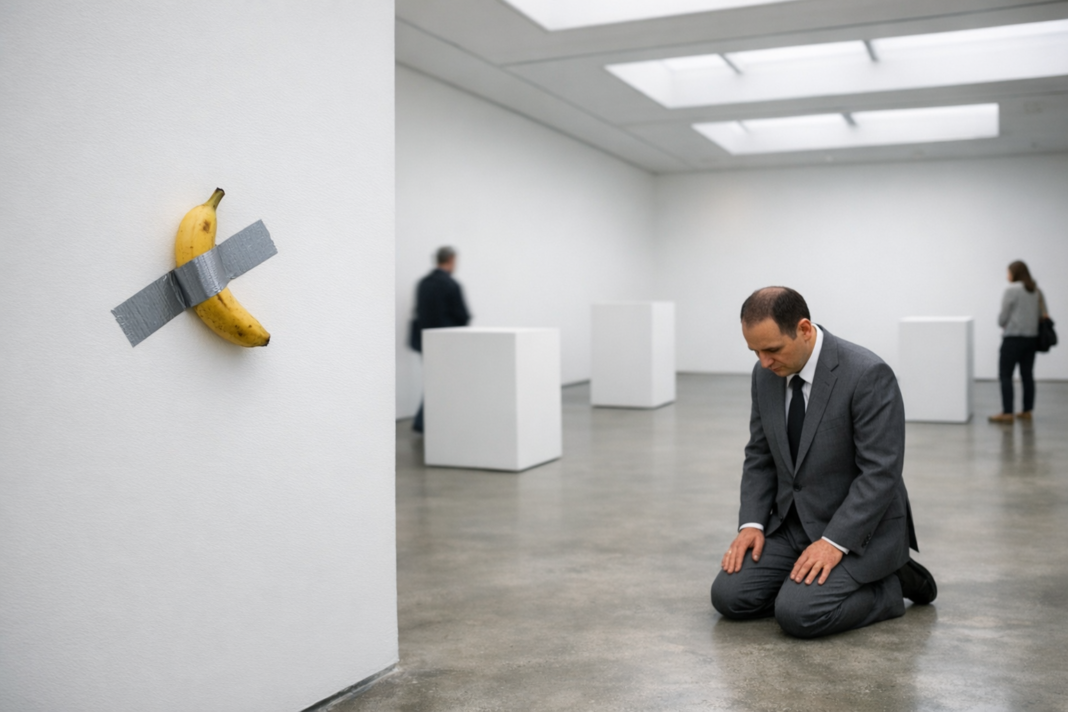

In a cavernous space the work of Maurizio Cattelan returns to public view with a major presentation at the Neue Nationalgalerie in Berlin. The show collects pieces that have already become part of the cultural conversation — from a gold toilet that was later stolen to a banana taped to a wall that sold for $6.2m and was eaten by its buyer — while also assembling new works that evoke polarising historical and religious figures, including representations tied to a pope and to Adolf Hitler. The presentation frames these choices as part of a wider artistic inquiry rather than mere shock value.
Cattelan’s career has long blurred the line between prank and critique. Highly publicised incidents around individual objects have amplified that perception: certain installations have been physically altered by audiences or targeted by thieves, and moments of intervention have become as notable as the objects themselves. Those episodes, the artist and curators argue, expose tensions around ownership, spectacle and how value is assigned in the contemporary market.
The Berlin exhibition gathers works that navigate that tension, placing humor and provocation alongside pieces that demand historical reckoning. By bringing contentious personae into a museum setting, the show unsettles conventional expectations about reverence and display and prompts questions about institutional responsibility. Visitors encounter objects that operate as performances on a gallery wall as well as sculptural interventions intended to provoke reflection on authority, celebrity and ritual in public life, situating the presentation within ongoing debates about art and memory.
Beyond headlines, the exhibition raises practical and conceptual issues for museums: how to preserve ephemeral works, how to secure pieces whose meaning can change through audience action, and how institutions should contextualise provocative imagery. Those considerations, alongside the familiar spectacle surrounding Cattelan’s most famous pieces, ensure the show functions both as a survey of a singular practice and as a case study in the evolving relationship between art, audiences and the institutions that host them.






