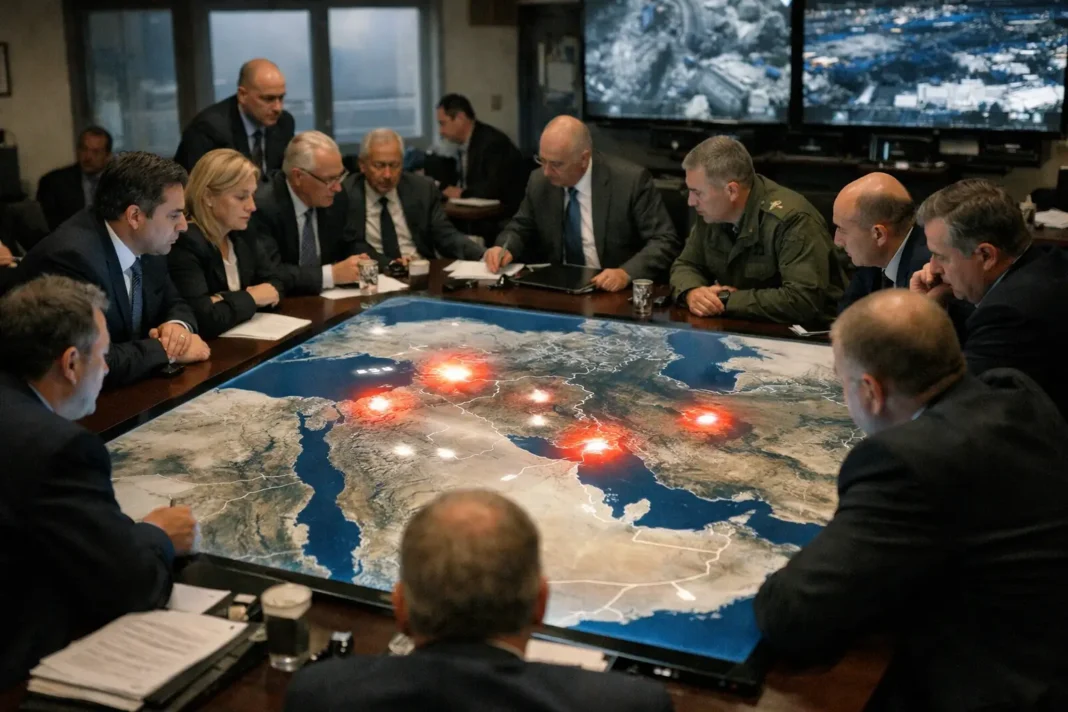

United States and Israel have taken unilateral actions perceived as hostile toward Iran, prompting debate about international legitimacy and contributing to heightened tensions across the Middle East. The sequence of measures and countermeasures has been followed by diplomatic protests, increased military alerts and a rise in rhetoric that risks narrowing the space for de-escalation. Regional capitals and international observers are monitoring whether these developments will trigger a new cycle of confrontations or open avenues for renewed negotiation.
Longstanding disputes over Iran‘s nuclear programme, its regional influence and ties with allied groups have shaped relations with the United States and Israel for years. Policies such as economic sanctions, diplomatic isolation and episodic covert or overt operations form part of a broader pattern that complicates efforts to stabilise security and revive multilateral diplomacy. Past negotiation efforts and confidence-building measures have shown that progress is possible but remains fragile.
The effects extend across political, security and economic dimensions: periods of heightened tension have coincided with increased military readiness, disruptions to commercial routes and pressures on energy markets. Regional actors must balance deterrence strategies with mechanisms to reduce the risk of miscalculation, while third-party states and international institutions consider responses within the framework of international law. Escalation carries potential humanitarian and economic costs that can propagate beyond immediate military theatres.
How the situation evolves will depend on decisions by Iran and other capitals: whether they opt for further coercive measures, pursue de-escalation through diplomacy, or engage multinational mechanisms to address security concerns. For governments and populations across the Middle East, the central question is whether short-term tactical advantages can be translated into sustainable improvements in security, or whether current dynamics will prolong cycles of instability with broader consequences for the region.