
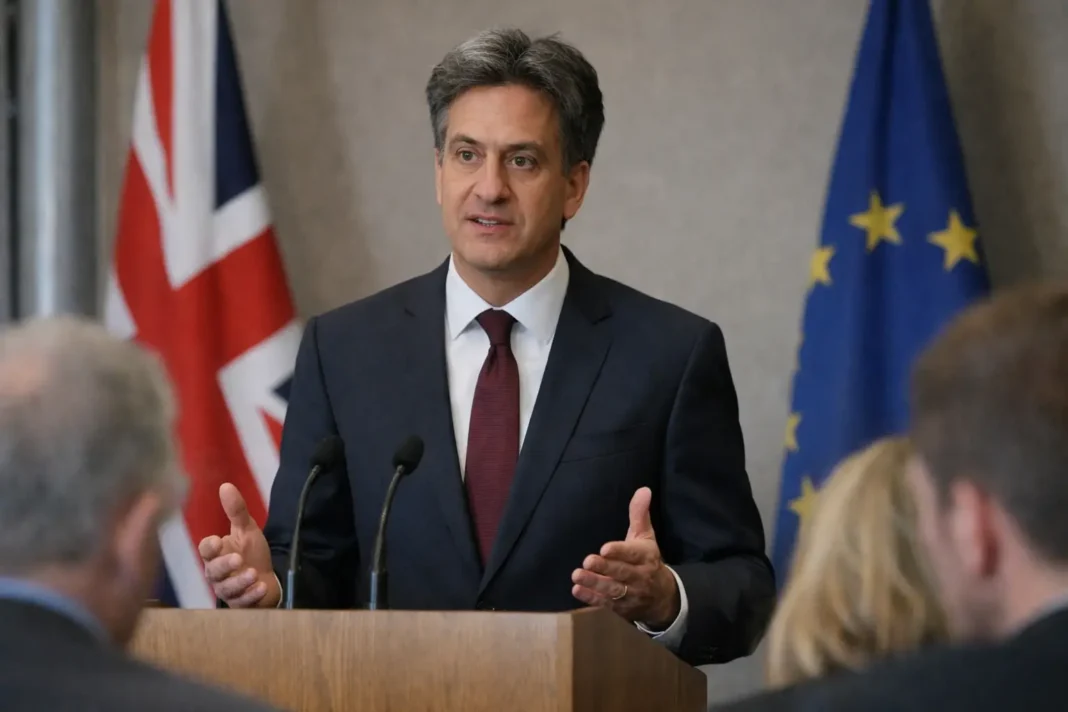

Miliband has rejected the idea that a broader agreement between Britain and the European Union depends on a separate settlement over university tuition fees for EU students in the UK. His intervention addresses a point of tension in discussions between London and Brussels, after suggestions from EU-side sources that implementation of a wider package could be linked to a change in the fee regime faced by European students in Britain.
The issue sits at the intersection of diplomacy, education policy and the post-Brexit relationship. Since the UK left the EU, students from member states have no longer generally benefited from the same fee status as domestic students at British universities, making study in Britain significantly more expensive for many applicants from Europe. Any move to reduce those costs would carry consequences for universities, students and public finances, which helps explain why the matter has become politically sensitive.
Miliband made clear that the broader UK-EU deal should not be treated as conditional on an agreement over fees. That distinction matters because it separates two different questions: the overall framework of cooperation between Britain and the EU, and the specific rules governing access to higher education. Linking the two could slow or complicate the adoption of measures already agreed or under discussion in other areas of the relationship.
For Brussels, student mobility remains an important symbol of ties with the UK, particularly for younger Europeans whose access to British universities changed after Brexit. For London, any adjustment to tuition arrangements would require careful handling, as universities rely on international fee income and domestic education policy remains politically contested. The dispute also illustrates how technical issues can acquire wider diplomatic weight when they are attached to efforts to stabilise relations between the UK and the EU.
The immediate significance of Miliband’s position is that it seeks to prevent the tuition-fee question from becoming a barrier to the wider agreement. The outcome will depend on whether both sides keep the files separate or allow the education dispute to influence the broader timetable. For now, the message from Miliband is that a UK-EU deal should stand on its own terms, rather than hinge on a parallel negotiation over the cost of studying in Britain.






