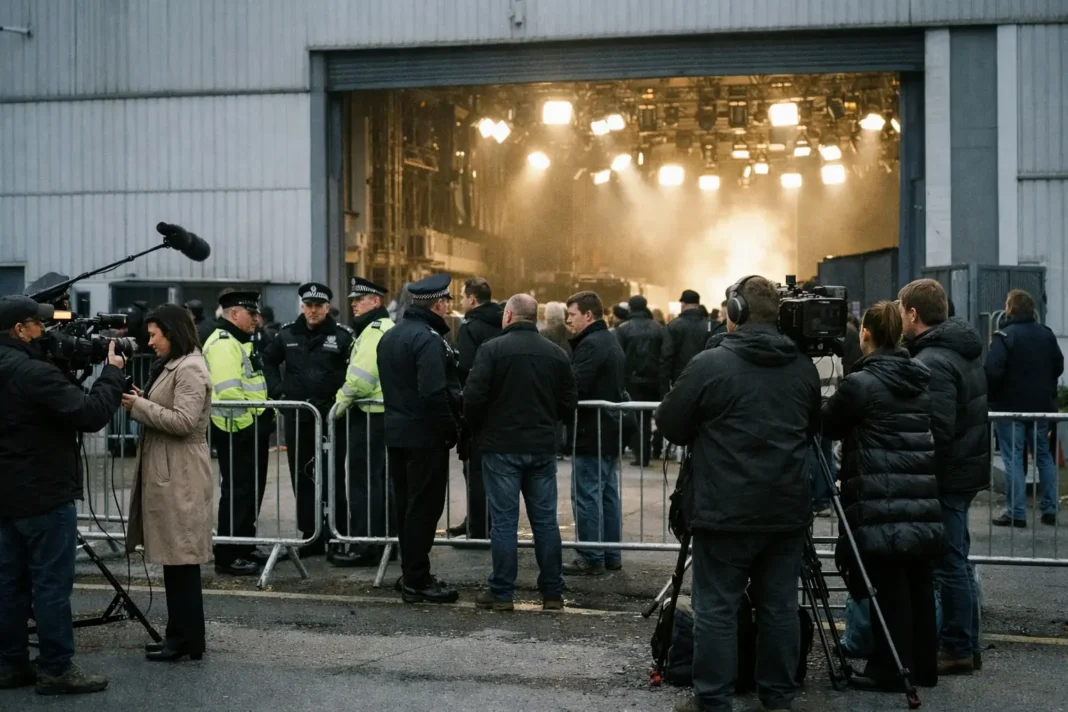

The BBC has apologised for “any offence caused” after a noise disruption linked to Strictly Come Dancing, placing one of British television’s best-known entertainment programmes under renewed public attention. The response from BBC acknowledges that the incident caused concern, while the available confirmed details remain limited. The broadcaster’s intervention is significant because Strictly is not a marginal production but a flagship format, closely associated with the corporation’s weekend entertainment identity.
Lancashire Police has confirmed that a mobile phone has been seized and that officers are assessing whether any criminal offences may have taken place. That assessment is an important distinction: the seizure of a device forms part of an inquiry, but it does not establish that an offence has been committed. The force’s position leaves the matter at a preliminary stage, with no confirmed charging decision contained in the information currently available.
The incident brings together two separate areas of accountability: the operational responsibilities of a broadcaster and the evidential duties of police. For a public service media organisation such as the BBC, even a disturbance connected with an entertainment show can carry reputational weight, particularly when viewers and local communities expect high standards from productions bearing the corporation’s name. For investigators, the focus is narrower and factual: whether the circumstances meet the threshold for any possible criminal offence.
Noise disruption involving a major television brand can quickly become more than a production issue because it touches on public order, community impact and the conduct of those involved around filming or programme activity. At the same time, the confirmed record does not support broader conclusions about responsibility. The broadcaster’s apology addresses offence caused by the disturbance; the police assessment concerns whether the law has been broken. Those are related developments, but they should not be treated as the same finding.
Until Lancashire Police completes its assessment, the verified facts remain confined to the BBC’s apology, the seizure of a mobile phone and the ongoing consideration of possible criminal offences. The episode nevertheless illustrates how quickly scrutiny can intensify around high-profile television productions, especially when a popular entertainment programme intersects with questions of conduct beyond the studio floor.