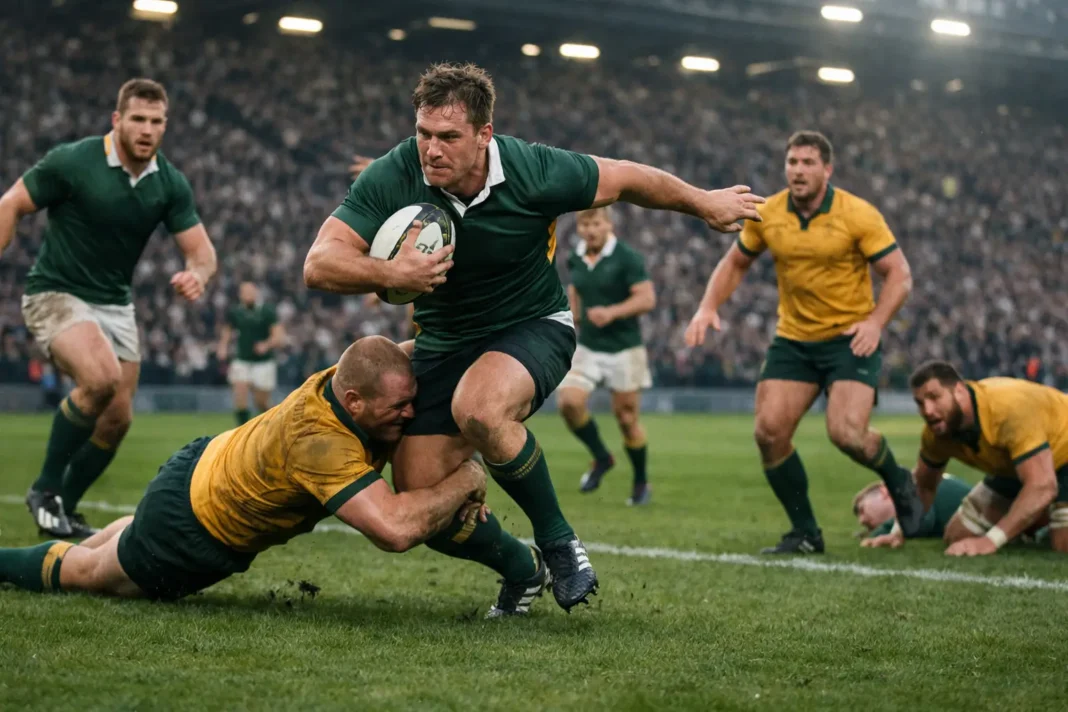

Ireland ended the autumn on a clear upward note, defeating Australia 38-14 in London to secure fifth place in the inaugural Nations Championship. The result gave Ireland a decisive finish to the competition and ensured their campaign closed with a performance built on attacking efficiency and control of the scoreboard.
The match was defined by Ireland’s five-try return, a margin that reflected their ability to turn pressure into points in the final outing of the autumn schedule. For followers of rugby, the scoreline also offered a concise measure of the gap on the day: Australia reached 14 points, but could not keep pace with an Irish side that continued to add to its lead and protect the advantage through to the closing stages.
The fixture carried significance beyond a single result because it determined Ireland’s final position in the new tournament structure. A fifth-place finish in the first edition of the Nations Championship gives Ireland a concrete benchmark in a competition designed to bring greater shape to the international calendar. While it was not a title-deciding match, the London finale still mattered for ranking within the event and for the message sent at the end of a demanding autumn window.
For Australia, the defeat closed the same campaign with a difficult scoreline against a major northern hemisphere opponent. The Wallabies’ 14 points kept them on the board, but Ireland’s try count and final total left little room for a late reversal. The outcome will be read within the broader context of Australia’s efforts to measure themselves against leading international sides during a period in which consistency remains a central objective.
London provided the stage for a meeting between two established rugby nations, with Ireland leaving with both the win and the higher finishing place. The inaugural Nations Championship now has one of its first placement markers: Ireland fifth after a 38-14 success, Australia beaten in the autumn finale, and the competition’s format given another data point as international rugby continues to test new ways of organising elite fixtures.