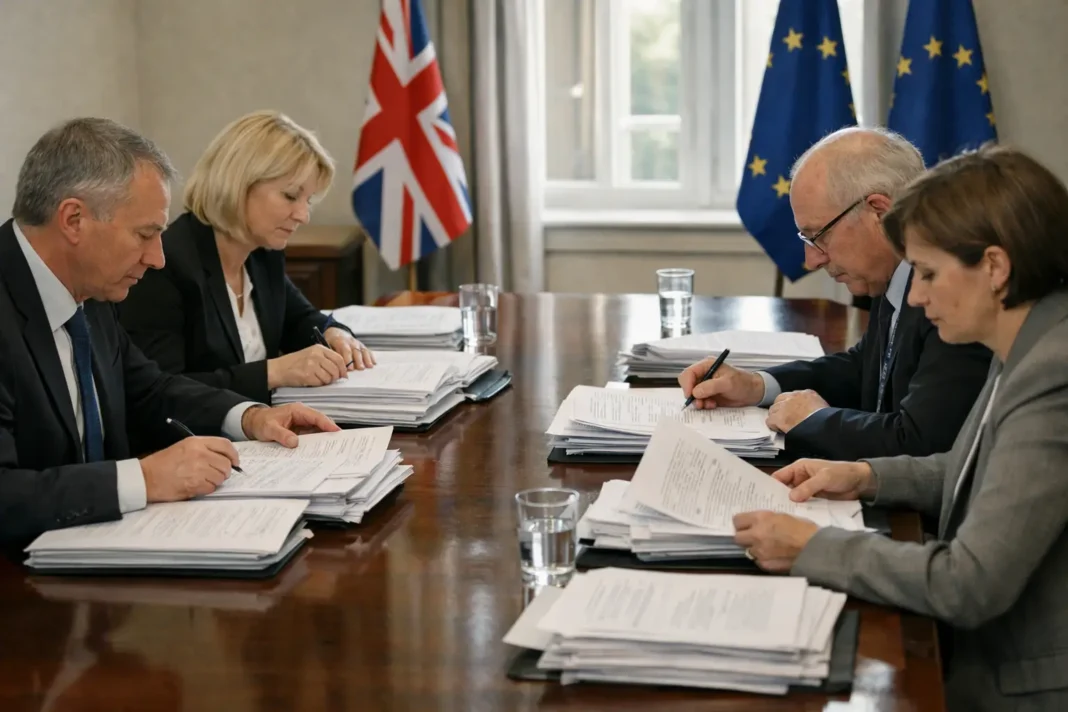

The United Kingdom will pay a “participation” fee connected to the delivery of new agreements with the European Union, after legal documents set out how Britain is expected to contribute to EU running costs. The disclosure adds a financial detail to the wider process of rebuilding practical cooperation between London and Brussels after years of post-Brexit separation.
The documents outline a contribution linked to the administration and operation of arrangements agreed between the UK and the bloc. While the wording places the payment within the mechanics of implementation rather than presenting it as a broader membership-style charge, it confirms that participation in certain EU-linked systems or cooperation frameworks can come with a cost to the British government. The issue is politically sensitive because financial transfers to EU institutions were a central point of debate during and after the Brexit process.
UK government ministers have sought to frame closer cooperation with Brussels as a practical step designed to reduce friction and improve outcomes in areas where both sides have shared interests. The UK Government remains outside the EU single market and customs union, and the new arrangements do not restore membership. Even so, the presence of a participation fee underlines a recurring feature of third-country cooperation with the EU: access, alignment or involvement in specific programmes often requires financial and administrative commitments.
For the European Commission, such contributions are typically tied to the costs of managing agreements, oversight and institutional support. For the UK, the practical question is whether the benefits of reduced barriers, improved coordination or access to EU-run structures justify the payments attached to them. The legal wording matters because it translates political understandings into obligations that can guide implementation and scrutiny.
The fee is likely to attract attention in Parliament and among businesses watching the direction of UK-EU relations. Companies affected by cross-border rules are focused less on political symbolism than on whether new arrangements make trade and cooperation more predictable. The publication of legal detail shows that the next phase of the relationship will depend not only on headline agreements, but also on the financial and administrative terms needed to make them work.