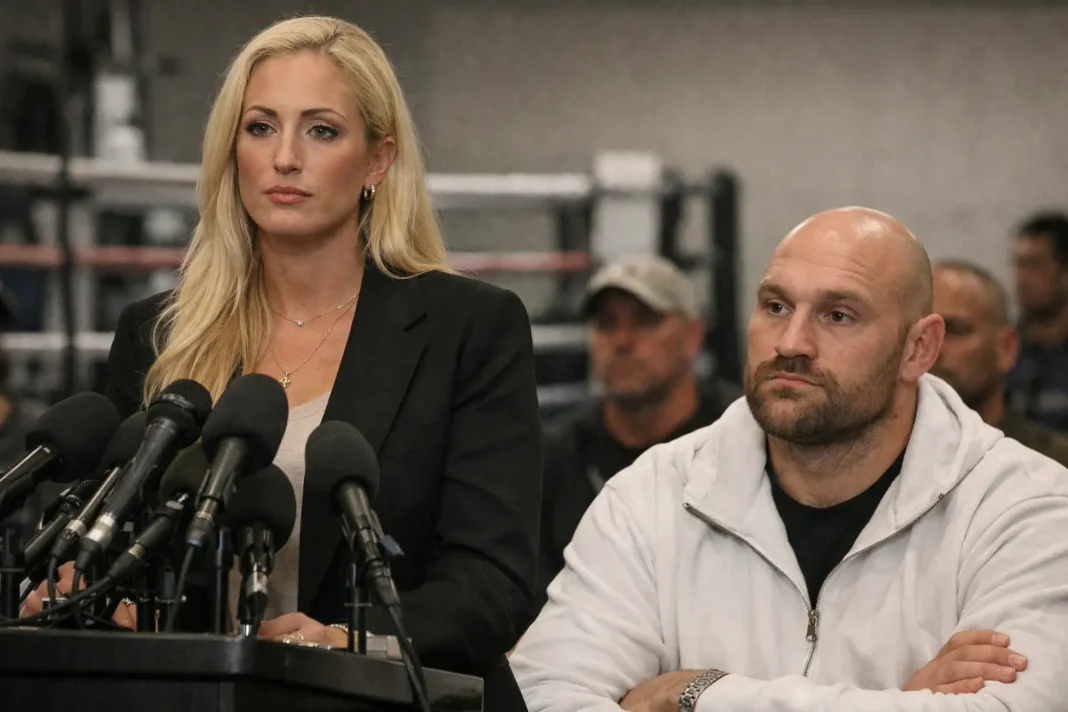

Paris Fury has withdrawn her claim that her husband, Tyson Fury, had been diagnosed with schizophrenia. The retraction narrows the public record around the heavyweight boxer’s health and removes a specific medical assertion that had attracted attention because of the couple’s high profile in boxing and popular culture.
The clarification matters because a psychiatric diagnosis is not a casual label. Conditions such as schizophrenia carry significant clinical meaning and social stigma, making precision especially important when they are discussed in public. Health organisations including the NHS describe schizophrenia as a serious mental health condition that requires professional assessment. A retracted statement does not establish any diagnosis, and no further medical detail has been confirmed by the withdrawal itself.
Tyson Fury, one of the most recognisable figures in modern heavyweight sport, has often been associated with wider conversations about pressure, fame and mental health. For public figures, comments from family members can quickly move beyond personal context and become part of the media narrative. That influence is greater when the person concerned competes in an elite sporting environment, where questions about wellbeing, fitness and privacy frequently intersect.
Paris Fury’s retraction also underlines a broader issue for celebrity coverage: medical information should be treated with restraint unless it is confirmed and clearly attributable. In this case, the relevant development is limited but significant. A claim that Tyson Fury had received a schizophrenia diagnosis has been withdrawn, leaving the public discussion without that asserted diagnosis as a verified fact.