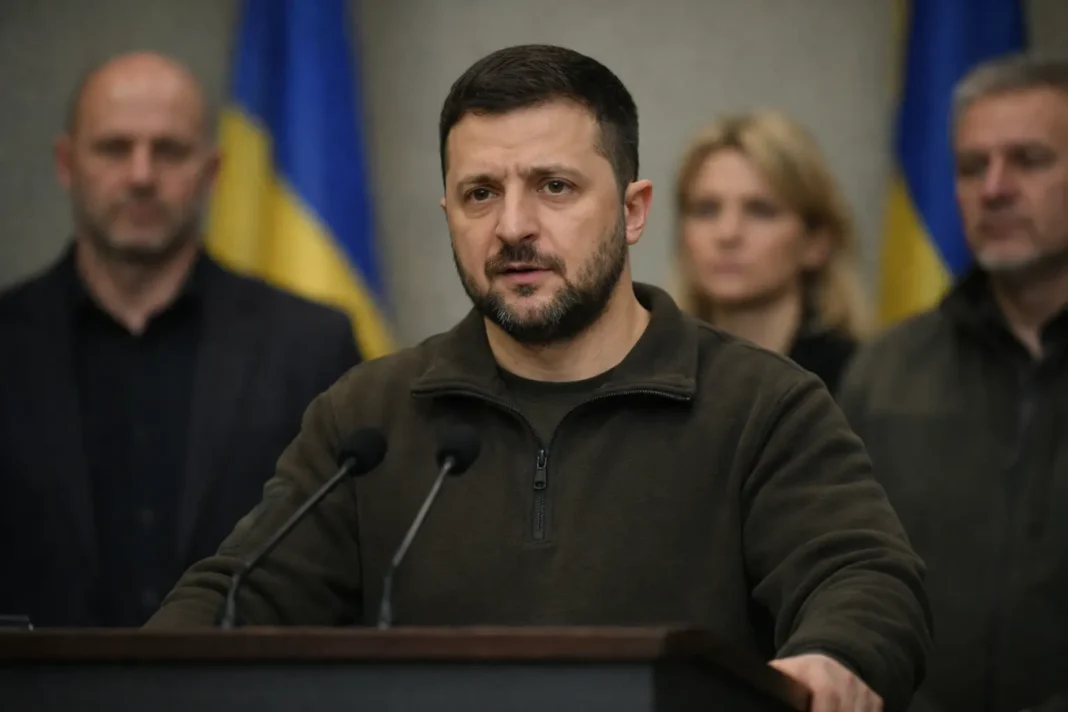

Ukraine’s president has expressed open frustration with Washington’s handling of the war, arguing that the United States is devoting too much attention to the Middle East while failing to apply sufficient pressure on Russia. In an interview with the BBC, Volodymyr Zelensky said the imbalance was damaging at a time when Kyiv continues to rely on international backing to resist Moscow’s invasion.
The Ukrainian leader’s remarks underline a recurring concern in Kyiv: that global attention is being divided by simultaneous crises, reducing the diplomatic and political urgency around the Ukraine war. Zelensky did not simply appeal for more sympathy; his criticism focused on pressure, a term that in the context of the conflict includes sanctions, military backing, diplomatic isolation and sustained political messaging aimed at the Kremlin.
Zelensky also addressed the language used by Donald Trump toward Vladimir Putin, saying it was “strange” for the US president to describe the Russian leader as a “friend.” The comment highlights the unease in Kyiv over any rhetoric that appears to soften the political distance between Washington and Moscow. For Ukraine, public signals from the White House matter not only as diplomatic language but also as indications of how firmly the US intends to confront Russia.
The statement comes at a sensitive moment for Ukrainian diplomacy. Kyiv depends heavily on Western support, and the United States remains central to that effort because of its political influence, military resources and role among allies. Any perception that Washington’s priorities are shifting can affect the confidence of partners and the calculations of Moscow. Zelensky’s intervention therefore serves as both a warning and a request: Ukraine wants Russia to face clearer costs and fewer openings for normalized engagement.
By linking American focus on the Middle East with insufficient pressure on Russia, Zelensky placed Ukraine’s war within a broader contest for international attention. His message was aimed at ensuring that the conflict is not treated as a secondary crisis. For Kyiv, maintaining pressure on Moscow is not a matter of symbolism; it is a core element of the strategy to defend Ukrainian territory and sustain the coalition that has supported the country since Russia’s full-scale invasion.