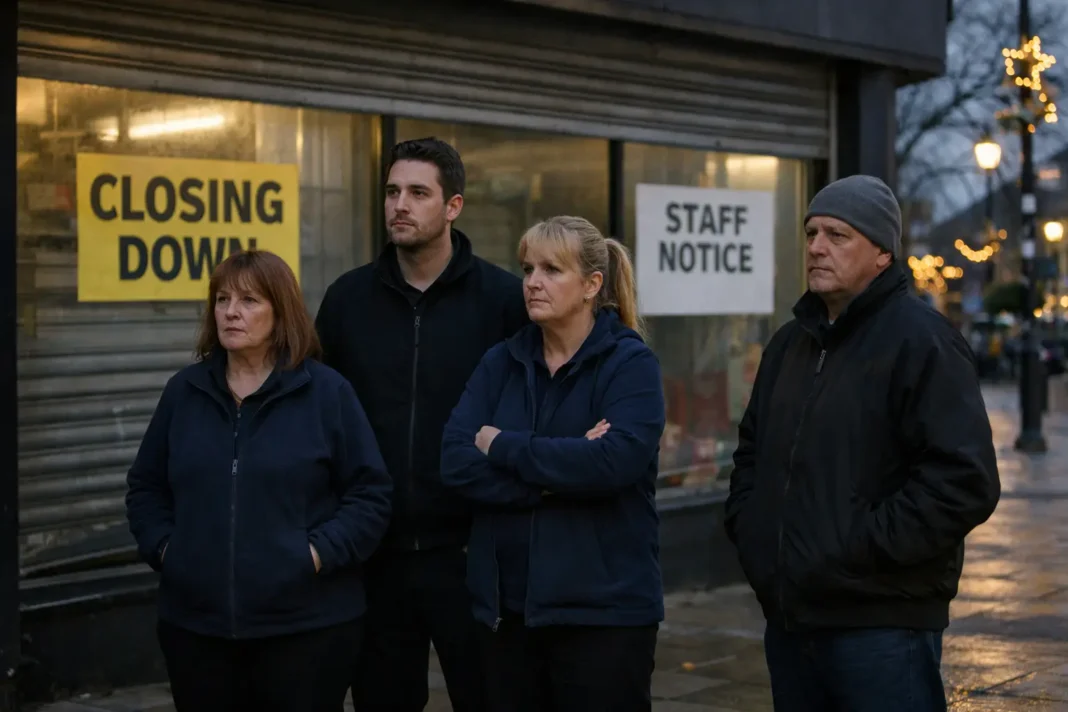

Poundland staff are facing a deeply uncertain run-up to Christmas after the discount retailer’s liquidation placed around 11,000 jobs at risk. The development has left employees across the chain waiting to learn whether their stores will close, continue trading, or be transferred to other retailers. For a business long embedded in the UK retail landscape, the process now under way raises immediate questions about workers’ livelihoods and the future of high street units that have relied on steady footfall from value-focused shoppers.
At the Camden store in north London, manager Aboud gathered his team after receiving the news on his phone on Wednesday afternoon. The reaction reflected the personal weight behind the numbers. One employee who had worked at the branch for 11 years became visibly distressed and left the shop, overwhelmed by the announcement. For staff who have spent years in the same stores, the workplace is not only a source of income but also a familiar community built around colleagues, regular customers and daily routine.
The formal liquidation process is only beginning, leaving staff with limited information about what comes next. Some branches may still attract interest from other chains, but workers have not been told which stores, if any, could be preserved. Aboud said he had been unable to obtain answers about the Camden branch and could no longer reach his senior regional manager. That absence of communication has become one of the most pressing concerns for employees seeking to plan their finances, family commitments and job searches before the holiday period.
Poundland, whose official website remains at Poundland, has been a familiar name on British shopping streets, particularly for customers looking for low-cost household goods, food items and everyday essentials. Its difficulties now add to wider pressure on high streets, where vacant units can weaken footfall for neighbouring businesses and reduce the range of affordable options available to local communities. The impact of a collapse of this size would not be limited to employees; landlords, suppliers and town centres may also feel the effects as decisions are made store by store.
The case also highlights a recurring problem in major retail failures: workers often learn about decisions only after ownership and insolvency processes are already advanced. While buyers may still emerge for parts of the estate, employees remain the people most exposed to the delay. With 11,000 roles potentially affected, the priority for staff is clarity: whether their store has a buyer, whether wages and notice arrangements are protected, and whether their jobs can survive beyond the liquidation process.