
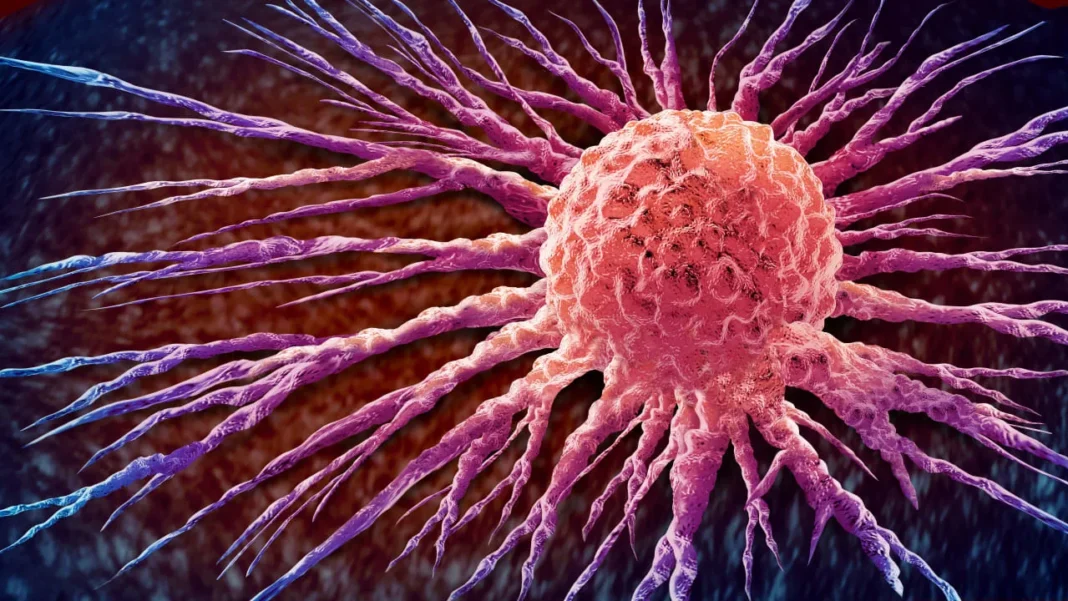

Breast cancer is the most frequently diagnosed cancer in the world, 99% affecting women and 1% of men. Each year, 2.3 million people worldwide are found to have contracted it, including about 5,000 in Israel and 300,000 in the US.
Among patients with hormone receptor-positive, HER2-negative, early-stage breast cancer, which accounts for about 70% of cases, a major challenge is identifying those who benefit from adjuvant chemotherapy given after surgery or radiation to destroy lingering microscopic cancer cells and reduce the risk of recurrence.
Deciding whether to administer chemotherapy after surgery is one of the most challenging questions in early-stage breast cancer care. While it can reduce the risk of the tumor returning, most patients don’t benefit from it and may experience significant short- and long-term harmful side effects.
A major challenge is identifying, at the time of diagnosis, which patients are likely to benefit and which are not. Those who would not benefit undergo hormonal treatments.
Researchers from the Technion-Israel Institute of Technology in Haifa, together with oncologists and pathologists from leading medical centers abroad – including Dana Farber Cancer Institute in Boston, Mount Sinai Medical Center in New York, the University of Chicago Medical Center, and the Institute of Molecular Pathology and Immunology of the University of Porto in Portugal – have developed an artificial intelligence model that predicts both the risk of breast cancer recurrence and the likelihood that a patient will benefit from chemotherapy.
The AI model – the first of its kind to be validated in a large, randomized clinical trial – analyzes routine pathology slides taken at diagnosis, offering a fast, widely accessible alternative to costly genomic tests.
The study has just been published in The Lancet Oncology under the title “Deep learning on histopathological images to predict breast cancer recurrence risk and chemotherapy benefit: a multicentre, model development and validation study.”
“These are complex biological signals that the human eye cannot consistently quantify,” said Dr. Gil Shamai of the Technion’s Geometric Image Processing Laboratory (headed by Prof. Ron Kimmel), who led the study. “The model integrates many subtle cues to generate a score that reflects both recurrence risk and expected benefit from chemotherapy.”
Shamai received his doctorate from the Technion’s Electrical Engineering Department and is a research associate at Kimmel’s lab in the Taub Faculty of Computer Science. He showed that the cancer imprints a unique signature, detectable by AI, and provides a molecular profile of the tumor cells.
It was presented to an enthusiastic audience at the 50th European Society for Medical Oncology (ESMO) conference in Berlin last December, which focused on precision medicine, antibody-drug conjugates, and cancer survivorship. He will also present a newer study at the American Society of Clinical Oncology (ASCO) meeting in June in Chicago, which will be attended by 50,000 experts.
Today, genomic tests such as Oncotype DX (which analyzes the activity of 21 genes in breast cancer tumors to assess the risk of recurrence and predict chemotherapy benefit) are commonly used to guide chemotherapy decisions, but these tests are expensive, can take weeks to return results, and are unavailable to many patients around the world. Their predictive accuracy is also limited, leading to both unnecessary chemotherapy and missed opportunities for other treatments.
The Technion-led AI model aimed at addressing these limitations by using information already available in standard pathology samples.
How computer learning can help pathologists obtain new info on breast cancer
TEN YEARS ago, when Shamai was preparing to do his doctoral thesis, he approached Dr. Yoav Benenbaum, a clinician at the Rambam Healthcare Campus at that time, whom he knew to suggest a research topic. “He is very smart and full of ideas,” Shamai told The Jerusalem Post in an interview. He suggested doing scans of breast cancer biopsies together with computer learning to obtain information that pathologists don’t have.”
Shamai recalled that he thought it would be a small project that he would do together with a student, but it turned out to be much bigger and an innovation that no one else had achieved. “Ten years ago, Yoav’s goal was to predict receptor status from the pathology images. He suggested scanning images at Rambam, but this wasn’t practical. We found images of tissue parts on the web, and, using scripts, built a dataset of 5,000 patients. This is how we showed that the molecular profile can be predicted from pathology images.
“About three years ago, we were granted rare access to tissue samples and clinical data from one of the largest randomized breast cancer studies that included 10,273 patients and their tissue images, clinical data, and follow-up information. This was meant to predict benefits from chemo,” he continued.
The AI system analyzes high-resolution digital images of tumor tissue stained and examined as part of routine pathology and evaluates multiple regions of the tumor and its microenvironment. Thus, it identifies visual patterns connected with cancer behavior, including cell division, tissue structure, immune response, and features linked to treatment sensitivity or resistance.
Kimmel explained that “instead of testing genes, we look directly at the tissue. Just as eye color can be determined by looking at the eyes rather than analyzing DNA, our system extracts a visual signature from pathology images that informs optimal treatment. Within minutes, the model produces a numerical score that supports shared decision making between oncologist and patient.”
According to Prof. Dvir Aran of the Technion’s Faculty of Biology, a co-leader of the study, “This is the first AI model shown to predict treatment benefit in breast cancer directly from pathology samples.” The model was further validated on thousands of patients from hospitals in Israel (Carmel, Ha’emek, and Sheba medical centers), the US, and Australia – showing consistent performance across different populations, equipment, and healthcare systems.
Unlike genomic tests, the AI-based assessment requires no additional tissue, laboratory processing, or a waiting period. It can be performed in minutes in any pathology lab equipped with a digital scanner and Internet access.
The model’s potential impact is relevant not only in well-developed countries but also in low- and middle-income countries where genomic testing reaches fewer than 5% of patients. “We want it to be adopted not only in Israel but also in developing countries where doctors give chemotherapy to nearly all breast cancer patients. It will change their treatment and lower costs,” Shamai added. “Large hospitals in India have invited me to come and set up year-long clinical trials, and others in the Philippines and Brazil have also contacted us.”
“Future work will focus on prospective validation – establishing documented evidence that it performs as intended before commercial production or implementation begins to further establish this approach as an accessible, efficient, and globally scalable tool for breast cancer treatment decisions,” they noted.
The researchers are also working to further improve the model and extend it to additional treatments and other cancer types in which aggressive therapy decisions are made under uncertainty.
Based on these results and the knowledge accumulated over years of groundbreaking research, the team plans to establish a start-up on the Technion campus that will develop tests, making them significantly more accessible, accurate, and faster compared to those currently in use worldwide.
Source:
www.jpost.com




