
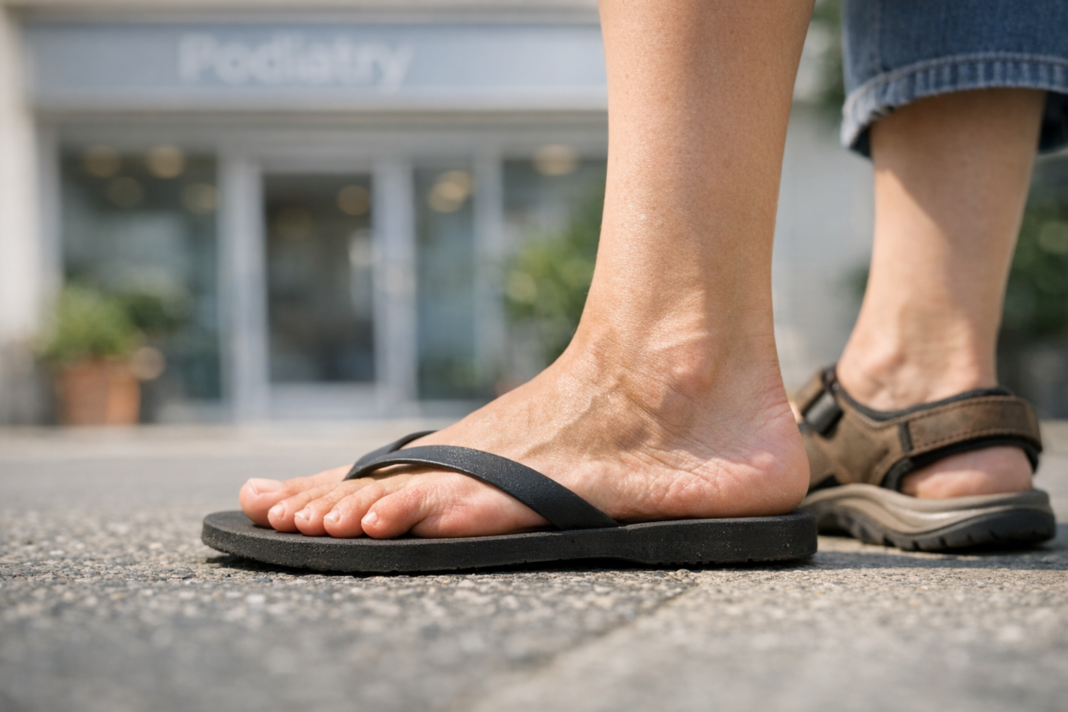

Summer sandals can be comfortable on hot days, but medical professionals caution that certain styles offer inadequate support and can contribute to foot pain and injury. Podiatrists point to thin-soled flip-flops, unsupportive thong straps and floppy footbeds as common culprits that increase strain on tendons and the plantar fascia, and that can aggravate existing conditions.
The mechanics are straightforward: lack of arch support and a secure heel strap forces muscles to work harder to stabilise the foot, while minimal cushioning increases peak pressure on the forefoot. These factors can lead to blisters, Achilles irritation, metatarsal pain and flare-ups of plantar fasciitis. Prolonged walking in shoes that permit excessive toe-gripping or sliding can also alter gait and contribute to overuse injuries higher up the kinetic chain.
When choosing warm-weather footwear experts recommend prioritising structure and fit over appearance. The American Podiatric Medical Association advises selecting sandals with a contoured footbed, defined arch support, a firm heel cup and adjustable straps that hold the foot securely. Soles with moderate cushioning and a tread that reduces slipping are beneficial for longer walks; removable footbeds allow insertion of customised orthotic devices if needed. Individuals with chronic foot pain or peripheral neuropathy, including people with diabetes, should avoid flimsy sandals and consult a specialist before adopting open footwear for extended periods.
If discomfort persists after switching to more supportive sandals, clinicians recommend evaluation by a podiatrist. Early assessment can identify specific biomechanical issues and guide interventions such as exercises, orthoses or temporary activity modification to prevent longer-term problems while still allowing seasonal comfort.





