
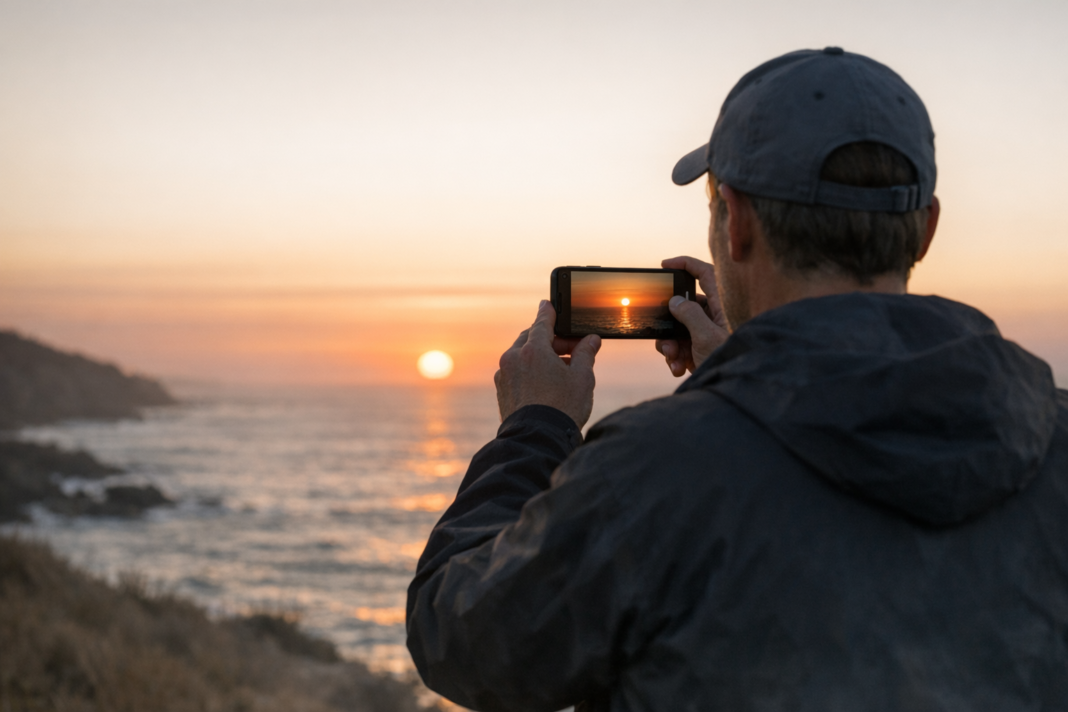

On an Athens rooftop I watched a ridge of people raise their phones as the sun slipped behind the city skyline. The scene on Athens‘s Filopappou ridge has become familiar in many urban centres: individuals angling devices to frame the light, composing images for immediate sharing. The practice is not confined to scenic hours; the same gestures appear at protests, crashes and family tables, turning private moments into a continuous stream of captured events.
The spread of camera-equipped phones means that recording is now a default action. Devices serve as instant archives, channels to platforms and, for bystanders, primary tools of documentation. In situations of public harm or abuse, footage gathered on phones has become crucial evidence. At the same time, the ubiquity of recording changes the texture of everyday life by shifting attention toward the act of capturing rather than the experience itself.
Photographers and journalists who have worked in conflict zones have long described the camera as a way to create distance from unfolding events; the device mediates exposure and risk. In a different register, ordinary users rely on their phones to process beauty and threat alike, often treating images as the memory rather than a supplement to it. This behavioral shift has prompted scholars and commentators to examine how constant documentation affects recollection, presence and social interaction.
The dual role of the phone—as evidence-collector and aesthetic tool—produces tensions. On one hand, widespread filming increases the chances that abuses are recorded and shared, expanding accountability. On the other, it can compress complex moments into shareable fragments, altering how communities interpret and value experiences. Platforms that reward immediacy and visibility tend to prioritise striking images over context, shaping which scenes are amplified and which are overlooked.
The pattern of photographing sunsets, disasters and dinners invites reflection about how societies recognise and preserve events. As everyday life becomes more mediated, the balance between bearing witness, living in the moment and constructing a public archive remains an open question with implications for attention, memory and civic life.






