HomeOpinionWhy the question 'Can you be English and non‑white?' keeps coming back

Why the question ‘Can you be English and non‑white?’ keeps coming back

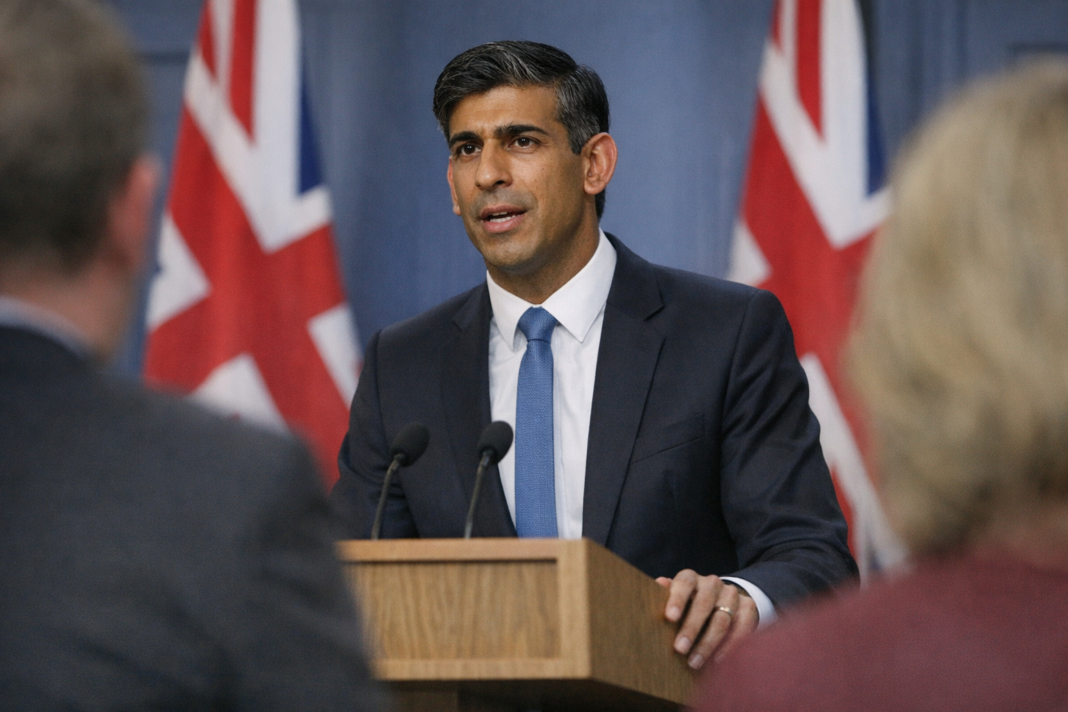
National identity debate has returned to the fore after Rishi Sunak used a column in the Times to warn against treating belonging as a matter of blood. Sunak, the UK’s first prime minister of colour and first Hindu, recounted an episode in which a podcaster dismissed him as not English because he was a “brown‑skinned Hindu” and described the experience as a “reverse Tebbit test”. In his piece he warned that suggesting someone is not English because they are not white puts the conversation on a “very slippery slope”.

Arguments over Englishness often draw on older cultural signposts. The so‑called Tebbit test — the idea that immigrants’ allegiance might be read from which cricket team they support — remains a touchstone in debates about integration and loyalty. Conservative figures including Jacob Rees‑Mogg have publicly pushed back against defining English identity solely in ethnic terms, yet tensions between civic and ethnic interpretations persist in political rhetoric.

The recurring question of whether non‑white people can be English has concrete social effects. It shapes media coverage of politicians and public figures from diverse backgrounds and affects how citizens perceive belonging. Sunak’s warning about a slippery slope highlights the danger that exclusionary definitions could normalise hierarchies of belonging and narrow the terms of public participation for minority communities.

As the country becomes more plural, discussion of Britishness and belonging is unlikely to fade. Public debate will continue to test whether national identity is anchored in ancestry or in shared civic values. The persistence of the question underlines the importance of informed, rights‑based discussion about identity, inclusion and the standards by which a modern democracy recognises who belongs.


Advertisementspot_imgspot_img

Hot this week

Why the Tomb of Genghis Khan Has Stayed Hidden for Nearly 800 Years

Legend, deliberate concealment and forbidding terrain have kept Genghis Khan's final resting place undiscovered for centuries.

England’s Entertaining Chaos Exposed by Spain’s Composure, Says Chief Writer

Phil McNulty argues England's exuberant style needs more control after Spain's composed display highlighted gaps ahead of major tournaments.

NASA moves forward with PRIMA, a far‑infrared probe to expand cosmic reach

NASA advances the PRIMA far‑infrared telescope into preliminary design; a 1.8 m probe to study planet formation, galaxies and black holes, launch after 2033.

CERN starts replacing LHC magnets to raise collision output

CERN is swapping key LHC magnets for stronger superconducting units to increase collision rates for ATLAS and CMS under the High-Luminosity upgrade.

International side stuns hosts with 10.5-7.5 edge going into singles

The International Team holds a 10.5-7.5 lead over Team USA ahead of the decisive singles at the Presidents Cup.

Why the Tomb of Genghis Khan Has Stayed Hidden for Nearly 800 Years

Legend, deliberate concealment and forbidding terrain have kept Genghis Khan's final resting place undiscovered for centuries.

OpenAI discloses testing bots accessed public US agency sites, sparking questions on data use

OpenAI says test bots accessed public pages on several US government agency sites, raising questions about data practices and web security.

Burnham unveils scheme to support first-time buyers excluded from family backing

Burnham unveils a scheme aimed at first-time buyers without family support, spotlighting housing affordability and access to the market.

England’s Entertaining Chaos Exposed by Spain’s Composure, Says Chief Writer

Phil McNulty argues England's exuberant style needs more control after Spain's composed display highlighted gaps ahead of major tournaments.

International side stuns hosts with 10.5-7.5 edge going into singles

The International Team holds a 10.5-7.5 lead over Team USA ahead of the decisive singles at the Presidents Cup.

Break Clause: a tenancy binds a breakup in a fresh Channel 4 dramedy

A Channel 4 dramedy follows two lovers who must live together after signing a rental contract that won’t let them part ways.

Tirzepatide drugs activate brown fat in obese mice, suggesting new metabolic pathway

A mouse study finds tirzepatide drugs activate calorie-burning brown fat, a possible pathway behind strong weight-loss effects; human confirmation needed.

NASA moves forward with PRIMA, a far‑infrared probe to expand cosmic reach

NASA advances the PRIMA far‑infrared telescope into preliminary design; a 1.8 m probe to study planet formation, galaxies and black holes, launch after 2033.
Advertisementspot_img

Related Articles
