

Fear of outsiders has become a recurring theme in recent public debate in the United Kingdom. The phrase “island of strangers,” used by Keir Starmer in a speech, sparked widespread criticism and a subsequent clarification from his office, highlighting how language about otherness has entered mainstream politics. That controversy underlined the weight of questions about belonging and difference in contemporary civic life.
Across the country, demonstrations and heated exchanges over border policy have kept immigration at the centre of discussion. Political pledges to ‘stop the boats’ and high levels of concern in voter surveys have reinforced the issue’s prominence. Cultural and civic institutions now find themselves operating in a charged environment where public sentiment, media coverage and policy debates intersect.
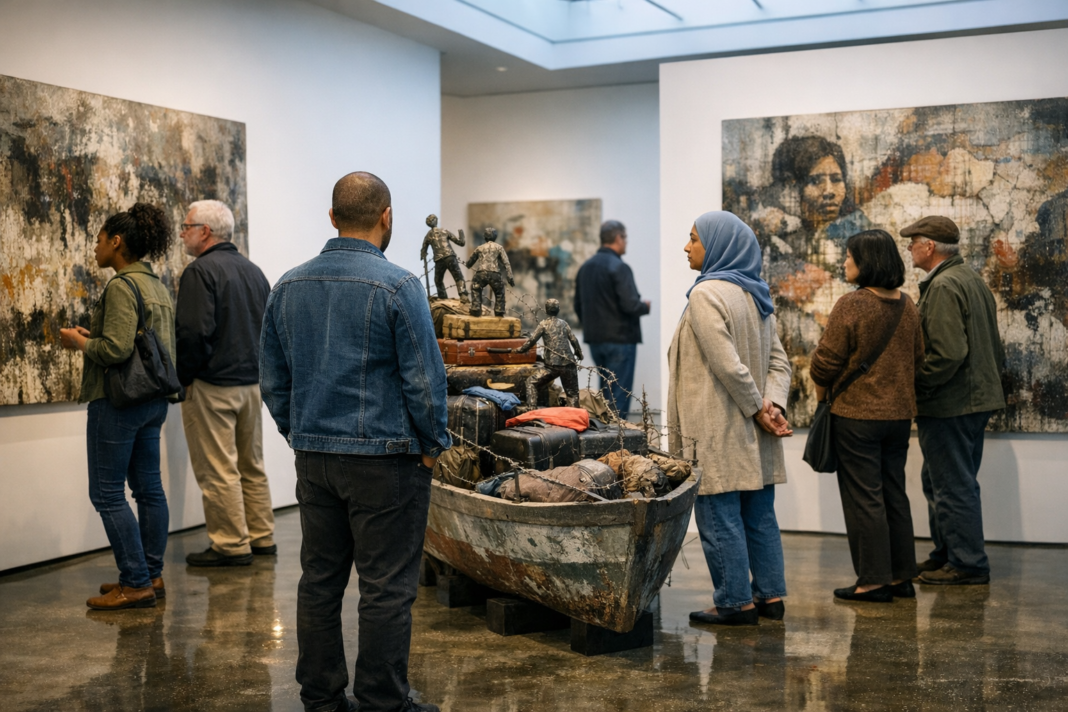
British Art Show has positioned its latest programme in direct response to these tensions. The show’s curator has assembled artists whose work engages with themes of belonging, memory and fear, aiming to place personal narratives and aesthetic inquiry alongside headline-driven coverage. The exhibition presents pieces that address migration, social exclusion and the psychological landscape of living amid perceived threats, inviting visitors to consider alternative perspectives.
By touring venues in different cities and bringing diverse audiences into galleries, the exhibition seeks to broaden the forums where questions about identity are discussed. Cultural projects of this kind do not offer policy prescriptions, but they do create opportunities for reflection beyond partisan frames, and for encounters with individual experiences that statistics and slogans often obscure. Observers say such encounters can shift public conversation by grounding abstract anxieties in concrete human stories; for policymakers and citizens alike, that reframing carries practical implications for how debates over community and responsibility proceed.






