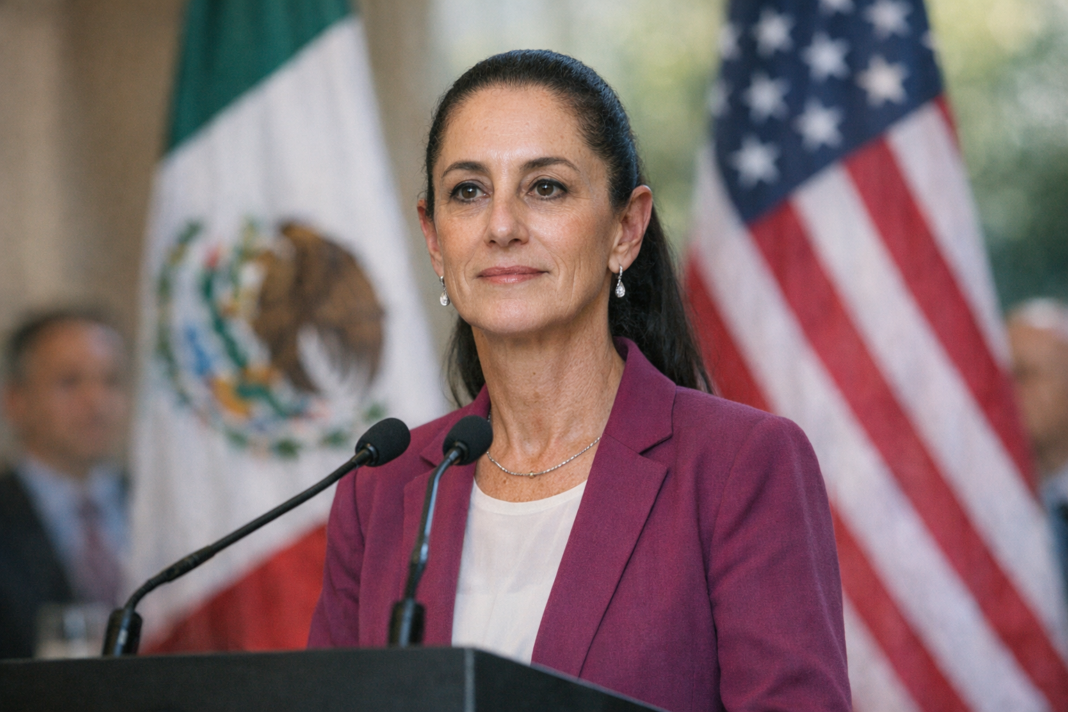

After two years in office, Claudia Sheinbaum has attracted notable recognition at home and abroad for the tone and management of Mexico’s relationship with the United States. Public statements, bilateral meetings and a steady diplomatic cadence have been read by many observers as a stabilising approach to a challenging cross‑border agenda. Praise has come from a range of commentators who view calm, predictable engagement as beneficial for trade, migration management and security cooperation.
At the same time, a number of analysts and commentators argue that this outward steadiness masks a pattern of deference toward Donald Trump and elements of the US policy line. Critics point to recent decisions and public stances on migration, commercial ties and regional security as evidence that Mexico has often prioritised accommodation over confrontation. Supporters counter that measured responses have preserved working channels and avoided escalation on issues that directly affect both economies and communities.
The debate touches on broader questions about sovereignty, domestic politics and the balance between principle and pragmatism in foreign affairs. For the administration, maintaining favorable commercial relations and cooperation on migration enforcement are immediate priorities; for oppositional voices and parts of civil society, any perception of repeated concessions risks eroding trust in independent policymaking. The discussion also reflects the asymmetric nature of the United States–Mexico relationship, where economic interdependence, border dynamics and security concerns place constant pressure on diplomatic choices.
Looking ahead, the contours of this debate are likely to shape how upcoming negotiations and public exchanges are interpreted by voters, partners and analysts. Observers will watch whether the administration pursues deeper institutional ties with Washington or shifts toward a more assertive posture when domestic political incentives change. For now, the balance between acclaim for diplomatic composure and critique for perceived capitulation remains a central theme in assessments of Claudia Sheinbaum‘s foreign policy record.