
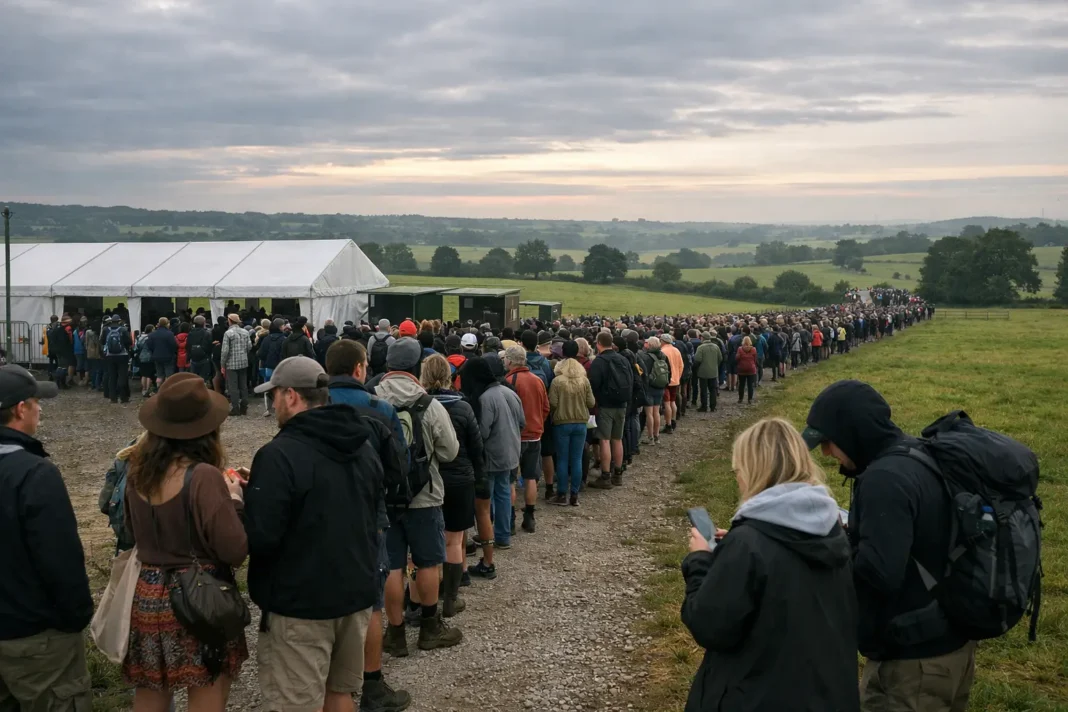

Tickets for Glastonbury vanished within 42 minutes as thousands of prospective festivalgoers entered an online queue seeking access to the event at Worthy Farm. The rapid sell-out underscores the intense demand for one of the UK’s most prominent music and arts gatherings and left many applicants unable to secure passes despite joining the waiting system.
Interest in the festival led to large-scale participation in the ticketing process, with many people logging on simultaneously in the hope of purchasing entry. Observers noted long virtual queues and swift allocation of available tickets, a dynamic that has become familiar for major festivals where capacity is finite. Organisers’ decision-making on ticket volumes and sale procedures shaped the short window in which purchases could be completed.
The immediate consequences extend beyond disappointed applicants. High demand and a quick sell-out typically feed activity on secondary marketplaces, complicating travel and accommodation planning for those who did secure tickets and exerting pressure on local transport and hospitality services around Worthy Farm. For local businesses and the wider events sector, such sell-outs signal strong consumer interest that can have economic benefits but also operational strains as logistics and capacity are tested.
The sell-out also raises questions for prospective attendees and the broader live-music ecosystem about access and affordability. With primary tickets no longer available, attention will turn to official resale channels and any announcements from festival organisers regarding further allocations or alternative entry options. What remains clear is that the festival retains significant appeal, prompting continued demand each time tickets are released.






