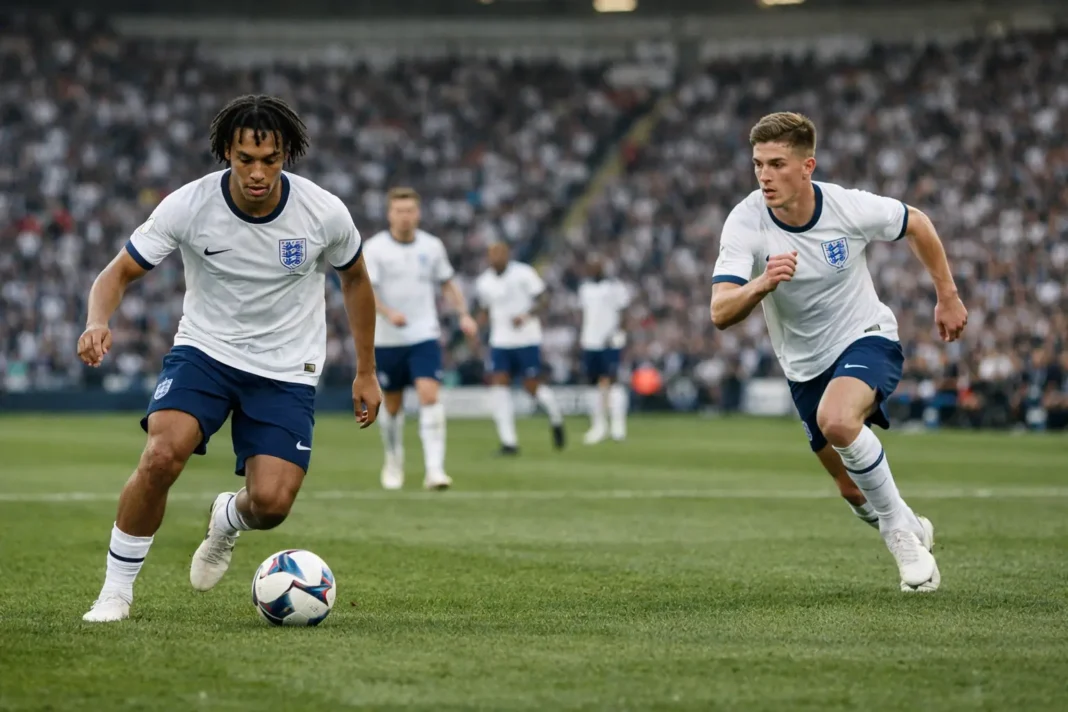

England’s international window offered a concise but revealing snapshot of squad development, with Phil McNulty taking stock of the key takeaways. The period underlined evolving choices in central areas and attack, driven in part by the return of Trent Alexander-Arnold and the senior debut of Alex Scott. For England, the sequence of fixtures served less as an end point than as a progress report on tactical flexibility and personnel readiness.
The most immediate lesson concerned the options available across midfield. The reintegration of Trent Alexander-Arnold expanded selection permutations, offering coaches a player capable of influencing play in multiple phases. That return, combined with the existing pool of central players, has created competition that will force clearer role definitions: who provides tempo, who carries the ball from deep, and who is tasked with advanced creativity. The window exposed the benefits of that depth while also highlighting the need to settle combinations that can be replicated consistently at tournament level. Links between selection and formation choices were a central theme in internal analysis.
At the other end, the emergence of a coherent attacking quartet — the so-called “front four” — became a tangible asset. The senior introduction of Alex Scott signalled the pathway from youth prospect to first-team option and added another layer to forward rotation. The increased number of attacking templates available to staff means greater adaptability against varied opponents, but it also raises questions about minutes management and the balance between established starters and rising talents. The window provided live evidence that competition for places is intensifying among England’s forwards and wide attackers, with implications for match plans and substitutions.
The broader consequence is practical: selection dilemmas will become more pronounced as upcoming fixtures approach, and coaching staff must reconcile short-term results with long-term squad building. Maintaining cohesion while experimenting remains the priority, with attention to how different combinations perform under pressure. The recent international window therefore reads as a constructive exercise in profiling what works, and what still requires refinement, as midfield clarity and a flexible forward group take shape ahead of more consequential encounters.