
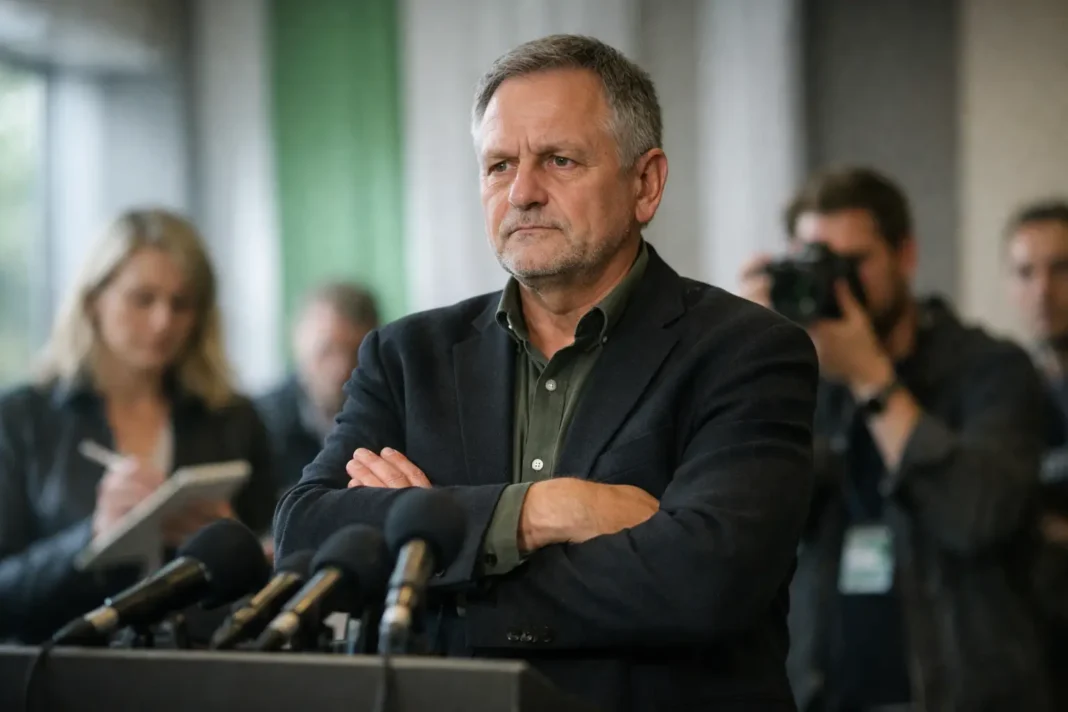

Polanski defends leadership after coming under sustained scrutiny following two developments that have unsettled the party. Polanski, leader of the Green Party, faced criticism over their response to a motion adopted by party members which described Zionism as a form of racism. At the same time, a recent by-election loss has fuelled debate about strategy and public messaging within the party.
The motion that prompted controversy was carried by a section of the membership, setting up a clash between grassroots organisers and the parliamentary or central leadership. Observers within and outside the party highlighted concerns about how the leadership addressed the motion, with critics saying the reaction failed to meet expectations for clarity and political judgement. The internal vote has therefore become a focal point for wider discussions about the party’s direction and values.
The by-election defeat added a practical dimension to the criticism, as electoral outcomes often sharpen scrutiny of leadership. While the specific causes of the loss are the subject of internal analysis, the juxtaposition of a divisive members’ motion and an unfavourable electoral result has intensified pressure on senior figures to explain both policy processes and campaign performance. Party activists and commentators are now looking at whether current strategies align with broader public priorities and the organisation’s stated objectives.
The episode is likely to prompt further debate at upcoming meetings and among the party’s membership about governance, candidate selection and internal communications. For analysts and supporters alike, the situation poses questions about how motions passed at membership level should be managed by leaders, and how leadership responses can affect voter perceptions. As the party navigates the fallout, attention will be on efforts to reconcile internal democratic expression with coherent external messaging and electoral competitiveness.






