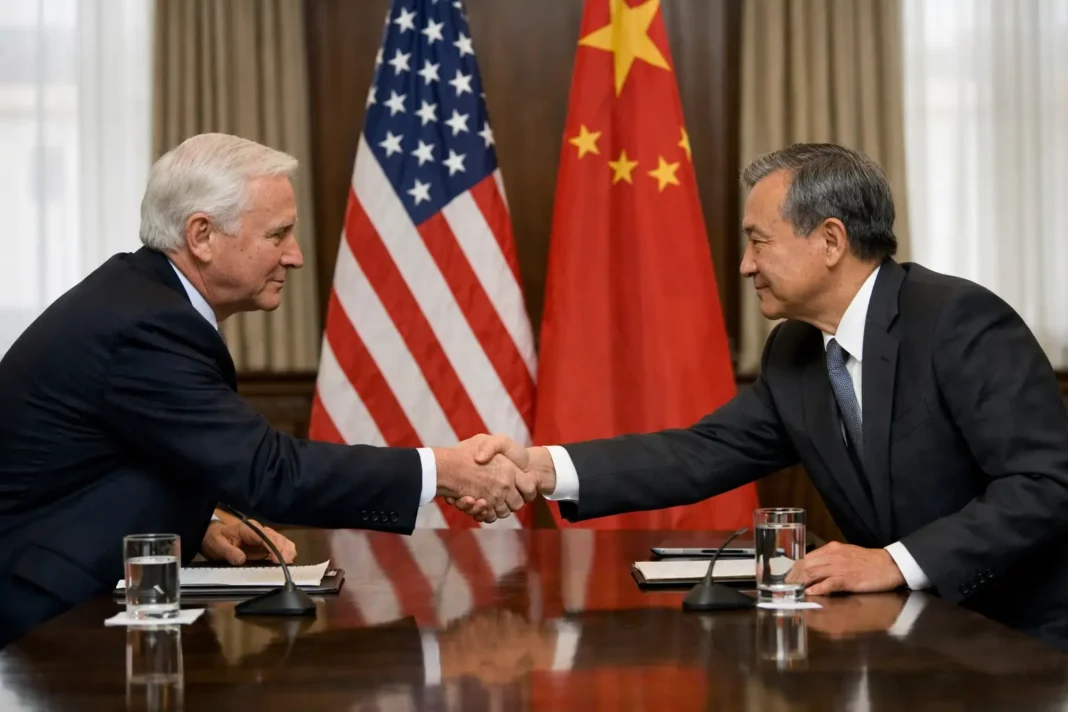

Trade truce extended as Xi Jinping and Donald Trump agreed to prolong a temporary halt in escalating trade measures. The move underlines that both the China and the United States retain levers of influence over each other, even as formal multilateral mechanisms struggle to manage deep disputes. In this context, the extension represents a pragmatic pause rather than a resolution of the structural tensions that have reshaped relations between the two economies.
The truce provides short-term predictability for companies and markets that have faced uncertainty from shifting tariffs, investment controls and regulatory scrutiny. It also serves as a diplomatic signal: extending the pause creates breathing room for negotiators and reduces the immediate risk of reciprocal escalation. At the same time, the arrangement reflects limits on both sides’ ability to impose their preferred outcomes unilaterally, rooted in economic interdependence and the high costs associated with a deeper rupture.
For the wider global economy, the ceasefire carries mixed implications. Businesses that operate across borders may welcome reduced volatility, yet the pause does not restore a functioning rules-based system for trade governance. Multilateral institutions retain a role in adjudicating disputes and setting common standards; the World Trade Organization and other fora remain relevant even if they have struggled to adapt to new strategic rivalries. In the interim, trading partners and supply chains will continue to navigate a landscape shaped by bilateral bargaining and selective decoupling.
Looking ahead, the extension should be seen as an opening for negotiated adjustments rather than a definitive settlement. Domestic politics in both capitals, economic priorities and the broader international environment will determine whether talks advance toward durable commitments or revert to cycles of tension and accommodation. Absent a renewed, effective multilateral framework, this fragile equilibrium may persist as the default state of great-power economic competition, with important consequences for global trade governance and business planning.