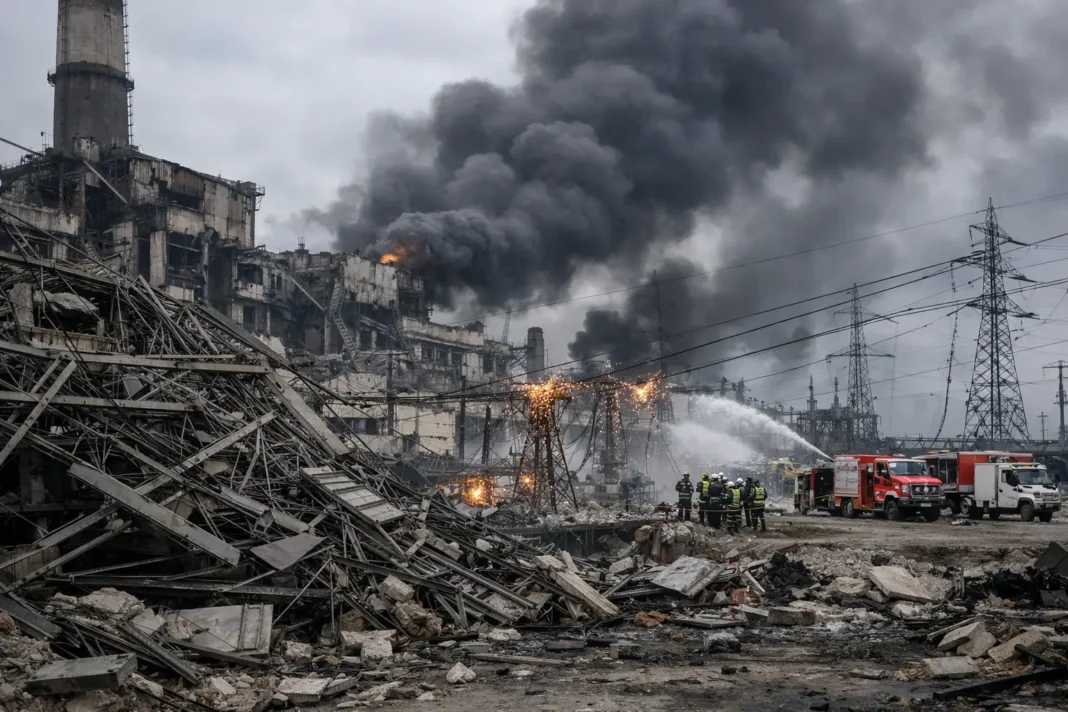

Six energy sites in Ukraine have been struck since the U.S. president announced a ceasefire and said energy infrastructure would not be targeted, Volodymyr Zelensky said. The statement from the Ukrainian leadership frames the incidents as continuing attacks despite a public pledge from the United States, a development that Kyiv says undercuts assurances about the protection of civilian infrastructure. The U.S. administration has previously addressed its stance on targeting on its official channels: White House.
Zelensky identified six separate strikes on facilities described broadly as energy sites. Kyiv’s comments point to continued military activity affecting infrastructure that supports power distribution and other critical services. The announcement did not detail the exact locations or the extent of damage at each site, and independent verification of the incidents has not been provided in the statement issued by the Ukrainian presidency: Office of the President of Ukraine.
The strikes on energy-related targets carry practical consequences for civilians, emergency services and industrial operations. Attacks on power plants, transmission lines and related installations can interrupt electricity supply, hamper heating and water services and complicate efforts to repair damaged sections of the grid. For Ukraine, maintaining resilient energy networks has been a persistent challenge during the conflict, and damage to infrastructure can increase the logistical and humanitarian burden on local authorities and service providers.
These developments also have broader diplomatic implications. Claims about a ceasefire and exemptions for energy sites contrast with reports of continued strikes, highlighting divergent narratives between Kyiv and other actors. The discrepancy raises questions about how battlefield conduct is monitored and how assurances are translated into operational practice. Kyiv’s account that six energy sites were hit since the announcement underscores ongoing tensions over the protection of civilian infrastructure in the conflict between Russia and Ukraine, and points to the challenges of enforcing any temporary pauses in hostilities.