
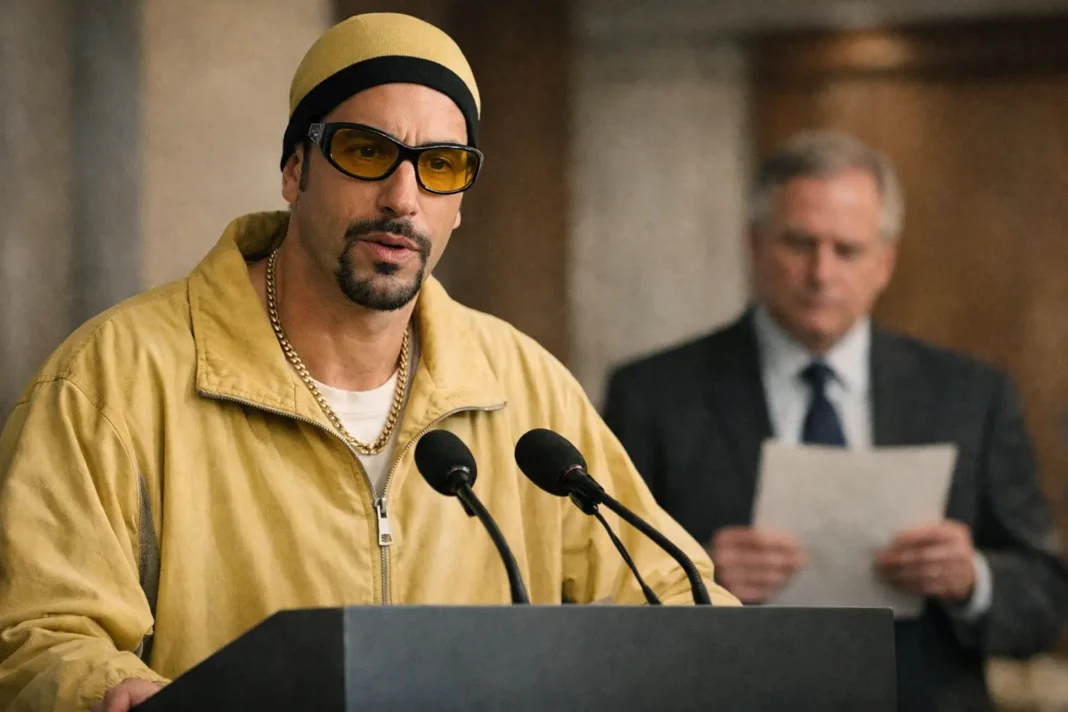

Twenty years on, Sacha Baron Cohen has returned to the screen with Ali G: Who Iz I?, a sequel that abandons a conventional plot in favour of a string of ambush pranks and staged hoaxes. The film follows the return of the shock-comic persona first seen in the 2002 feature, but it favors direct confrontation and unscripted encounters over a linear narrative, revisiting techniques that made the character controversial from the start.
The new instalment assembles familiar and newly conceived figures around Ali G. Among them is Erran Morad, a shadowy security operative who previously featured in Baron Cohen’s TV projects, and Dr Nira Cain-N’Degrocello, a deliberately exaggerated liberal academic created to lampoon debates over cultural appropriation. The film targets a range of public attitudes, notably the rhetoric of those who oppose so-called ‘woke’ sensibilities, and stages a large, contrived finale built around scripted set pieces and deliberate shock value.
Critical responses to the film are already split. Some observers note the physical energy and audacity of the pranks, comparing their impact to contemporary stunt-based comedy, while others say the material feels broader and cruder than earlier outings. The sequel has intensified earlier controversies: commentators who viewed the original as racially problematic say this edition reinforces that judgement, and the production has prompted public pushback from at least one political figure. A Republican leader has stated intentions to pursue legal action, describing Baron Cohen as “a liar and a pervert.”
Beyond immediate reactions, the release of Ali G: Who Iz I? has reopened discussions about the boundaries and ethics of ambush comedy, the responsibilities of performers when their work uses deception, and the legal exposure of everyone involved in staged encounters. Baron Cohen’s decision to introduce new characters that appear designed to mock the film’s anticipated critics highlights an explicitly self-referential approach: the project interrogates its own defensibility as it seeks laughs. The result is a film likely to provoke debate among audiences, public figures and media observers about what such satire can and cannot do in the current cultural climate.






