
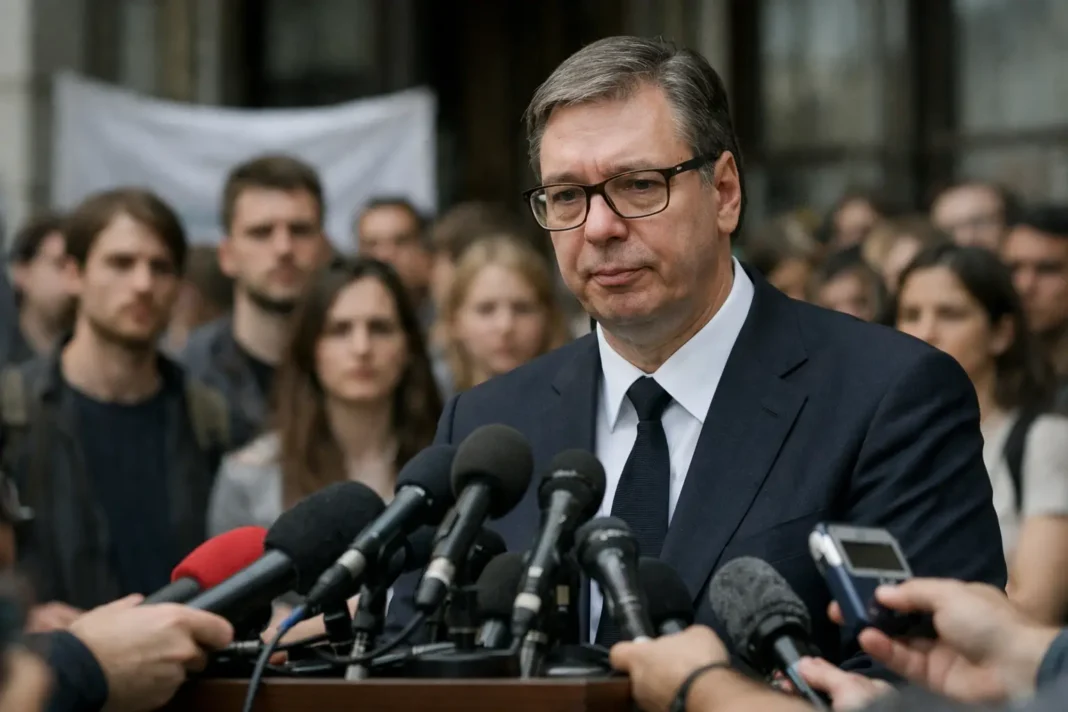

Serbia’s political landscape shifted after Aleksandar Vučić, the country’s dominant right-wing populist leader for the past 12 years, acknowledged that his party had lost a vote widely framed as a verdict on the nation’s political direction. The concession marked a rare moment of public defeat for a leader who has long shaped the balance of power in Serbia and remained at the centre of its institutions, campaigns and public debate.
The outcome triggered elation among supporters of the student-led protest movement, which had turned growing public dissatisfaction into an organised challenge at the ballot box. The vote had been presented by its backers as more than a routine political contest: it became a symbolic test of whether Serbia would continue under the same leadership model or open space for a different civic and political trajectory. Vučić’s acknowledgement that the result was “clear” gave the moment immediate national significance.
The movement’s role is central to the political meaning of the result. Student organisers helped give structure and visibility to discontent that had spread beyond university circles, linking demands for accountability with a broader appeal to democratic participation. In a system where established parties and state institutions have often dominated the political field, the prominence of student protests gave the campaign a distinct character and widened its resonance among voters seeking change.
For Vučić, the concession interrupts a long period in which his political camp has managed to define Serbia’s public agenda and present itself as the country’s indispensable force. The loss does not by itself settle the country’s future direction, but it weakens the aura of inevitability around his rule and gives new momentum to opponents who had struggled to translate street mobilisation into institutional results. The fact that the vote was cast as a referendum on Serbia’s future raises the stakes for every political actor now responding to the result.
The immediate consequence is a changed political atmosphere. Celebrations across the country reflected not only satisfaction with a single victory but also the belief that organised civic pressure can alter the balance of power. Serbia now enters a more uncertain phase, with the student-led movement facing the challenge of sustaining unity and turning public energy into lasting political influence, while Vučić and his party must confront the clearest electoral rejection of their dominance in years.






