
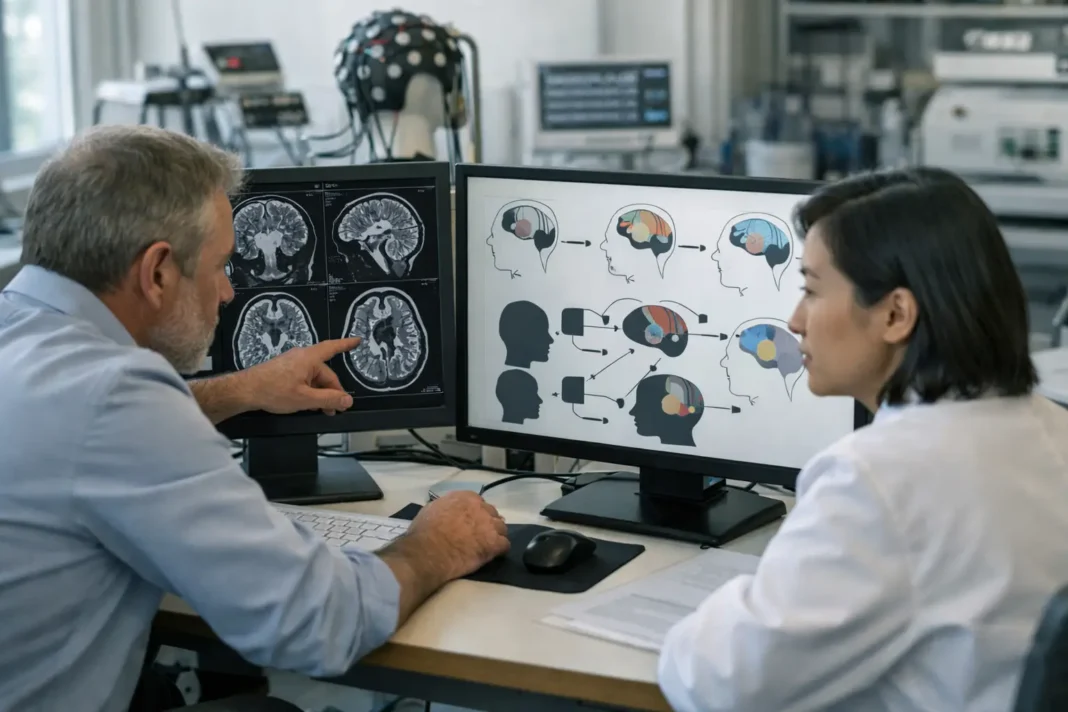

A large new study is reshaping scientific understanding of how autistic children’s brains respond to faces, suggesting that differences in face processing may appear earlier in development than researchers had previously believed. The findings focus on brain signals linked to recognizing faces, a process that plays a central role in everyday social interaction, from identifying familiar people to interpreting expressions.
The research found that, in neurotypical children, neural responses associated with face recognition tend to become more specialized as children grow older. In autistic children, those same signals showed far less developmental change. This contrast points to a different developmental path in the systems the brain uses to process faces, rather than a simple delay in reaching the same pattern seen in other children.
Face recognition is a complex function involving attention, memory and interpretation of visual cues. For some autistic people, difficulty recognizing faces or reading emotions can affect communication and social experience. The study’s results may help explain why those challenges occur in some cases, while also reinforcing that autism is highly variable and cannot be reduced to a single trait or symptom. The World Health Organization describes autism spectrum conditions as involving diverse characteristics related to social communication, behavior and sensory processing.
The findings are important for neuroscience because they suggest that the brain networks involved in recognizing faces may diverge earlier than expected in autistic development. That could influence future studies on early brain development, as well as research into how children learn to interpret social information. The result does not establish a diagnostic test or a treatment pathway on its own, but it adds evidence that developmental timing matters when studying autism.
For families, clinicians and educators, the study underlines the need to understand social difficulties as rooted in brain development rather than lack of interest or effort. It also highlights why support should be adapted to individual needs. As research continues, a clearer picture of the brain mechanisms behind face processing could help improve approaches to assessment and support, while avoiding broad assumptions about how autistic children perceive the people around them.





