
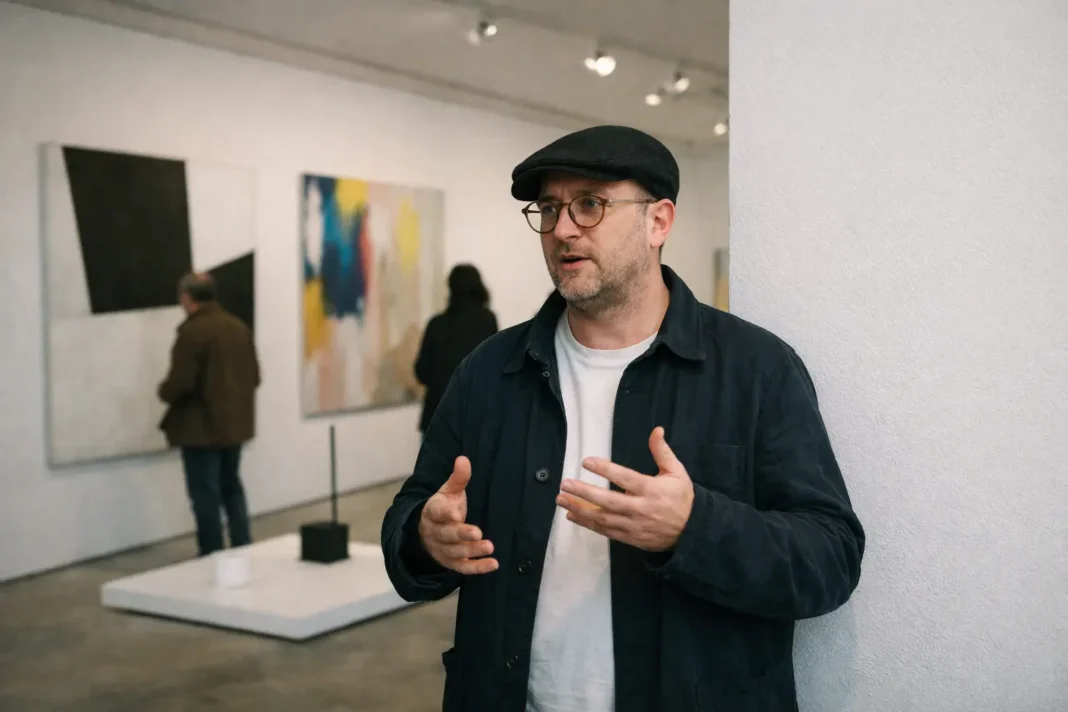

Ryan Gander has chosen an awkward moment to renew his attack on painting. The British conceptual artist, now 50, has described drawing and painting as acts he finds intellectually unconvincing, even calling them “futile and dumb”. Yet his latest exhibition places paintings at the centre of the encounter with the public, turning that apparent contradiction into the first question raised by the work itself.
Gander, long associated with conceptual art, has built a career on objects, language and situations that test how viewers assign meaning. His resistance to traditional image-making fits that approach. For him, copying reality by hand is difficult to justify in an age when a photograph can record a face or scene instantly. The point is not simply technical preference, but a broader argument about what art is expected to do once reproduction has become routine.
The artist’s criticism extends beyond medium. He has also dismissed the legacy of the Young British Artists, the generation that reshaped the British art market and public debate in the 1990s. The movement, documented by institutions such as Tate, made figures including Damien Hirst and Tracey Emin central to international conversations about British art. Gander has framed that period in far harsher terms, rejecting what he sees as its superficiality and self-regard.
His remarks are striking because they come from an artist who entered the field after that highly visible generation. For younger British artists, the 1990s boom created both opportunity and a burden: public attention grew, but so did expectations that art should arrive with spectacle, market value and personality attached. Gander places himself against that inheritance, arguing instead for work measured by ideas and by the way it reorganises perception.
The presence of paintings in his new show does not soften those views so much as complicate them. By using a form he distrusts, Gander forces viewers to confront the gap between object and belief, surface and intention. The result is not a retreat into convention, but a challenge to the assumptions that still surround painting’s prestige. In that sense, the works function less as a defence of the medium than as a test of why it continues to matter.





