
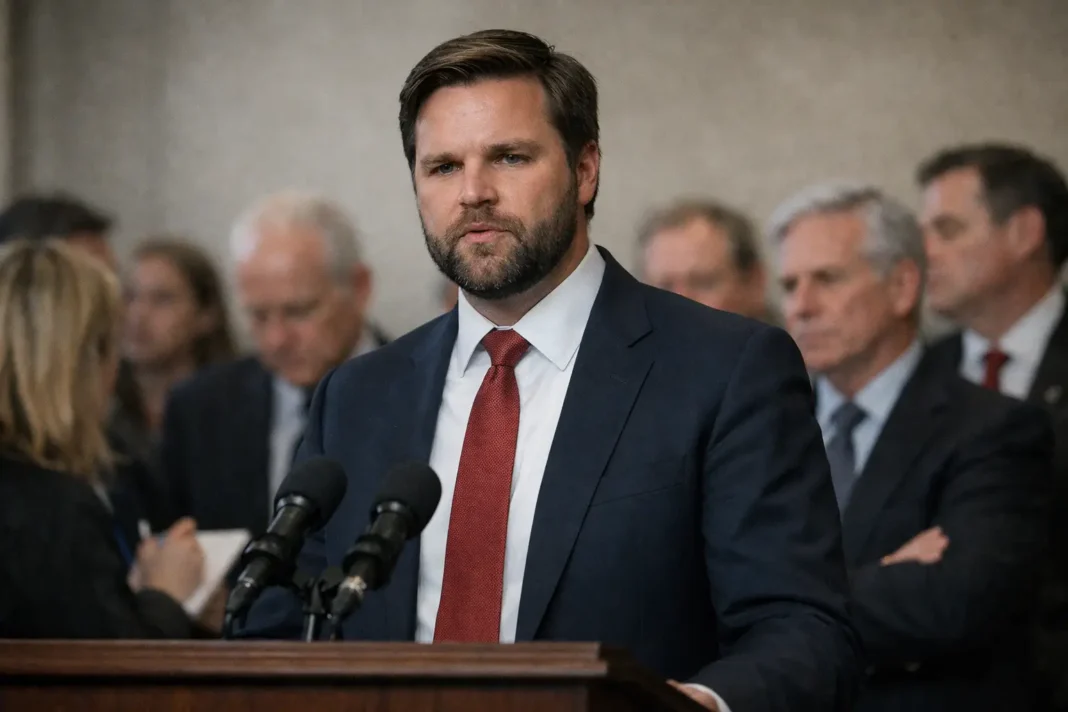

A striking political rupture has opened at the top of Washington’s Republican leadership after JD Vance, the vice-president, delivered a blunt critique of a Republican election defeat and linked the setback to the Iran war. The assessment marked an unusually direct departure from the public discipline normally expected inside an administration led by Donald Trump, especially on matters touching both US politics and national security.
Vance’s comments carry weight because they did not come from a marginal figure or an outside strategist, but from the official who stands immediately behind the president in the constitutional order. By blaming the political damage on the Iran war, he placed foreign policy at the centre of the party’s electoral reckoning. That framing matters for the White House, where unity between president and vice-president is typically treated as an essential signal of governing strength.
The episode also presents a delicate test for the Republican Party. Election defeats often trigger internal reviews over message, turnout and candidate quality, but Vance’s intervention narrowed the focus to the consequences of war. In doing so, he gave the debate a sharper edge: the question is not only how Republicans lost, but whether the administration’s handling of Iran became a burden for candidates facing voters.
For Trump, the criticism is politically sensitive because loyalty has long been a defining feature of his movement. Public disagreement from a vice-president is rare in modern presidential politics, and rarer still when it concerns the interpretation of an election result. Vance’s position therefore sits on a narrow line: it acknowledges the scale of the defeat while avoiding a broader personal repudiation of the president. Even so, the break is significant because it challenges the administration’s preferred narrative from within its own leadership.
The consequences may extend beyond a single electoral cycle. Republican officials now face pressure to explain whether the Iran war will remain central to the party’s agenda or become a point of internal recalibration before future elections. Vance’s critique has made that discussion harder to contain, turning what might have been a routine post-election dispute into a measure of how much dissent the Trump coalition can absorb while in power.







