
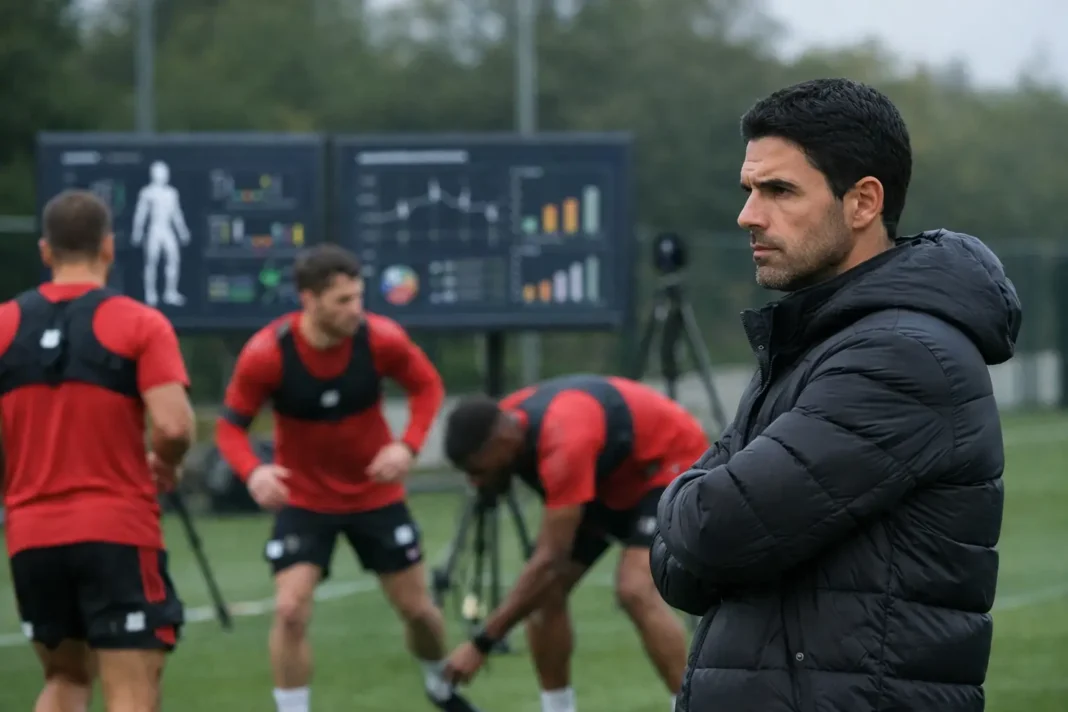

Arsenal’s injury management has moved back into the spotlight after Thursday’s newspaper agenda highlighted Mikel Arteta’s reported use of expertise linked to NASA in an effort to address the fitness problems affecting his squad. The claim places the Arsenal manager at the centre of a wider discussion about how elite clubs are trying to reduce physical breakdowns in a season shaped by intense domestic and European commitments.
The available information does not detail the precise nature of the collaboration, the technology involved, or the personnel consulted. Its significance lies in what it suggests about the direction of modern football: leading teams are increasingly looking beyond traditional coaching departments for marginal gains. Sports science, medical data, recovery monitoring and workload analysis have become central to performance planning, particularly for clubs competing at the top end of the Premier League.
For Arteta, the subject is especially sensitive because availability can define a title challenge as much as tactics or recruitment. Injuries influence selection continuity, training intensity and the balance between risk and recovery. A squad built to compete across multiple competitions needs not only depth but also reliable systems to identify fatigue, manage return-to-play schedules and limit repeat problems. Any move toward external scientific input reflects the pressure on clubs to protect players while maintaining elite performance levels.
The reference to NASA also underlines how far the boundaries of high-performance sport have expanded. Aerospace research is associated with extreme environments, physical monitoring and complex data interpretation, areas that can overlap with the demands of athlete management. Without further official detail, it remains unclear how directly such knowledge is being applied at Arsenal, but the idea is consistent with football’s broader shift toward evidence-based decision-making in conditioning and recovery.
As the season develops, the practical measure of any approach will be player availability and consistency on the pitch. Arsenal’s ambitions require a squad capable of absorbing fixture congestion without losing momentum. Arteta’s willingness to explore scientific support, if confirmed in practice, would fit a wider pattern among major clubs: the search for competitive advantage now extends well beyond the training ground, into medicine, analytics and specialist research designed to keep key players fit for longer.






