
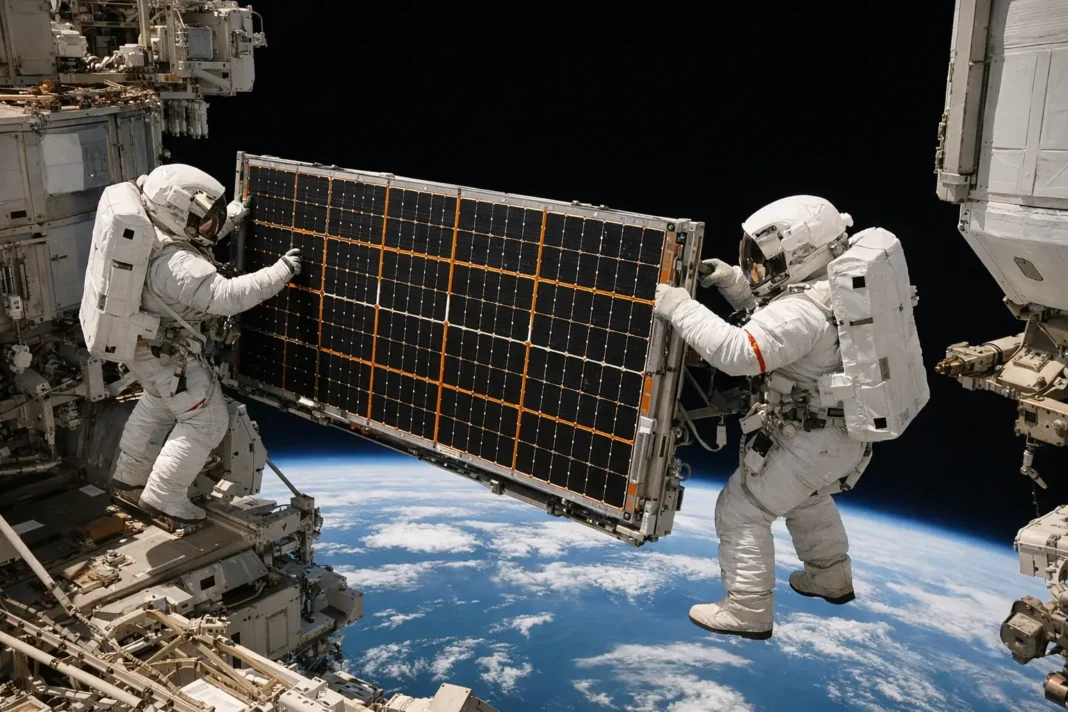

A seven-hour spacewalk has delivered a significant step in the long-running effort to expand the electrical capacity of the International Space Station. Two astronauts worked outside the orbital laboratory for 7 hours and 11 minutes to install a new solar array, adding another element to a broader upgrade designed to strengthen the station’s power system.
The installation moves NASA closer to completing a power modernization program that is expected to increase the station’s available electricity by as much as 30% once the final array is in place. That last installation is scheduled for November 5. The additional capacity is intended to support essential station operations as the laboratory continues to host research, technology demonstrations and daily crew activity in low Earth orbit.
Power is one of the defining constraints for any long-duration orbital platform. On the space station, solar arrays convert sunlight into electricity used across core systems, including the infrastructure needed to sustain crews and keep experiments running. Expanding that supply provides added resilience for an aging complex that remains central to human spaceflight and to research conducted in microgravity.
The upgrade also has relevance beyond the station’s current scientific workload. NASA has linked the enhanced power capability to critical operations and to the station’s eventual controlled deorbit, a process that will require reliable systems through the final phase of the orbiting laboratory’s life. The latest spacewalk therefore serves both immediate operational needs and longer-term planning for the future of space exploration infrastructure.






