HomeOpinionBurnham Rules Out Slavery Reparations but Urges Britain to Face Its Past

Burnham Rules Out Slavery Reparations but Urges Britain to Face Its Past

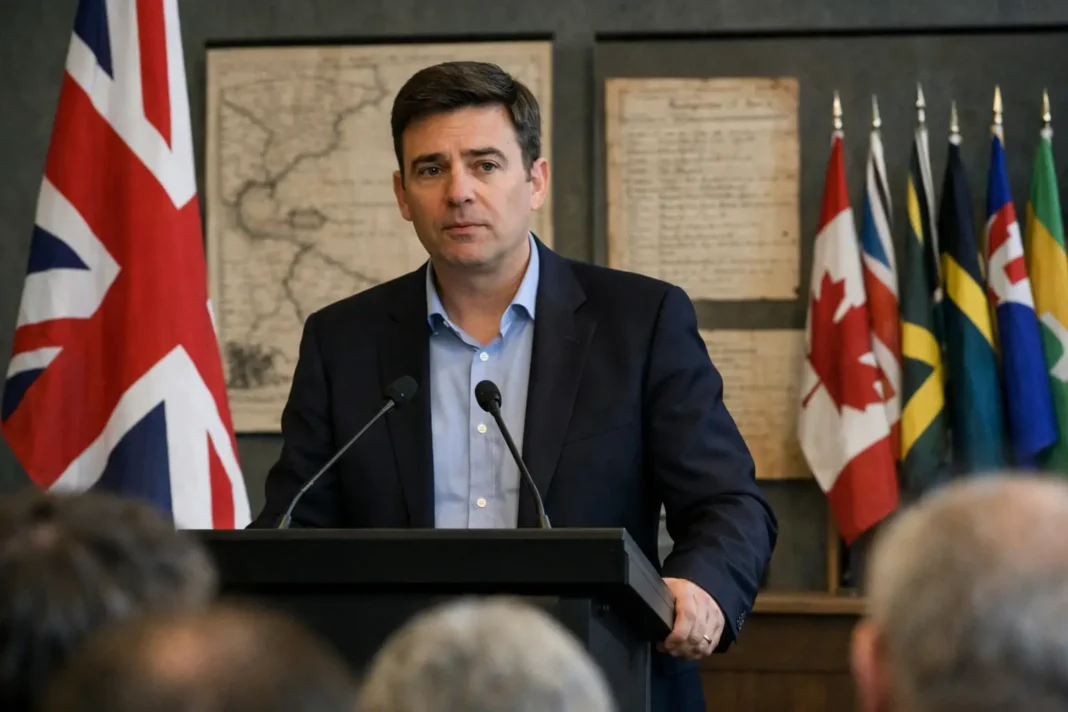
Britain’s slavery debate has been given renewed political weight after Andy Burnham argued that today’s public should not be required to fund financial reparations for the crimes of the slave trade, while insisting the country must confront the full complexity of its history. His intervention places emphasis on acknowledgement, education and future cooperation rather than direct payments, a position likely to shape discussion around slavery, national memory and the United Kingdom’s relationship with the Commonwealth.

Burnham’s position rejects financial compensation as the appropriate response to historic injustice, but does not minimise Britain’s role in the traffic of enslaved people. He has signalled openness to calls for a formal apology for Britain’s involvement in the slave trade, while arguing that prosperity should be pursued through partnership with Commonwealth countries. The distinction matters politically: it separates a moral reckoning with the past from a reparations model that remains contested in Britain and across parts of the Caribbean and Africa.

The historical reference at the centre of Burnham’s argument is Manchester, a city with a divided legacy. On 28 October 1787, the abolitionist Thomas Clarkson addressed a large congregation at Manchester Cathedral, condemning the brutality of the slave trade and describing the suffering of enslaved people. After the sermon, thousands in Manchester signed a petition against slavery. Yet the same city’s cotton economy was deeply connected to labour extracted from enslaved people, exposing the contradiction between abolitionist activism and industrial wealth.

The issue carries particular resonance during Black History Month, when public institutions, schools and communities revisit the experiences and contributions of Black people while examining how slavery shaped modern Britain. Burnham’s remarks underline a wider national tension: Britain was home to campaigners who helped drive abolition, but it was also a participant in the trade in human beings. That dual history continues to influence debates over monuments, curricula, civic apologies and Britain’s ties with nations whose societies were marked by colonial exploitation.

For the government, the challenge is to turn historical acknowledgement into practical policy without presenting financial reparations as the central solution. Burnham’s emphasis on working with the Commonwealth frames the response around shared development and long-term cooperation, rather than individual liability for past crimes. The approach may not satisfy advocates who see reparations as a necessary form of justice, but it makes clear that the question of Britain’s slavery legacy is no longer confined to history; it remains a live political issue in the present.


Advertisementspot_imgspot_img

Hot this week

Study Links Popular Sugar Substitutes to Quicker Cognitive Decline

A study of nearly 13,000 adults found higher use of artificial sweeteners was associated with faster decline in memory and thinking.

Brazil’s Democratic Test: Turning Confidence Into Reform

Brazil’s renewed democratic confidence raises a harder question: whether institutions and coalitions can resist authoritarian pressure.

Virtual Reality Training Shows Promise for Inducing Lucid Dreams

A study suggests dreamlike VR and meditation can increase lucid dreaming, though researchers note limits and call for further testing.

A Sudden Collapse Puts Vitamin D Deficiency in Focus

Saskia Reeves-Priestley discovered her low vitamin D levels only after collapsing at work, highlighting a common but often overlooked deficiency.

China’s Pressures Raise Questions Over Power, Growth and Succession

China’s political continuity, economic slowdown and demographic strain are drawing closer international scrutiny.

Virtual Reality Training Shows Promise for Inducing Lucid Dreams

A study suggests dreamlike VR and meditation can increase lucid dreaming, though researchers note limits and call for further testing.

A Sudden Collapse Puts Vitamin D Deficiency in Focus

Saskia Reeves-Priestley discovered her low vitamin D levels only after collapsing at work, highlighting a common but often overlooked deficiency.

Binance Faces a $6.3bn Recovery Challenge After North Korea-Linked Crypto Hack

Binance is working to recover $6.3bn stolen in a complex crypto hack linked to North Korea, in what may be the largest case of its kind.

Britain Faces Slavery Apology Calls as Reparations Remain Off the Table

Burnham is open to calls for a slavery apology, while Britain’s prime minister says reparations are not the right answer.

Washington Clears Sale of 500 Patriot Interceptors to Ukraine

U.S. approval for 500 Patriot interceptors strengthens Ukraine’s missile defense against Russian ballistic attacks.

Eddie Howe and Manchester United: the fit, the risks and the unanswered questions

Eddie Howe’s Manchester United links raise questions over style, pressure, recruitment and whether the timing would suit club and coach.

Celebrity Traitors Finale Crowns a Breakout Reality TV Moment

Celebrity Traitors ends its second series after drawing 15 million viewers, underscoring the strength of reality competition TV.

Verstappen and Lawson Handed Grid Penalties After Mexico City Practice Collision

Max Verstappen and Liam Lawson receive one-place grid penalties after an unacceptable practice collision at the Mexico City Grand Prix.
Advertisementspot_img

Related Articles
